目次


Industrial Trolley Carts Overview
What Is an Industrial Trolley Cart
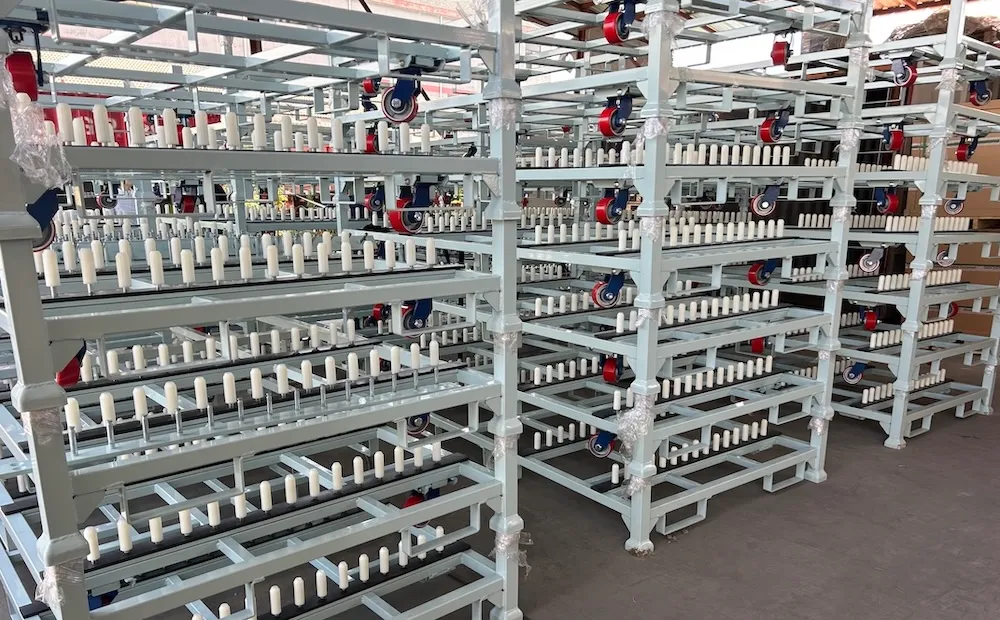
An industrial trolley cart is a heavy-duty, mobile handling unit designed to move materials, totes, cartons, ツール, or finished goods efficiently through warehouses, retail backrooms, production lines, and distribution centers. Unlike general-purpose consumer carts, industrial trolley carts are engineered around load capacity, maneuverability, 耐久性, and workflow fit—often with welded frames, modular shelves, side panels, or cages that match a specific process. アットエイブルハードウェア, we manufacture custom OEM/ODM trolley carts in China with export-ready documentation, consistent weld quality, and repeatable geometry using 自動ロボット溶接サービス and robust welded steel frames.
Typical Buyers and Use Scenarios
Industrial trolley carts are commonly sourced by procurement teams, mechanical/design engineers, and quality managers who need reliable, repeatable products at scale. Typical use cases include order picking and replenishment, kitting and line-feeding, WIP (work-in-process) movement, reverse logistics, and secure transport of high-value items. OEM/ODM programs often require consistent dimensions for racking interfaces, conveyor transfer points, lift-gate clearance, or aisle-width restrictions—plus coatings and wheel choices that match the operating environment.
Industrial Trolley Cart Types
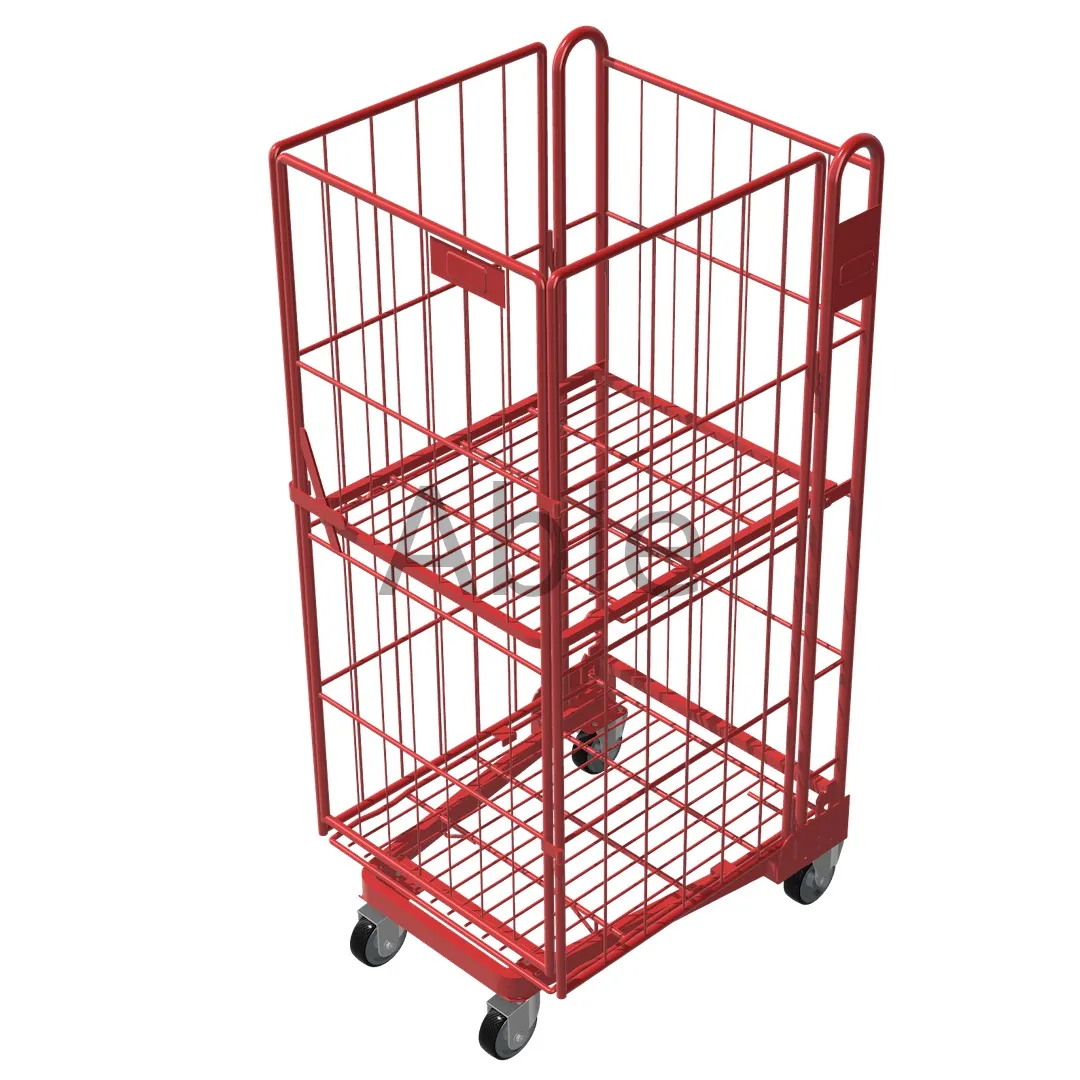
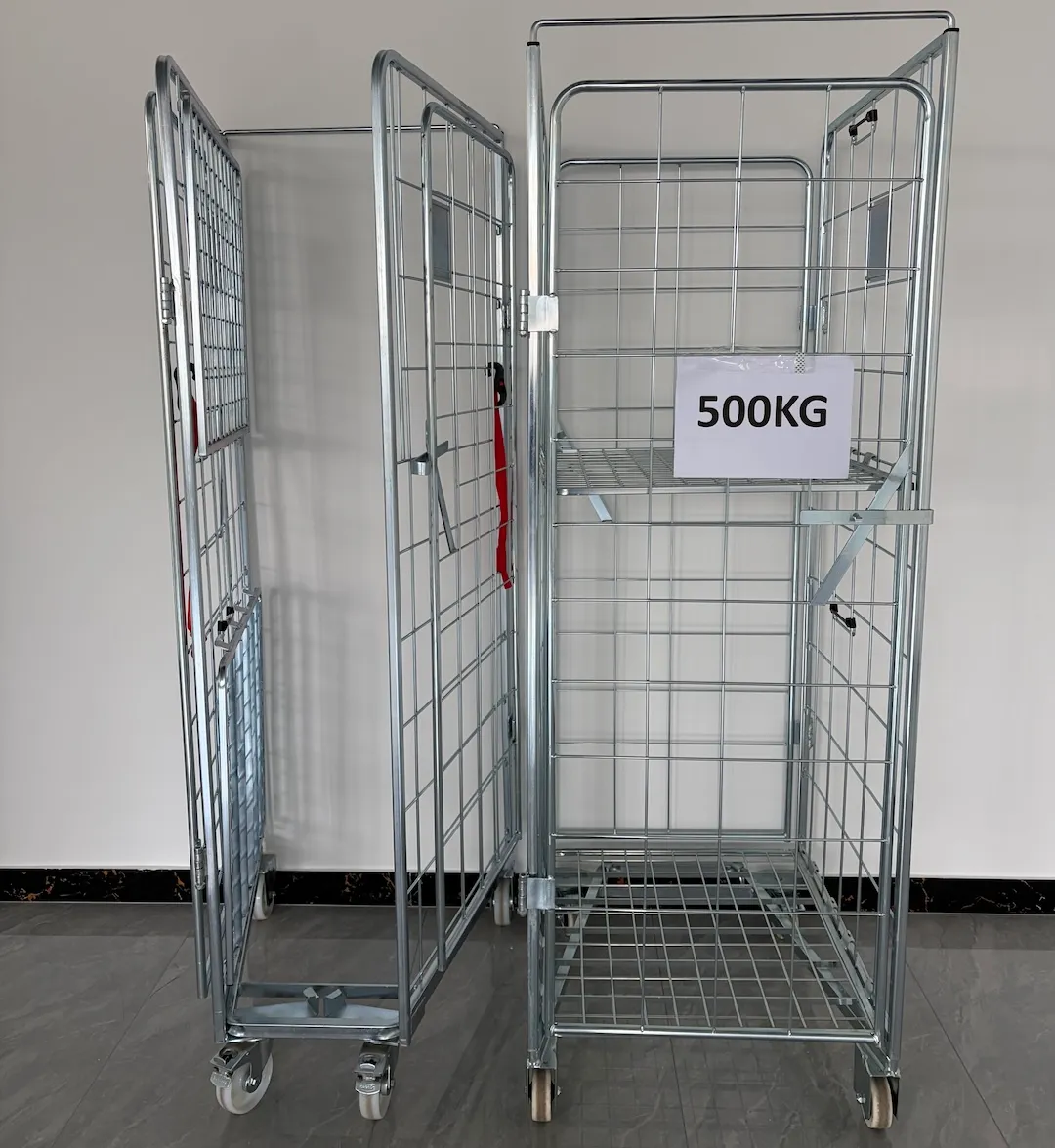
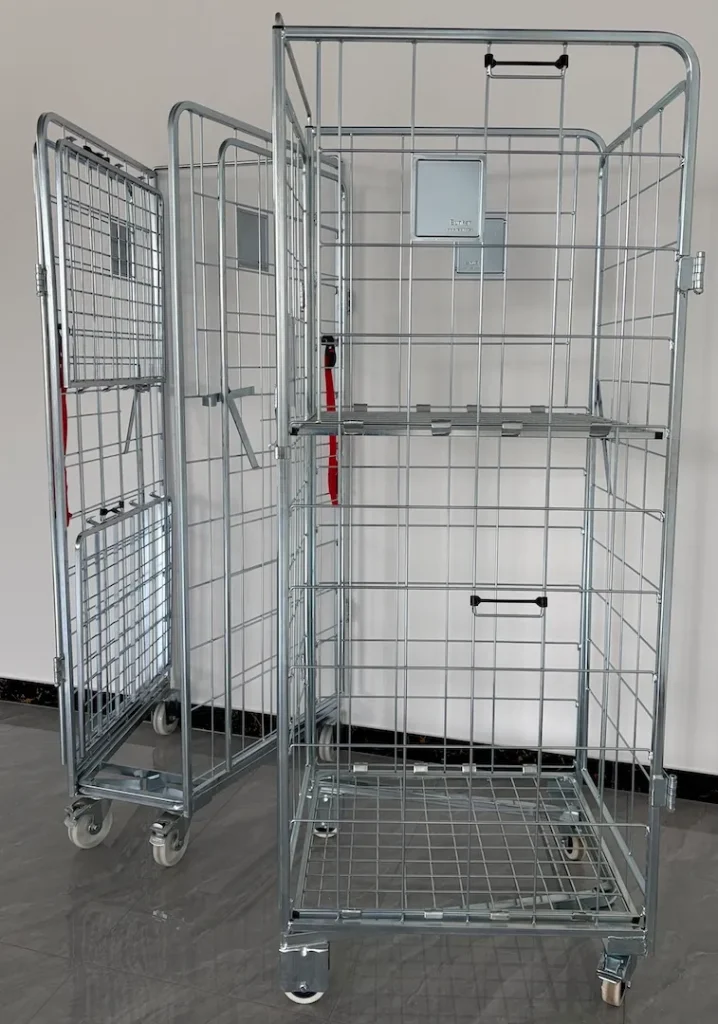
Logistic Roll Cage Trolleys
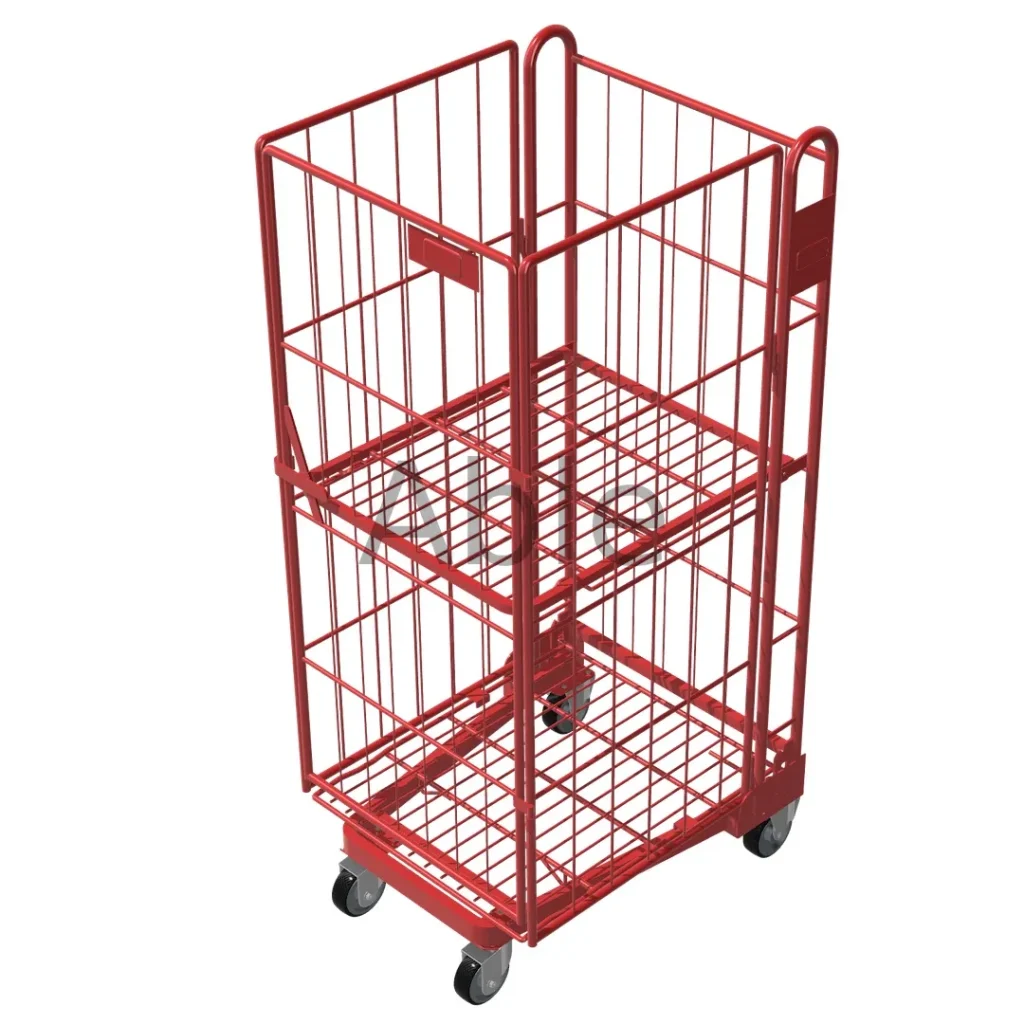
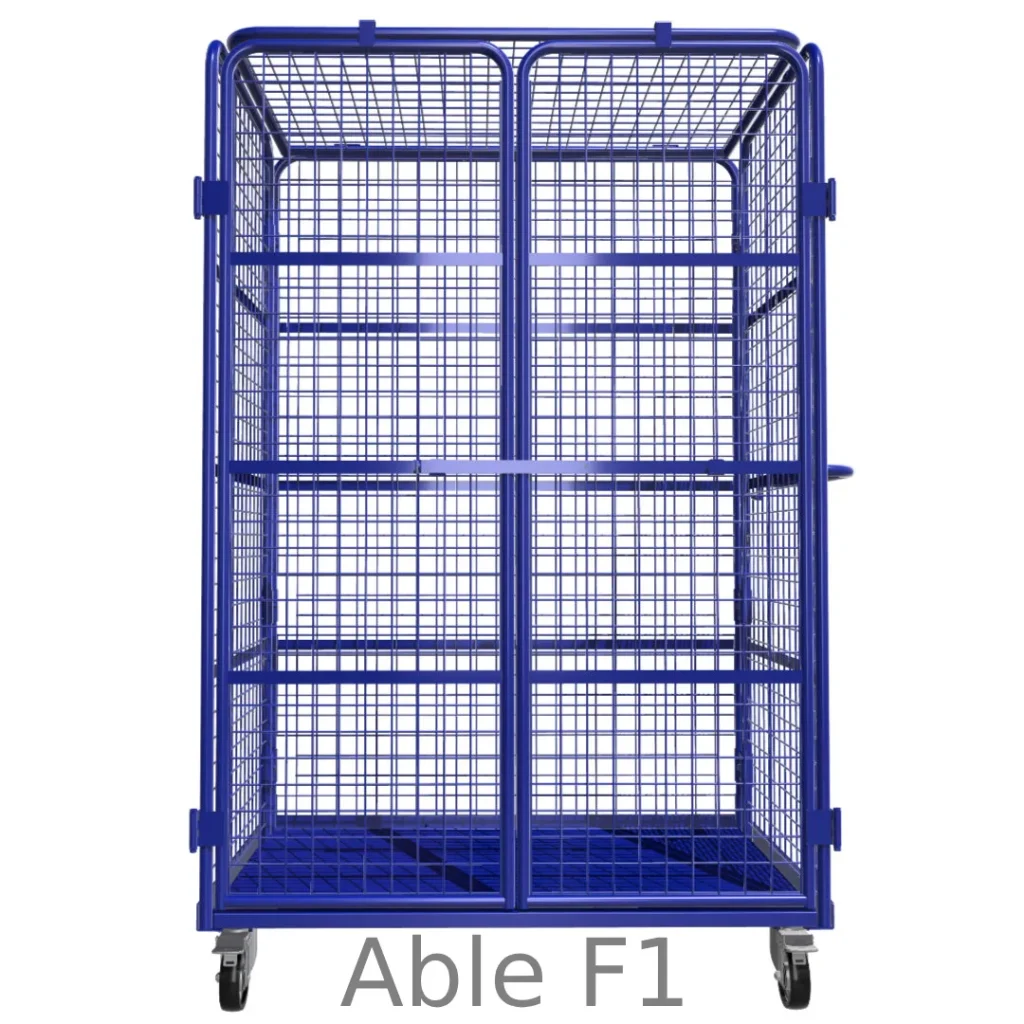
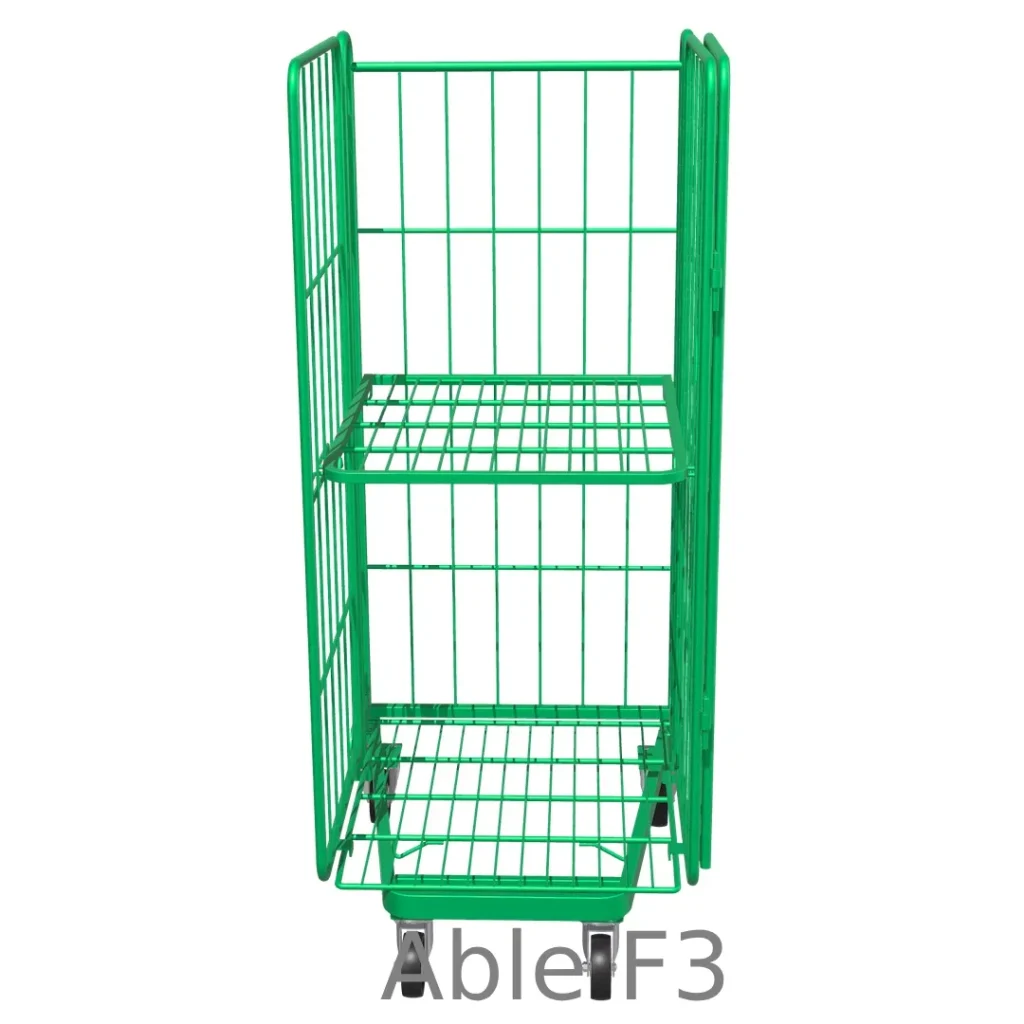
Roll cage trolleys (also called roll containers) are designed for high-volume logistics and secure movement of parcels, totes, and returns. Options include 2/3/4-sided cages, half or full doors, lockable designs, nesting geometry, and removable shelves. View our ロジスティックロールケージトロリー built for secure, high-volume handling in retail, e-commerce, and warehouse distribution.
産業用資材運搬カート
These carts focus on structural strength, load rating, and daily durability—often used for bulk transfer, staging, and internal transport. Common configurations include deck carts, shelf carts, and heavy-duty platform designs with reinforced frames and optimized caster layouts. Explore our 産業用資材運搬カート engineered for safe, efficient movement of goods across warehouses, production lines, and distribution centers.
Folding Logistic Trolleys
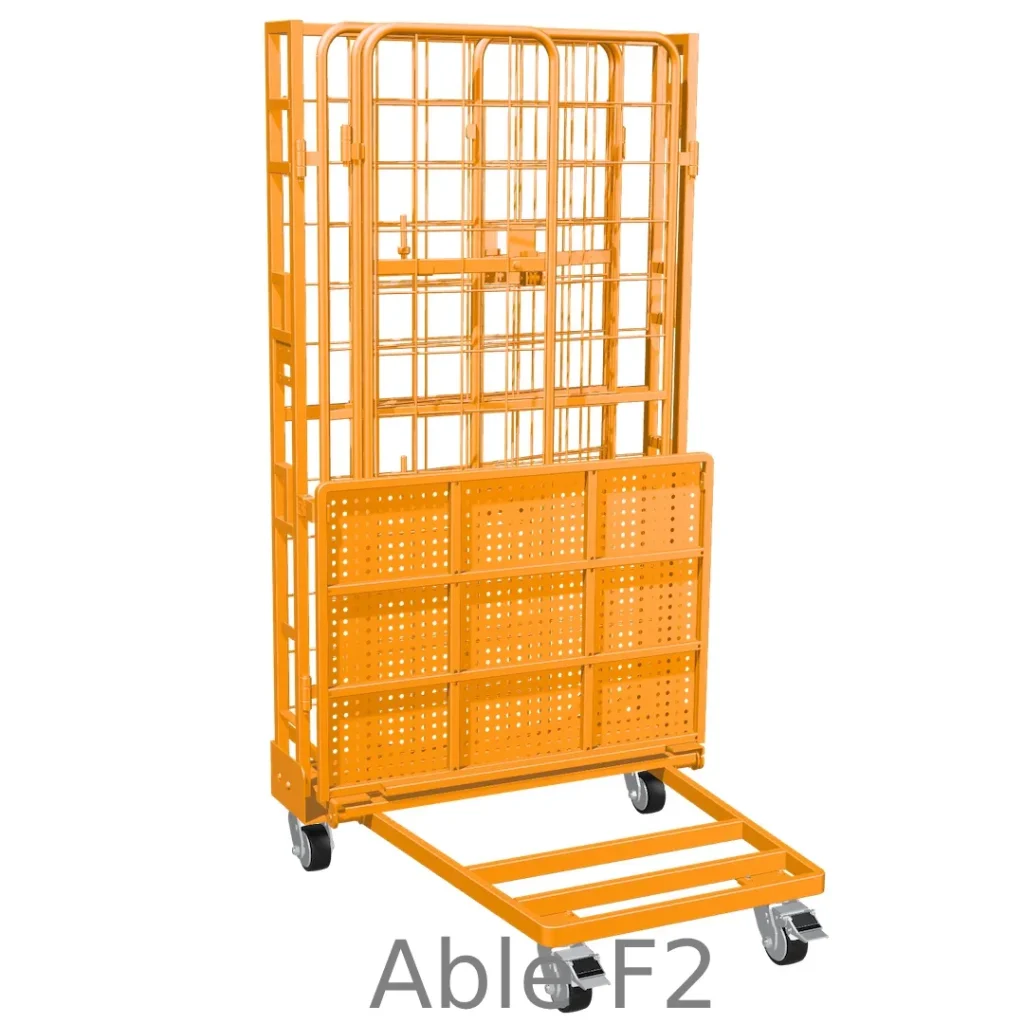
Folding trolley designs reduce storage footprint and improve outbound freight efficiency. Folding side frames, collapsible shelves, and lockable hinges can be engineered for cycle life and operator safety. Discover our 折りたたみ物流トロリー designed to save space while maintaining load stability for transport, storage, and return logistics.


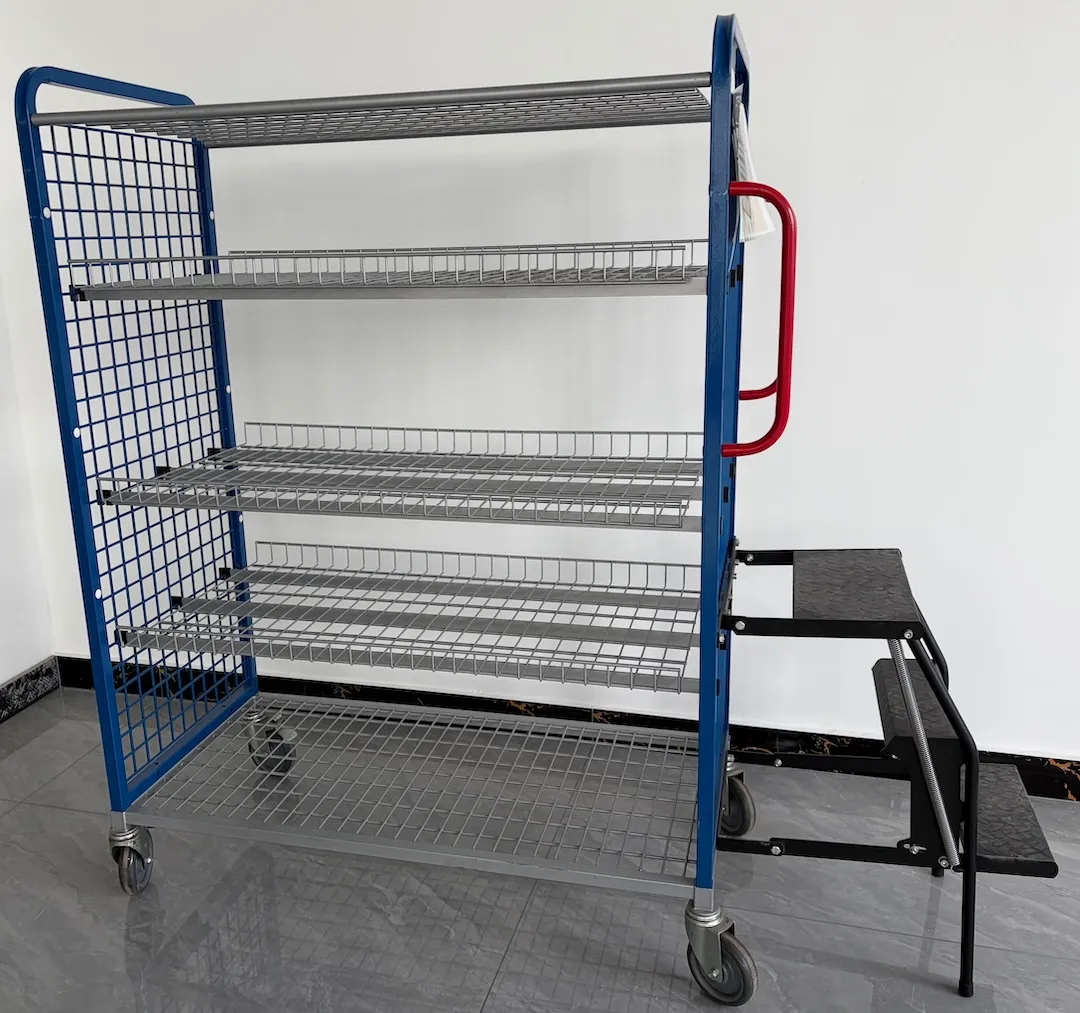
Stocking and Order Picking Carts
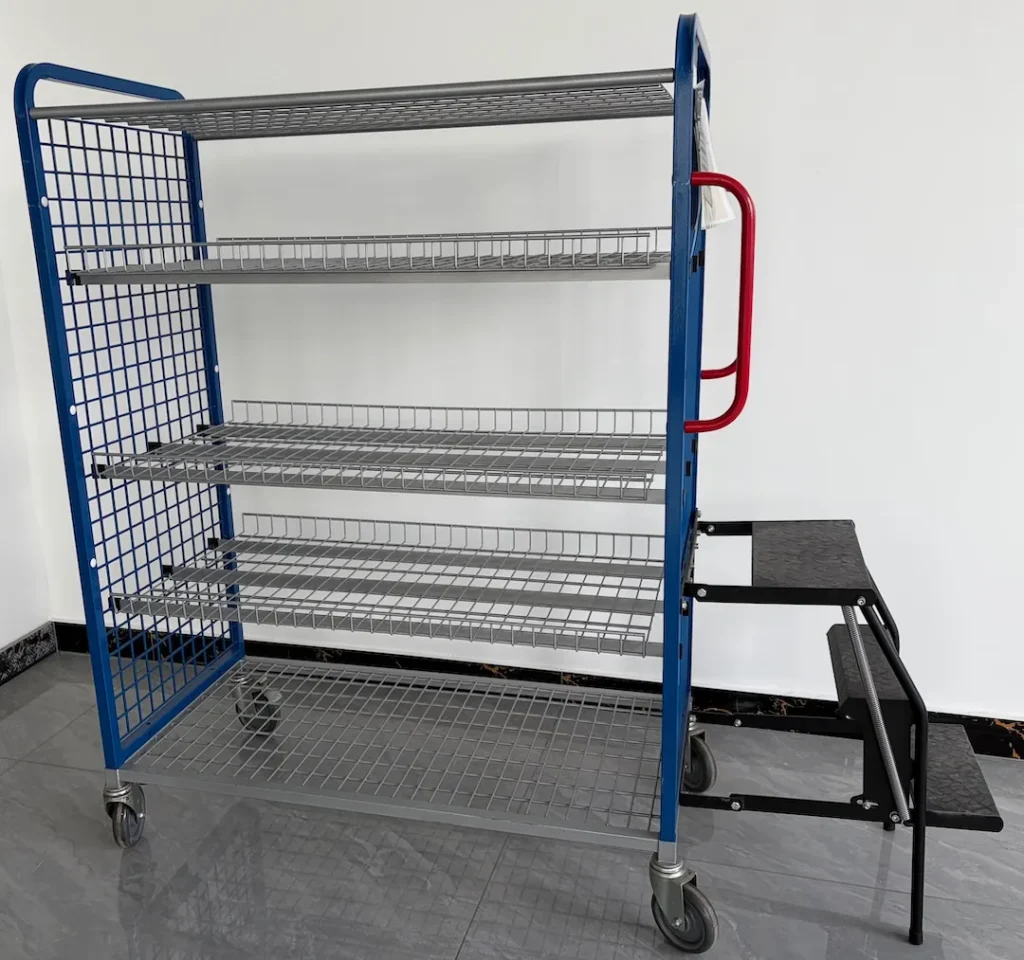
Picking carts are optimized for replenishment and selection workflows: multi-tier shelving, tote rails, bin dividers, writing surfaces, label/document holders, and optional tablet mounts. They are widely used in fulfillment centers and retail backrooms. Explore our ストッキングピッキングカート optimized for fast order picking, shelf replenishment, and ergonomic warehouse operations.
Towable Tugger-Train Carts
Towable cart designs integrate tow bars, hitches, and tracking alignment for tugger-train logistics, improving throughput in long-distance internal transport. Explore our カスタムタガーカート engineered to your load, route, and tugger train requirements.
Platform and Flatbed Carts
Flatbed designs prioritize deck space and load stability. They can be built with tie-down points, anti-slip surfaces, edge lips, or push bars, and tuned for tight aisles with appropriate caster geometry.
Shelf and Tier Carts
Multi-shelf carts support structured picking, kitting, and light assembly. Shelves can be solid, perforated, or wire; fixed or adjustable; and designed with retaining rails to prevent tote slip.
U-Boat / Stock Carts
U-frame carts are popular for retail stocking and distribution. They offer high volume capacity with minimal frame obstruction and can be designed to nest for return logistics.
Bin and Cabinet Carts
When parts organization and security matter, bin and cabinet carts provide integrated drawers, ビン, or lockable storage—often used in maintenance, tooling, and controlled inventory.
Packing and Kitting Carts
Packing carts keep cartons, dunnage, labels, and tools at the point of use. Kitting carts support line-feeding with standardized shelf spacing and easy identification.
Workstation and IT Carts
Mobile workstations combine a stable frame with functional add-ons like writing surfaces, device shelves, and accessory mounts—built for inspection, scanning, and process control.
Specialty and Custom-Engineered Carts
Specialty carts address unique part geometry, handling constraints, or safety requirements—such as A-frame transport, tilt/rotation mechanisms, or custom fixtures for specific products.
Key Applications and Industries
Warehouse and 3PL Logistics
Trolley carts support receiving, put-away, staging, picking, and dispatch. For industry-focused solutions, see マテリアルハンドリングカート & 倉庫用のラック & ロジスティクス.
E-Commerce Fulfillment and Parcel Handling
Fulfillment environments demand maneuverability, low rolling resistance, and repeatable dimensions—often with modular shelves and pick-friendly accessories.
Retail Backroom and Store Replenishment
Retail workflows prioritize high-volume stocking, nesting efficiency, and protective features that reduce product damage. See 治具フレーム & 小売用ワイヤーディスプレイ.
Manufacturing Line-Feed and Kitting
Production lines need standardized carts for kitting, WIP movement, and point-of-use presentation—often with precise dimensions and stable frames.
自動車, Appliance, HVAC, and OEM Production
OEM factories often require load-rated carts and brackets designed around assemblies and fixtures. See フレーム, ラック & HVAC用ブラケット & 電気.
Cold Chain and Food Handling Environments
Cold-room and washdown environments require suitable materials, finishes, and wheel treads to perform reliably under temperature and moisture stress.
よくある質問
What Load Capacity Should I Specify for My Use Case
Specify both static and dynamic expectations, plus whether loads are uniform or point-loaded. If you’re unsure, share payload type and max weight and we’ll propose a safe rating.
Should I Choose Roll Cage, Picking, Folding, or Flatbed
Roll cage supports secure logistics, picking carts optimize replenishment speed, folding designs reduce storage and freight cost, and flatbeds handle bulky loads with simple loading access.
What’s the Best Caster Setup for Tight Aisles
Four swivel casters maximize maneuverability, その間 2 rigid + 2 swivel improves tracking stability. The best choice depends on aisle width, load weight, and operator habits.
How Do I Select the Right Surface Finish for Corrosion Resistance
Powder coating works well for indoor use; zinc-based protection or stainless steel may be better for higher corrosion exposure. Share the environment and we’ll recommend options.
What Is a Typical Prototype and Production Lead Time
Lead time depends on complexity, revision cycles, and finish requirements. We quote realistic timelines after DFM review and confirmation of key specs.
Can You Match Our Existing Cart Design and Branding
はい. We can match core geometry and functional features and add branding plates, colors, and identification features for fleet consistency.
How Do You Control Weld Consistency and Dimensional Repeatability
We control key dimensions through fixtures, defined inspection checkpoints, and robotic welding where appropriate—supported by documented 品質管理.
Ask for a Fast Quote and Prototype Plan
Send your drawings (or a simple sketch), target load, aisle/floor conditions, and finish requirements. Able Hardware will respond with a spec confirmation list, recommended configuration, and a volume-based quotation—including cost drivers and packaging options for export shipping.
引用を要求
もっと インダストリアルトロリーカート: