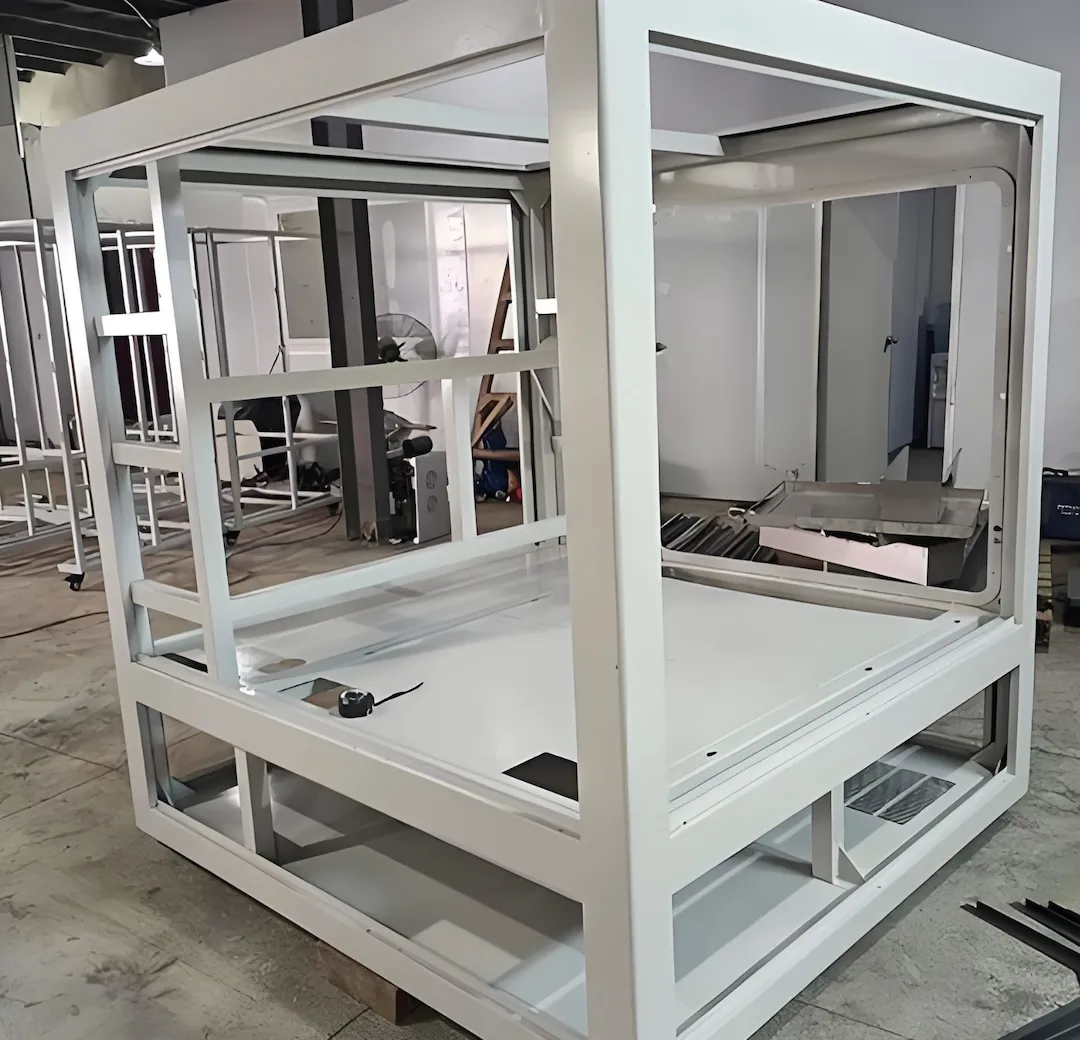
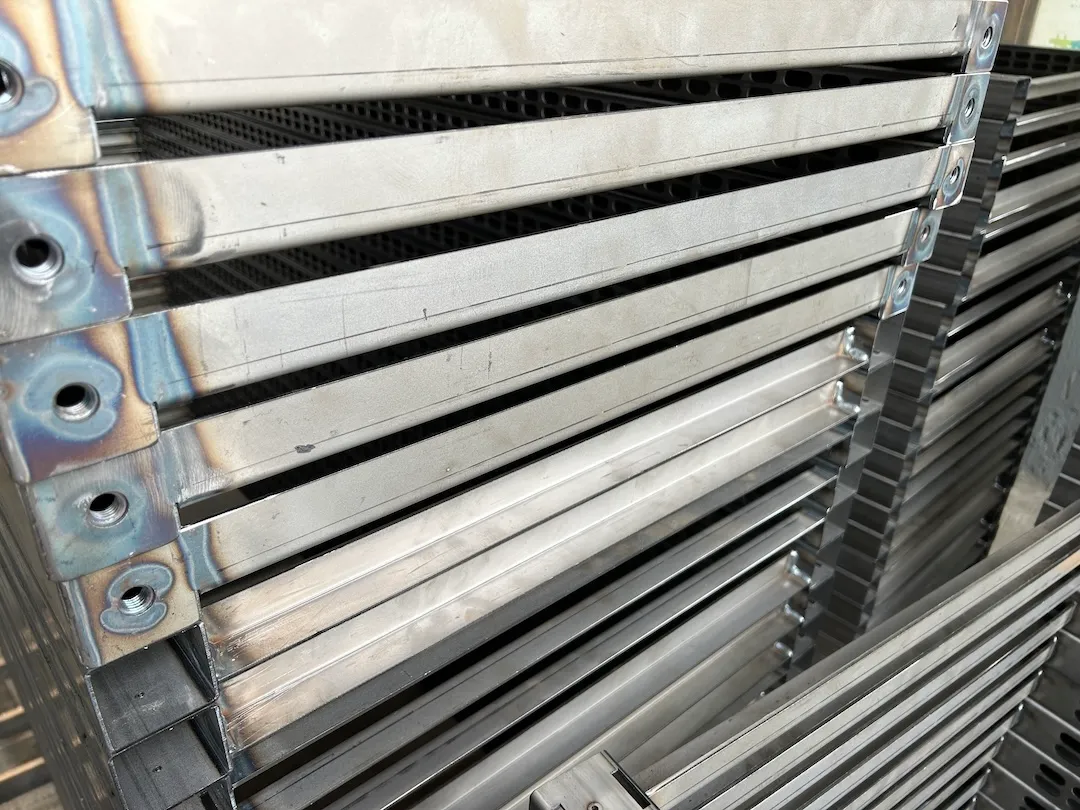
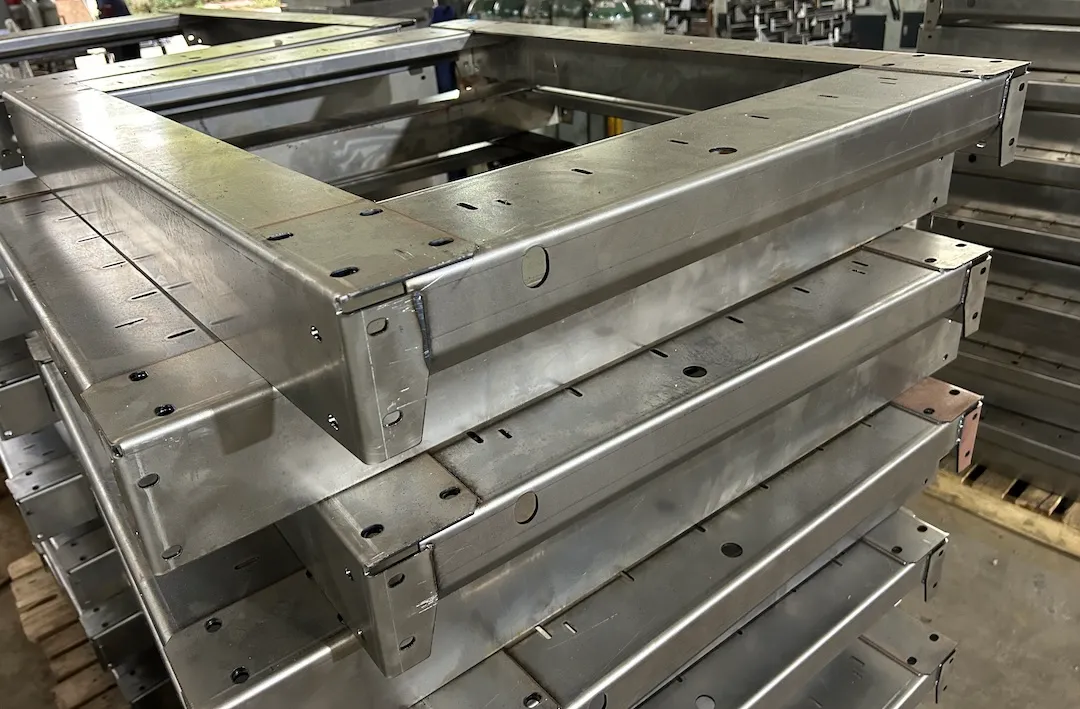
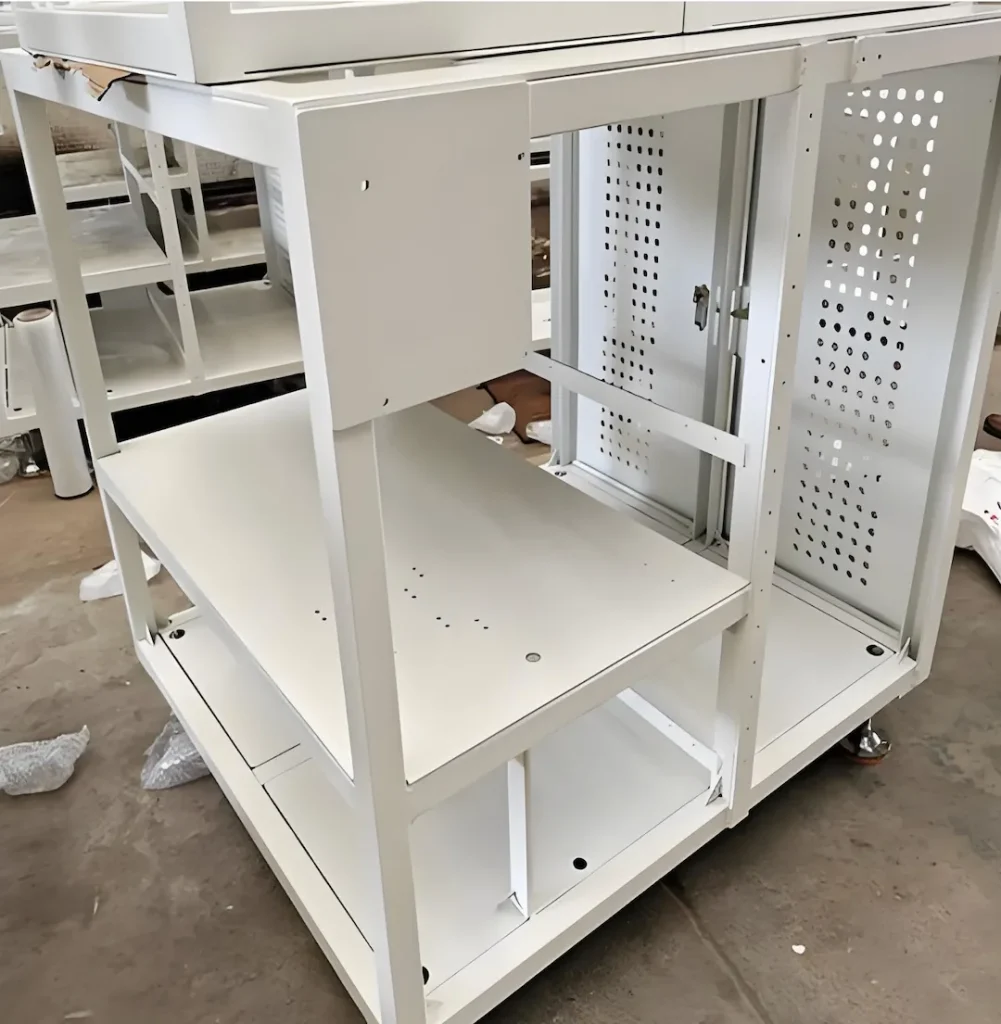
In OEM sourcing, “sheet metal frame” usually means a fabricated assembly—not a single bent part. It’s the backbone that locates components, controls alignment, and stays stable through shipping, installation, 振動, and daily use. Able Hardware is a China-based OEM/ODM manufacturer building custom sheet metal frames with export-ready inspection documentation. For broader welded structures beyond sheet metal, we also deliver カスタム金属溶接フレーム.
目次

Types of Sheet Metal Frames We Manufacture
Equipment Mounting Frames
Frames for motors, パンプス, sensors, and power modules often include slots, standoffs, ribs, and cable cutouts. Typical RFQ controls are mounting hole pattern, interface flatness, and allowable deflection under load.
Machine Base & Support Frames
Base/support frames focus on rigidity and stable datums for downstream assembly. For heavy-duty programs, reference 産業機械用のカスタム溶接フレーム when lifting points, 振動, and service access must be engineered into the structure.
Electronics Chassis & Sub-Chassis Frames
Chassis/sub-chassis assemblies prioritize repeatable hole locations, clean edges, and consistent bends for module alignment (rails, guides, connector cutouts, grounding points). A cost-effective RFQ applies tighter tolerances only to critical interfaces instead of everywhere.
Industrial Control Housing Frames
Control frames support mounting plates, DIN rails, and cable management inside cabinets. Define cosmetic-side requirements, grounding areas that must remain uncoated, and any regional fastener standards needed for your end market.
Telecom / Communications Equipment Frames
Telecom frames are modular and hardware-rich, with sub-panels, ケーブル管理, and airflow features. We stabilize fit-up with dedicated fixtures and inspection checkpoints on the interfaces that mate with standardized modules.
Display & Commercial Equipment Frames
Display frames for kiosks and POS systems combine structure with appearance (edge quality, gap control, cosmetic finish). For merchandising projects, we also support 治具フレーム & 小売用ワイヤーディスプレイ to consolidate sourcing.
Structural Sheet Metal Frames (Reinforced / Load-Bearing)
Load-bearing frames use ribs, braces, ガセット, and engineered joint placement to control deformation. Because welding heat can distort thin sections, these frames require balanced weld patterns, stable fixturing, and acceptance criteria tied to critical datums and interfaces.
Hybrid Frames: 板金 + Square Tube Welded Structures
Hybrid builds combine formed sheet metal with tube members for stiffness while keeping sheet-metal features for mounting and access. These frames often ship alongside 金属棚, カスタムワイヤー製品, and mobile equipment such as インダストリアルトロリーカート.
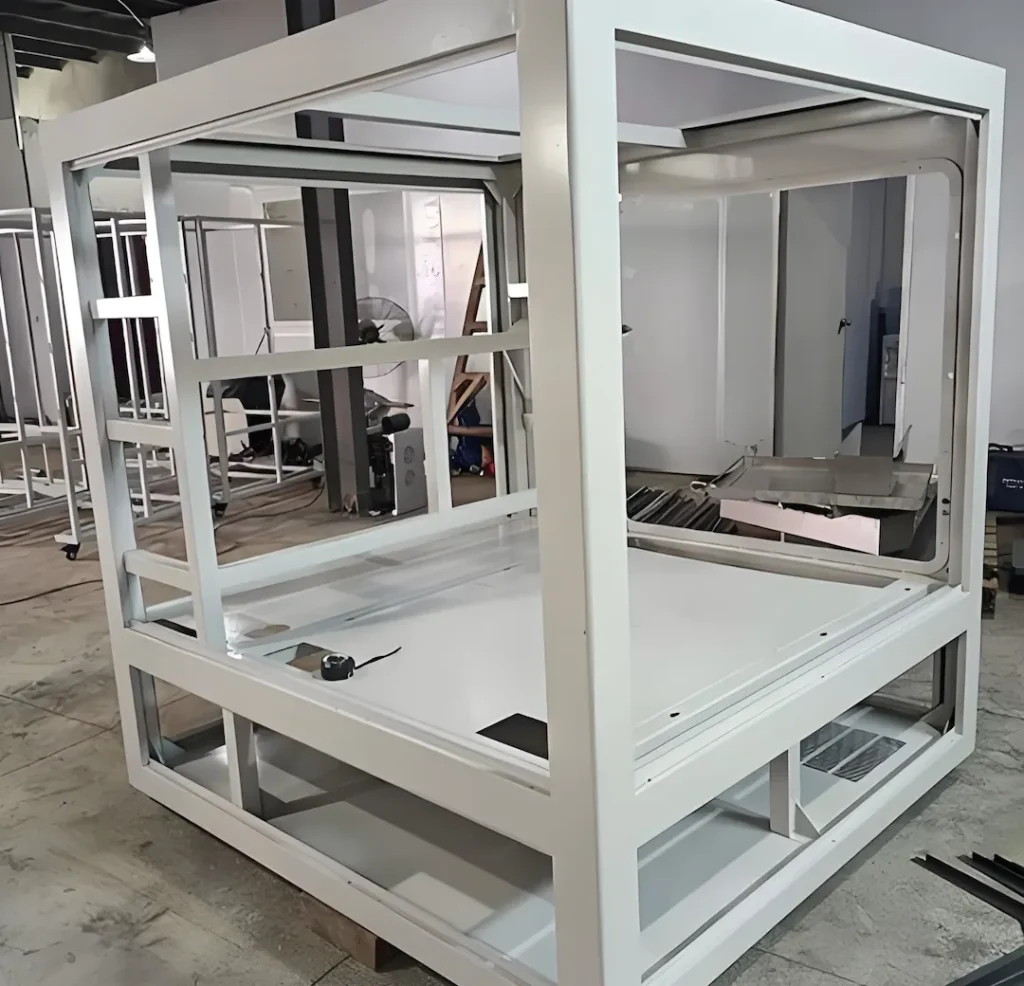
Typical Sheet Metal Parts Included in a “Frame” Project (BOM Scope)
Panels, Covers, and Access Doors
Covers and service doors drive cosmetic standards and fit-up. Define cosmetic faces, allowable defects, and masking needs (for grounding or assembly surfaces).
Brackets, Gussets, and Reinforcement Plates
Reinforcement adds stiffness without increasing thickness everywhere. Specify which interfaces are load-bearing and where flatness/squareness matters most.
Internal Chassis Members, Standoffs, and Stiffeners
Internal rails, standoffs, and stiffeners support modules and control alignment. Clarify any spacing/alignment requirements that affect assembly performance.
Tabs & Slots for Self-Locating Assembly
Tabs and slots improve alignment before welding and reduce variation. They’re especially helpful when moving from prototype builds to repeat orders.
PEM Hardware, Rivet Nuts, and Threaded Inserts
Specify thread standards, insert types, and any pull-out/torque requirements. If you need go/no-go checks or traceability, include it in the RFQ so it becomes part of the inspection plan.
Materials We Offer for Sheet Metal Frames
Cold-Rolled Steel (CRS)
A common choice for indoor equipment where paint or powder coating provides corrosion protection and cost efficiency.
Galvanized Steel
Used for improved corrosion resistance in humid environments. Confirm whether appearance is cosmetic-critical and clarify expectations around weld zones.
ステンレス鋼
Selected for corrosion resistance, 衛生, and premium appearance. For medical-adjacent structures, we also support 医療機器用の金属溶接フレーム with export-ready documentation aligned to OEM approval needs.
アルミニウム
Chosen for lightweight designs and corrosion resistance. Early DFM review helps manage forming behavior and weld distortion risks.
真鍮 / 銅 (Special Requirements)
Used for conductivity or aesthetic needs. Define cosmetic surfaces and protected contact points clearly.
Fabrication Processes Used to Build Sheet Metal Frames
レーザー切断 / Blanking
Accurate blanks enable consistent bends and predictable hole positioning. Edges are deburred to improve safety and finishing results.
曲げ & 形にする
Bend repeatability drives fit-up. We control bend angle and flange length and recommend practical tolerances based on the interfaces that matter.
Deburring and Edge Conditioning
Edge conditioning reduces sharp edges, improves coating adhesion, and supports a clean appearance on customer-facing assemblies.
Robotic / Automatic Welding (MIG; TIG if specified)
Welding converts parts into stable structures. Automated Robotic Welding supports repeatable geometry and consistent weld placement; TIG can be used where specified for material or appearance requirements.
Assembly and Functional Fit-Up
We can deliver complete assemblies with installed hardware and interface checks. Packaging is selected to protect finishes and maintain geometry during export shipping.
Surface Finishes and Cosmetic Requirements
絵画 / パウダーコーティング
Provide color references (RAL/Pantone), gloss, masking needs, and cosmetic-side definition. Finish, 公差, and part complexity are key cost drivers.
Sandblasting / Surface Prep
Used to improve adhesion and visual consistency. Define acceptable surface condition levels when cosmetics are critical.
Polishing / Brushed Finishes (ステンレス)
Specify grain direction and which faces are cosmetic to avoid ambiguity at receiving.
Galvanized Appearance & Corrosion Protection Targets
If galvanized finish is functional-only, state that. If appearance matters, define acceptance criteria and how weld zones will be evaluated.
Key Specifications Buyers Should Provide in an RFQ
Overall Dimensions and Critical Datums
Provide the assembly envelope (L × W × H) and the datums that control fit. Clarify mounting faces, reference edges, and key mating interfaces.
公差: Hole Locations, Flatness, Squareness
Apply tight tolerances only to critical interfaces (mating hole patterns, gasket faces, sliding module alignment). Over-tolerancing increases scrap risk and affects the achievable quotation range.
Sheet Thickness and Reinforcement Strategy
List thickness per part and describe loading direction. Often, ribs/gussets or hybrid tube members improve stiffness more efficiently than increasing thickness everywhere.
Welding Requirements and Distortion Control
Define deformation limits and inspection points. If weld cosmetics are not critical, stating that upfront helps reduce cost drivers.
Hardware Requirements: PEM, Inserts, Threads
List thread standards and hardware types, plus any inspection needs. Hardware planning is part of export-ready 品質管理 and prevents assembly-line surprises.
Finish Spec: 色, Coating Thickness, Masking Areas
Specify coating spec, masking areas, and any grounding surfaces that must remain uncoated, plus packaging expectations for finished surfaces.
Engineering Support for OEM Projects
DFM Review to Reduce Cost and Lead Time
We review tolerance stack-ups, distortion-prone joints, and hard-to-fixture parts, then propose manufacturable options that protect function and schedule.
Fast Prototyping (Quantity 1 OK)
We support quantity-1 prototypes and pilot builds. Quotation ranges are driven by complexity, number of unique parts, finishing steps, and fixture needs.
ECN / Revision Control for Ongoing Programs
We manage revision control and align inspection checkpoints to the latest drawing revision to reduce mixed builds during engineering changes.
Quality Assurance and Inspection Deliverables
Incoming Material Verification and Traceability
Materials are verified to spec with traceability where required.
Dimensional Inspection (FAI / First Article on Request)
FAI targets critical interfaces (hole patterns, datums, flatness/squareness) so your team can approve confidently before scaling.
Weld Inspection and Visual Standards
Welds are checked against defined criteria with attention to geometry and deformation control, including repeatability for robotic-welded builds.
Surface Finish Inspection and Packaging Checks
We verify finish appearance against your cosmetic definition and confirm packaging protection before shipment.
Applications and Industries We Support
Industrial Equipment and Automation
Frames for equipment modules, automation systems, and industrial platforms where stable geometry and repeatable assembly are required.
Enclosures, Cabinets, and Control Systems
For cabinet and control applications, see フレーム, ラック & HVAC用ブラケット & 電気.
Electronics and Communications Equipment
Chassis and internal frames requiring reliable module alignment, clean edges, and repeatable hole patterns.
Aerospace / Medical / Compliance-Driven Programs (If Required)
We can align deliverables to your supplier approval process. For fitness-related structures, reference フィットネス機器用の金属溶接フレーム.
よくある質問
What’s the difference between a sheet metal frame and a chassis?
A chassis is typically an internal structural platform inside an enclosure or device (rails, guides, connector cutouts). A sheet metal frame can be a chassis, but it may also be an external load-bearing structure or a hybrid welded assembly.
Can you build frames as complete assemblies with panels, brackets, and hardware installed?
はい. We can supply complete assemblies with installed hardware and interface checks on the features you define as critical.
What materials are most common for sheet metal frames?
CRS for indoor equipment, stainless for corrosion resistance/hygiene, galvanized steel for humid environments, and aluminum for weight reduction.
How do you control distortion and keep geometry consistent?
We use stable fixturing, controlled welding sequence, robotic welding where appropriate, and inspection checkpoints on critical datums and interfaces.
What drawings should I send?
Send a 2D drawing with critical tolerances plus a 3D model if available. Include material/thickness, finish spec, and target quantities.
What QA documents can you provide?
Typical deliverables include FAI reports, critical dimension records, material verification, and weld/finish inspection checkpoints.
Send your RFQ for an engineered quotation
Share your frame type, assembly envelope (L × W × H), material and thickness, critical tolerances (holes/flatness/squareness), finish requirements, target quantity, and drawing files (2D/3D). We’ll respond with a DFM summary, prototype plan, inspection approach, and a quotation range based on your cost drivers.