Table des matières
Able Hardware construit des chariots industriels personnalisés à imprimer à Suzhou, Jiangsu, La Chine les expédie soudés, équipé, fini et emballé.
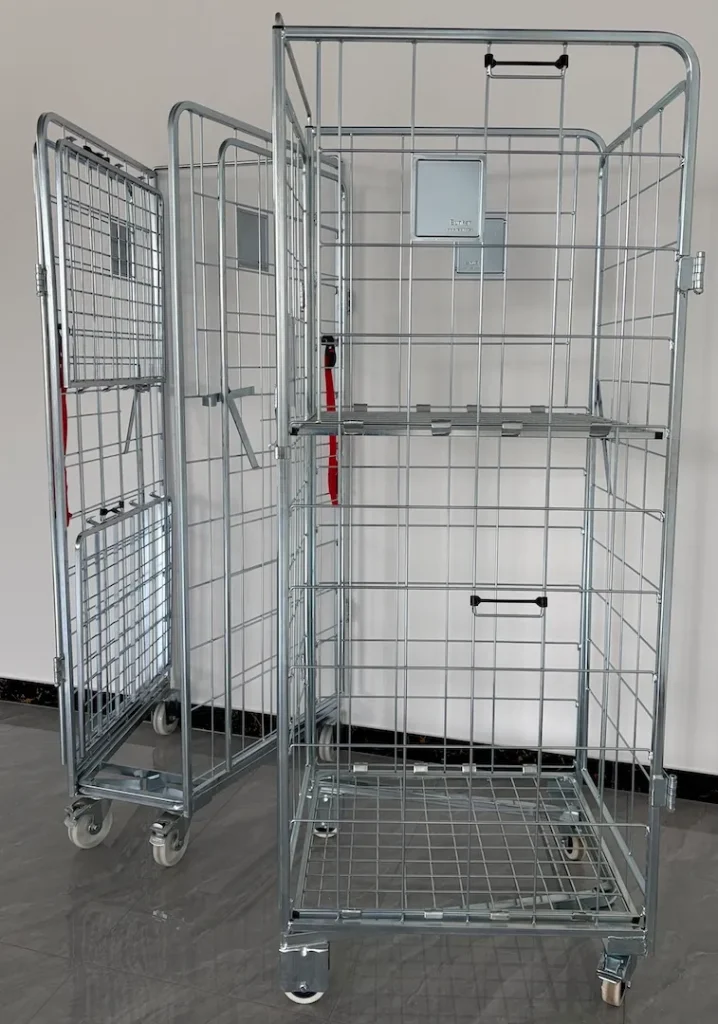
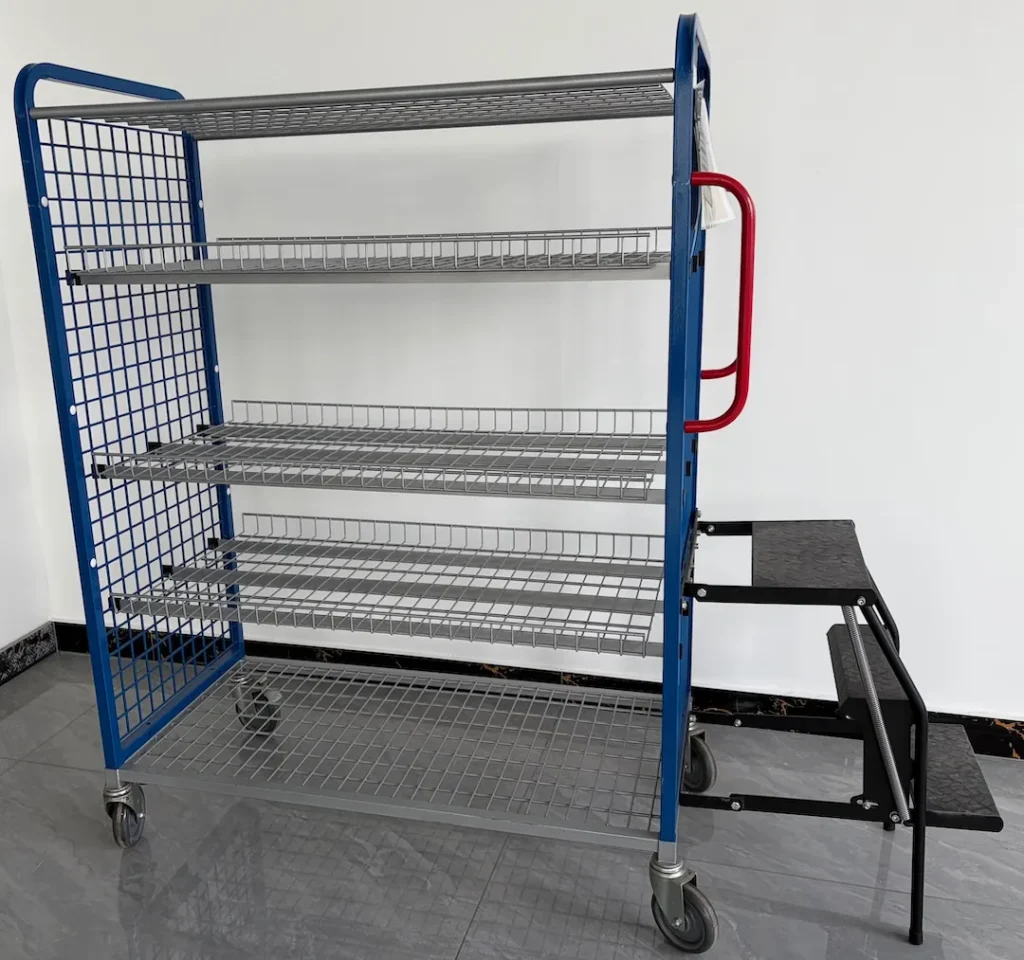
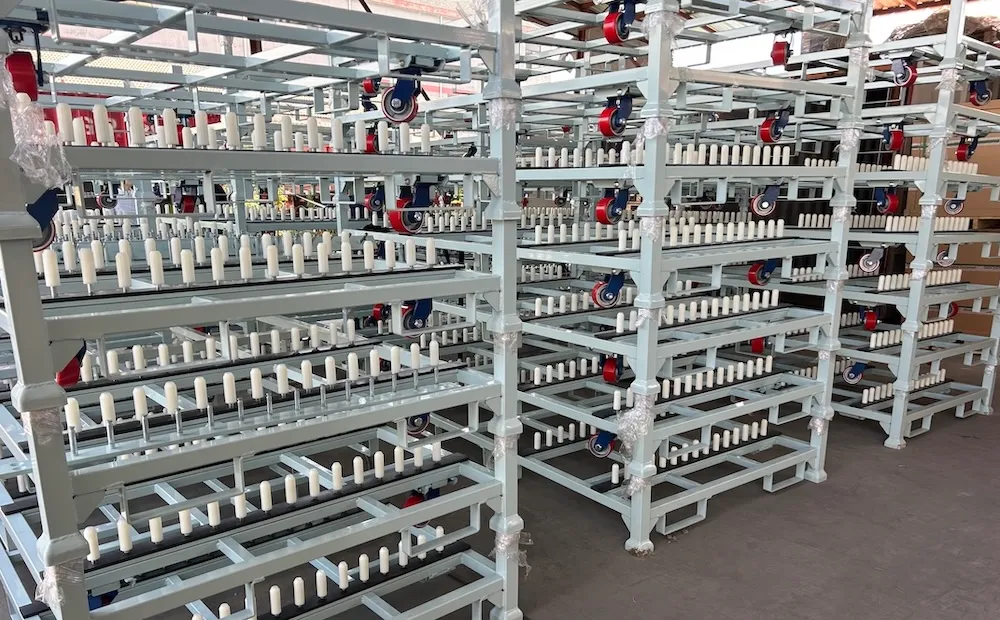
Chariots industriels personnalisés, construits pour imprimer, pour les OEM internationaux
Fabricant de chariots industriels personnalisés en Chine par rapport aux chariots sur catalogue
Un chariot de catalogue fixe la taille du pont et la capacité de charge; build-to-print permet à votre chargement, l'allée et le poste de travail définissent le chariot. Voir Chariots de manutention industrielle.
Châssis de chariot soudés, roulettes adaptées, et chariots complets de manutention
Nous fournissons des cadres nus et soudés, châssis à roulettes, ou chariots complets avec fardage et quincaillerie installés.
Chariots manuels, chariots industriels, et chariots de remorqueurs dans une seule portée OEM
Chariots manuels, les chariots de remorqueurs et les flottes imbriquées partagent un itinéraire à travers Soudage personnalisé & Services de fabrication; les véhicules motorisés et guidés par rail sont cotés séparément.


Types de chariots industriels sur mesure que nous fabriquons
Chariots à plate-forme personnalisés et chariots industriels à plat
Plateformes plates pour fourre-tout, boîtes et machines — voir Chariot à plateforme personnalisé - tandis qu'un Chariot Logistique Pliant s'effondre pour le fret de retour.
Étagère, plateau, trousse, cueillette, et chariots WIP
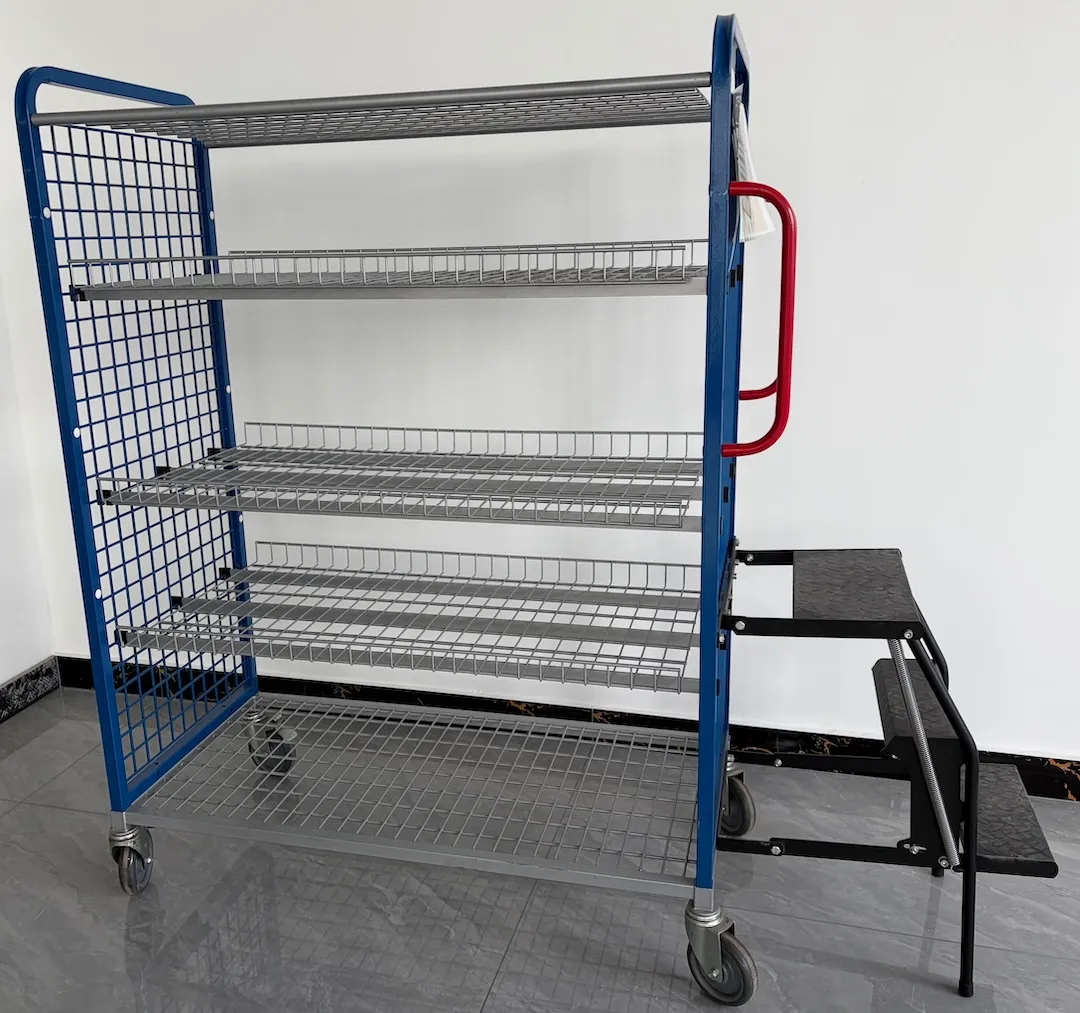
Chariots à plusieurs niveaux pour le kitting, picking et travail en cours, avec pas d'étagère défini par la géométrie de la pièce. Voir Chariots de cueillette de bas.
Côté ligne, étagère, cage, et chariots de sécurité
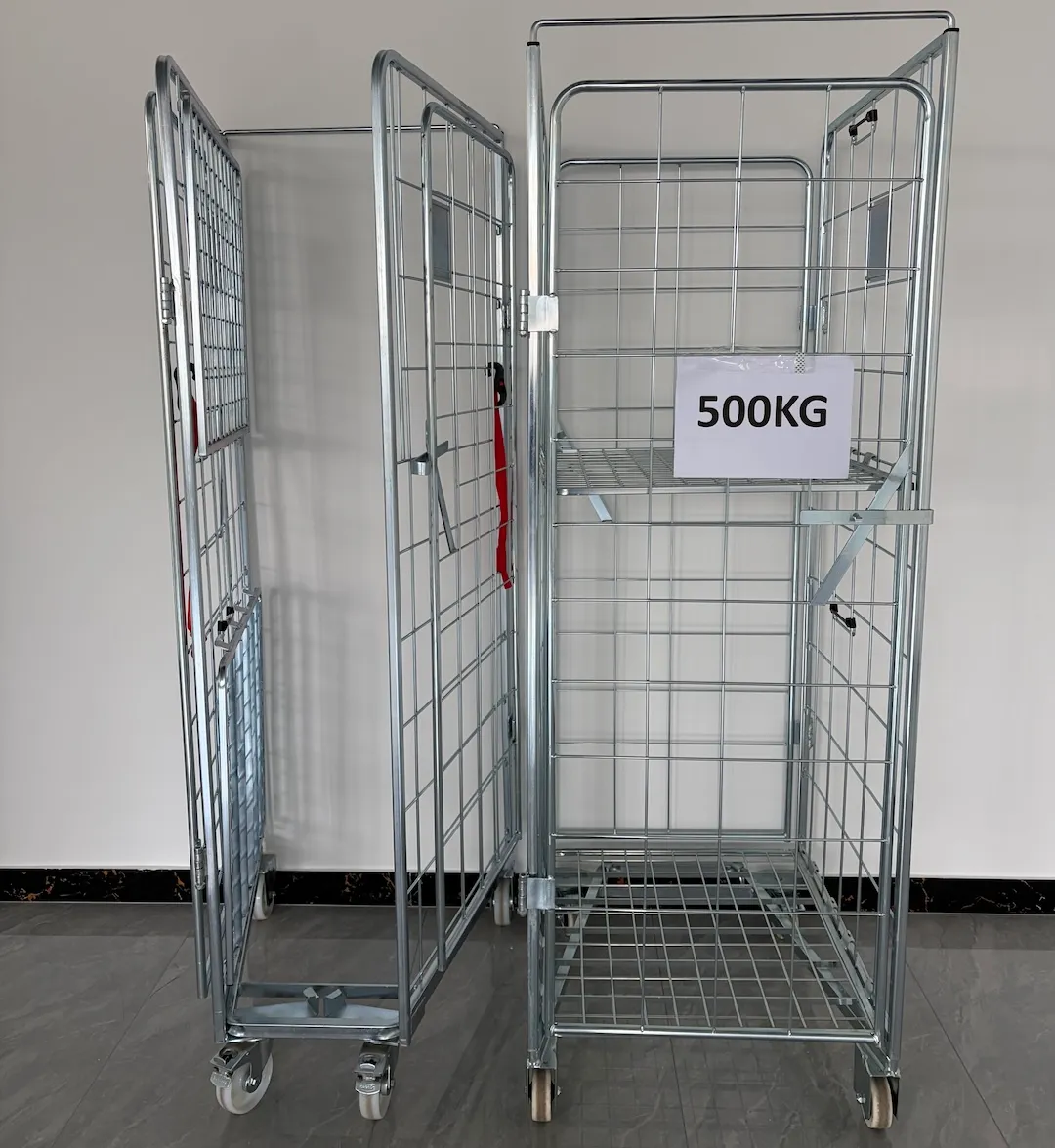
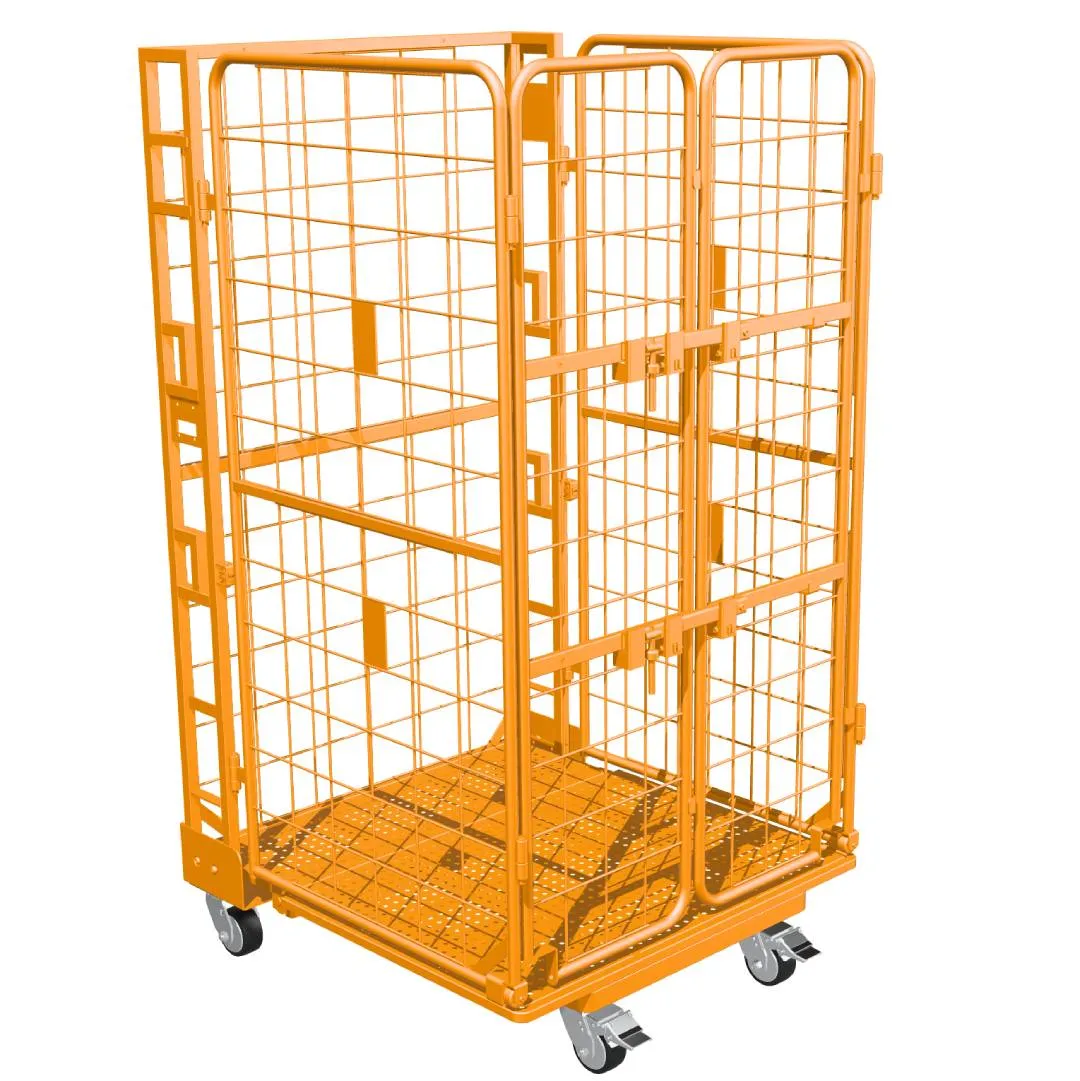
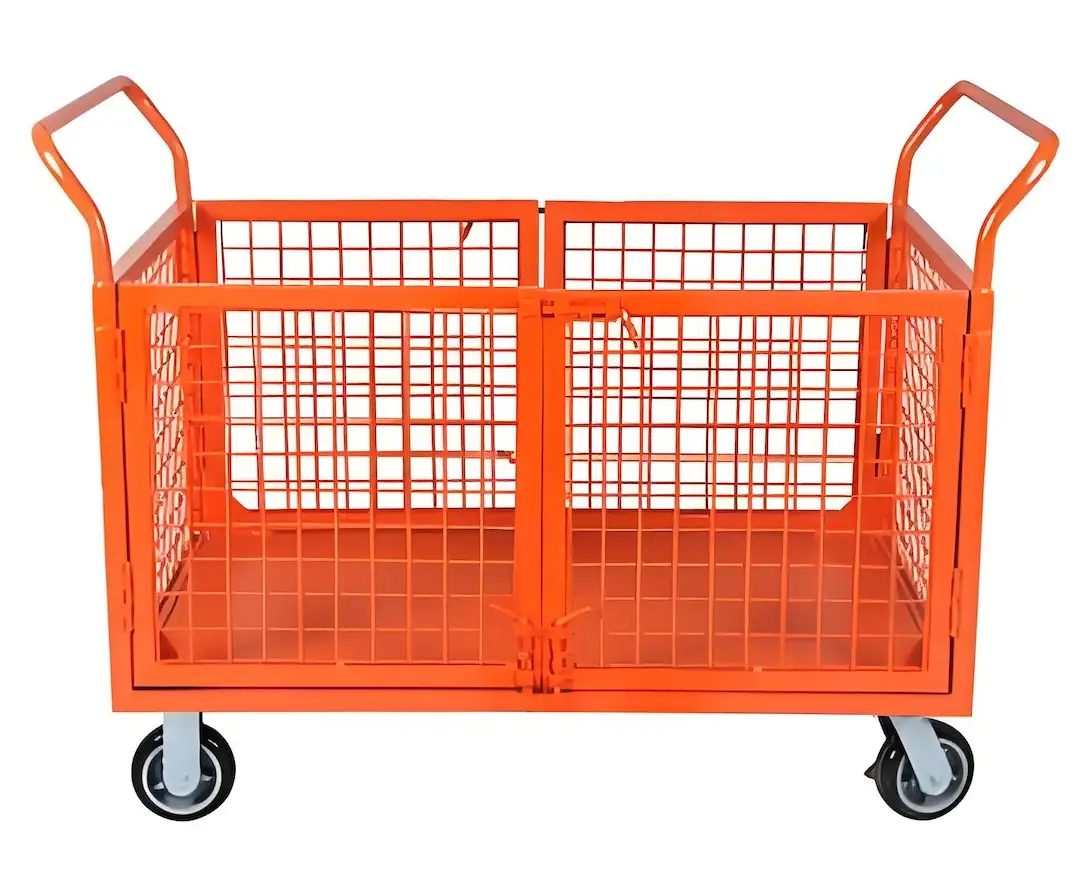
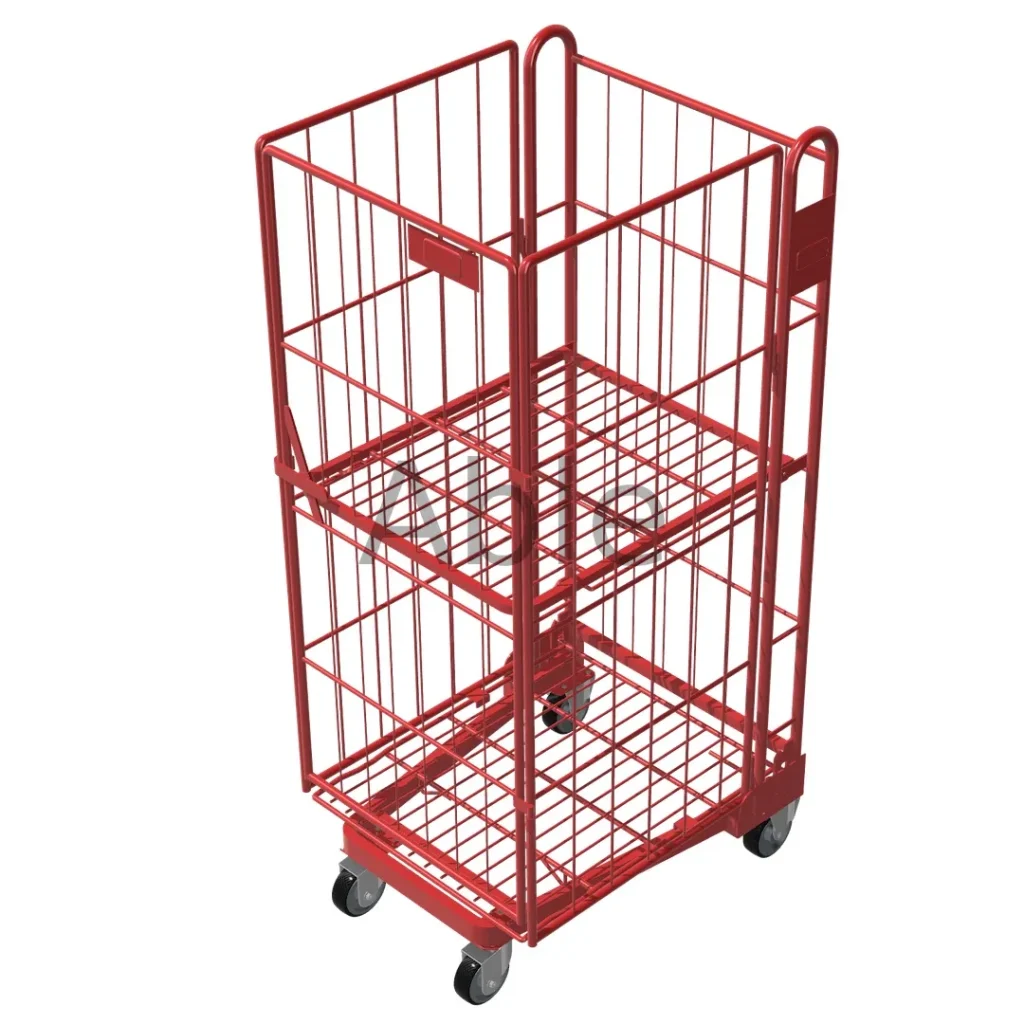
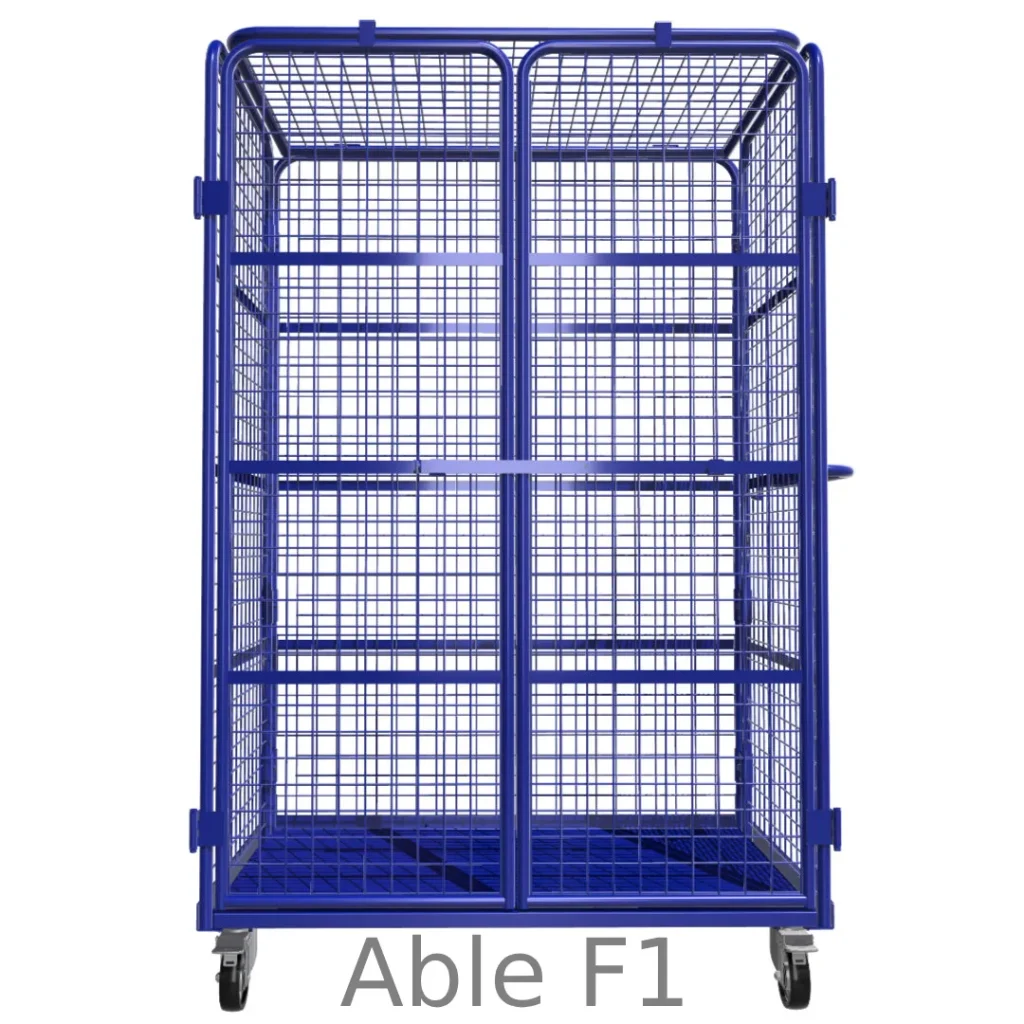
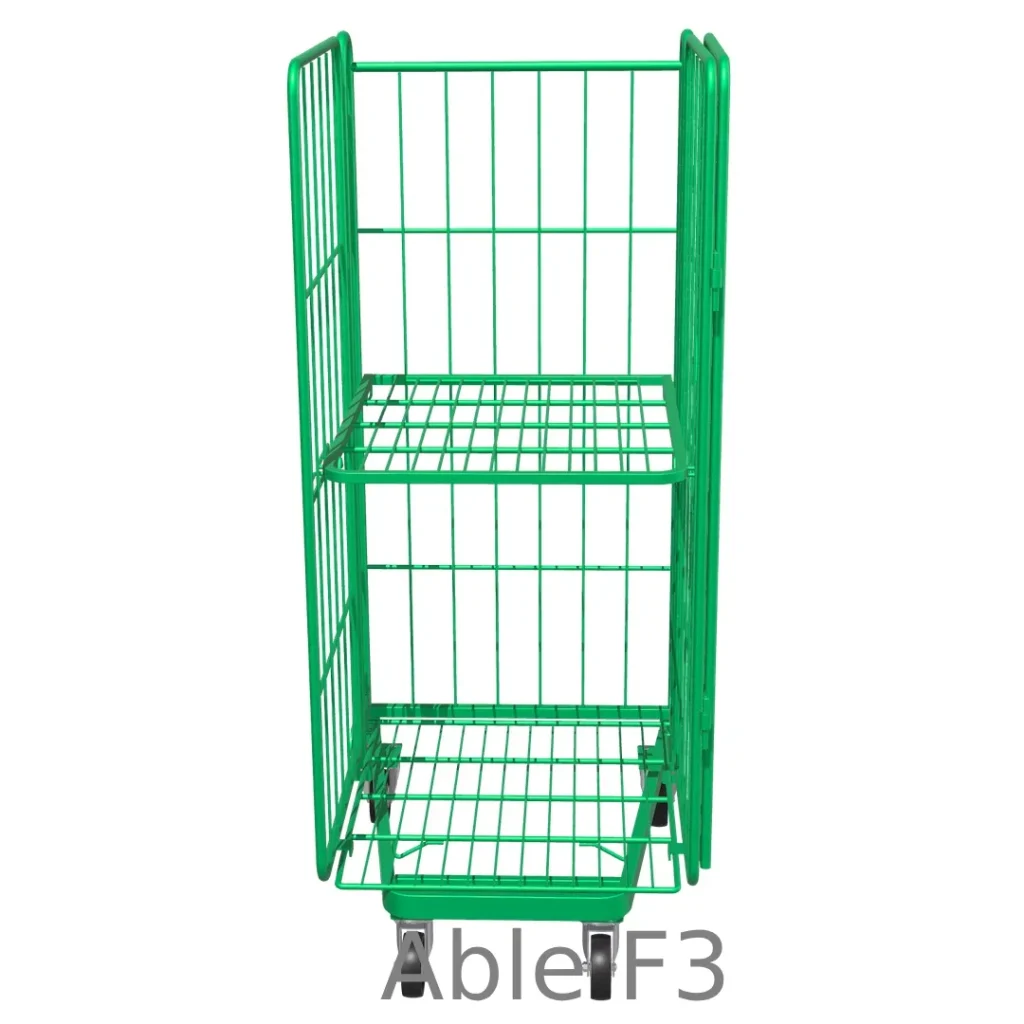
Contrôle des stocks fermés à l'aide Chariot à cage à rouleau logistique unités et Chariot roulant en treillis métallique construit avec des portails battants et des portes verrouillables.
Outillage, fixation, mouler, mourir, et chariots à matériel
Les charges ponctuelles élevées nécessitent un gabarit de pont plus lourd, espacement plus étroit des traverses et caractéristiques d'amarrage adaptées à un traversin.
Panneau, feuille, tuyau, bar, tambour, bobine, et chariots de manutention de rouleaux
Cadres en A, berceaux, cales et protection des bords, où la rétention compte plus que la surface du pont.
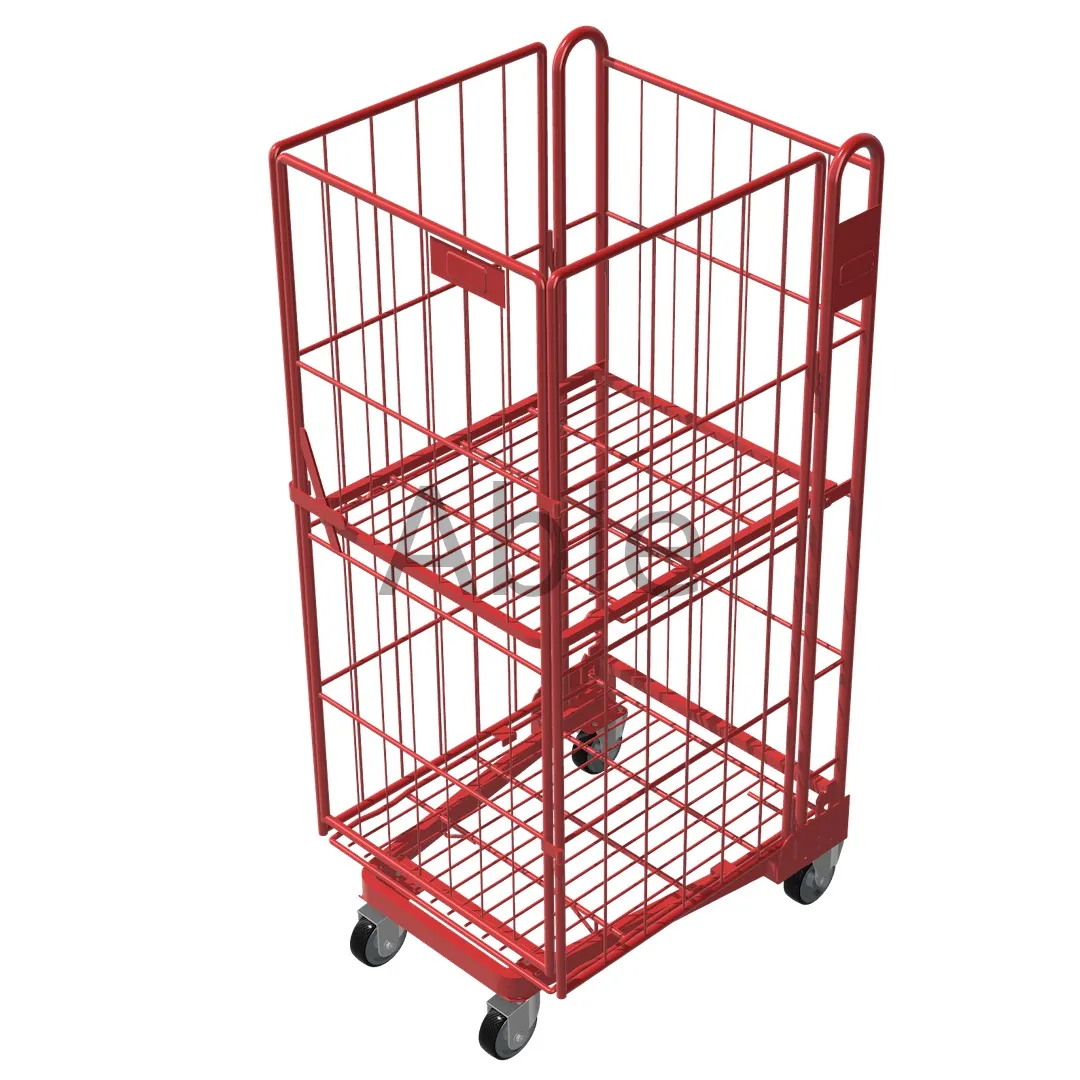


Concevez votre chariot en fonction de la charge, itinéraire, et poste de travail
Charge utile, tare, centre de gravité, et répartition de la charge
La précision des devis commence par la charge utile, tare et masse brute: 600 kg sur deux coussinets n'est pas 600 kg sur une terrasse.
Largeur d'allée, dégagement de la porte, tourner l'enveloppe, et hauteur de transfert
Envoyer l'allée la plus étroite, la plus petite porte et le virage le plus serré; une 50 L'inadéquation de la hauteur du pont en mm transforme un toboggan en ascenseur.
Type de sol, articulations, seuils, pente, et cycle de service
L’état du sol détermine le diamètre des roues plus que la charge utile; déplacements par quart de travail, jeu de roulements et de bande de roulement.
Chargement à la main, chariot élévateur, grue, convoyeur, ou table élévatrice
Le chargement d’un chariot élévateur nécessite des passages de fourches, chargement par grue points de levage vérifiés, et transfert par table élévatrice à hauteur de pont adaptée.
Plate-forme, étagère, étagère, cage, et conceptions de chariots spécifiques à la charge
Ponts, lèvres, étagères, plateaux à écoulement gravitaire, et niveaux réglables
Les decks sont livrés en plaque unie, plaque de contrôle, tôle perforée, métal déployé ou treillis, plus plateaux à gravité inclinés.
Fardage, nids, épingles, séparateurs, et interfaces de protection des pièces
Nids, épingles, la mousse et les inserts évitent d'endommager les pièces et restent remplaçables, alors porte des objets, ne jette jamais un cadre.
Cages grillagées, portes verrouillables, et chariots de contrôle des stocks
Les côtés en maille retiennent le stock en vrac tout en gardant la visibilité, avec portes de chute et dispositions de cadenas pour les stocks de grande valeur.
Imbriqué, empilable, et constructions de chariots démontables
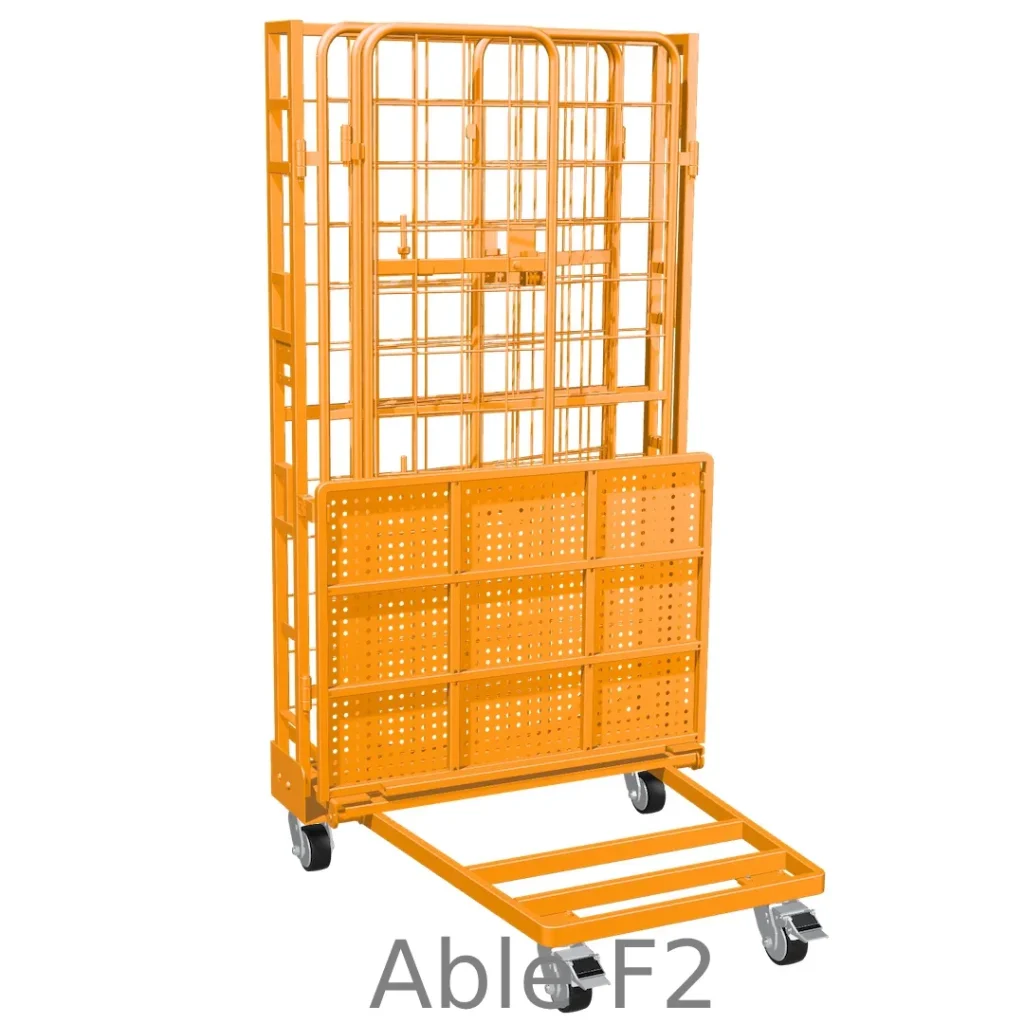
Nidification, les poteaux de gerbage et les montants démontables réduisent le volume du fret de retour, mais doit être conçu dès le début.


Roulettes, roues, pilotage, freins, et gérer les options
Deux rigides et deux pivotants, à quatre pivots, six roues, et dispositions de verrouillage directionnel
Deux voies rigides et deux voies pivotantes droites, quatre roulettes pivotantes manœuvrent en place, les modèles à six roues pivotent étroitement.
Polyuréthane, caoutchouc, nylon, phénolique, non marquant, et roues conductrices
Le polyuréthane convient à la plupart des centrales à béton, le caoutchouc coupe le bruit, et le nylon ou le phénolique supportent plus de charge avec une force plus élevée.
Freins de roue, roulettes à blocage total, freins centraux, et freins de stationnement
Un verrou pivotant n'est pas un frein de roue, et ni l'un ni l'autre ne tient de manière fiable sur un gradient. Les roulettes à verrouillage total maintiennent les deux.
Poignées de poussée, tirer les poignées, hauteur de la poignée, et autorisation de l'opérateur
Les poignées de poussée se situent généralement entre 900 et 1 100 mm; DANS 1757:2022 références hauteurs de timon de 700 à 1 000 mm, 1,100–1 300 mm en poussant.
ISO 22883, ISO 22884, DANS 12532, et sélection de roulettes ANSI ICWM
ISO 22883 et FR 12532 couverture utilisation manuelle ou tractée pour 1.1 SP (4 km/h), ISO 22884 à 4.4 SP, et ISO 22878 définit les méthodes de test. ANSI ICWM-2018 évalue les roulettes selon des tests d'endurance – charge statique quatre fois supérieure à la valeur nominale pendant une minute – de sorte que la capacité du chariot n'est jamais une simple arithmétique..
Chariots remorqueurs personnalisés et systèmes mère/fille
Chariots industriels tractables compatibles avec les remorqueurs existants
La plupart des programmes de remorqueurs sont des rénovations, alors envoyez votre modèle de tracteur et votre dessin d'attelage. Voir Chariots de remorqueurs personnalisés.
Barre, attelage, hauteur de remorquage, articulation, et rétention de sécurité
Définir le type de coupleur, hauteur de remorquage en charge, articulation, rétention secondaire et rangement du timon.
Direction centrale, quad-direction, et géométries des chariots de suivi des trains
Les chariots à direction centrale pivotent autour d'un essieu central; la géométrie à quatre directions maintient chaque chariot plus près de la trajectoire du tracteur.
Chariots mères, charrettes fille, et interfaces d'échange côté ligne
Les cadres mères transportent des chariots filles amovibles, les dimensions de capture et de verrouillage sont donc adaptées pour l'interchangeabilité de la flotte.
Chemin balayé par le train de remorquage, hors suivi, et masse maximale du train
Un essai de route chargé enregistre le chemin balayé, déviation par position et masse du train par rapport à la traction nominale de la barre d'attelage.
Charge utile, stabilité, déviation, et ingénierie des charges sur roulettes
Capacité nominale d'un chariot complet par rapport aux évaluations du catalogue de roulettes
Quatre roulettes nominales 500 kg chacun ne font pas un 2,000 chariot de kg; l'élément le plus faible gouverne.
Cadre, pont, essieu, attache, frein, et limiteurs de stabilité
Jauge de pont, espacement des traverses, sections de cadre, plaques à roulettes, attaches, les freins et la stabilité sont vérifiés séparément.
Charge ponctuelle, charge décalée, et cas à centre de gravité élevé
DANS 1757:2022 la vérification comprend des tests d'inclinaison statique à proximité 36% longitudinale et 23% latéral à vide, 18% à charge nominale, plus a 20 mm impact d'obstacle.
Déviation du pont, ensemble permanent, et validation du chargement d'épreuve
Les résultats du chargement de la preuve doivent indiquer le modèle de chargement, déformation et déformation résiduelle; l'affaissement du pont augmente également la force de poussée.
Partage des roues inégal et charges dynamiques sur les itinéraires
Le dimensionnement sur trois ou quatre roues est standard, donc un 400 kg bruts dont le chariot a besoin environ 135 kg par roulette.
Mesure ergonomique de la force push-pull
Initial, soutenu, tournant, et force de décollement sous des planchers définis
Rapporter la force de démarrage maximale et la force de roulement soutenue, avec charge, spécifications du sol et des roues indiquées.
ISO 11228-2 conditions d'évaluation de poussée et de traction
ISO 11228-2 et Amendement 1:2022 évaluer la poussée et la traction par la force, fréquence, distance et posture, pas une limite universelle.
Hauteur de la poignée, diamètre de roue, et options à faible résistance au roulement
Des roues plus grandes et une bande de roulement plus souple réduisent la force de démarrage; DANS 1757:2022 les limites se rapprochent 200 N pour commencer et 100 N pour garder un 500 kg camion roulant.
Réglable en hauteur, inclinaison, tourner, et chariots d'assistance au levage après examen de sécurité
Inclinaison, les chariots de rotation et d'assistance au levage suppriment la flexion mais ajoutent des points de piégeage, donc un examen des risques documenté s'applique.
Acier, acier inoxydable, aluminium, et options de chariot ESD
Cadres de chariots industriels robustes en acier au carbone et Q355
Q235B offre environ 235 Rendement minimum MPa par rapport 355 MPa pour Q355B, permettant souvent des parois plus minces et une tare inférieure. Voir Services de soudage de métaux personnalisés.
304, 304L, et chariots lavables et nettoyables en acier inoxydable 316L
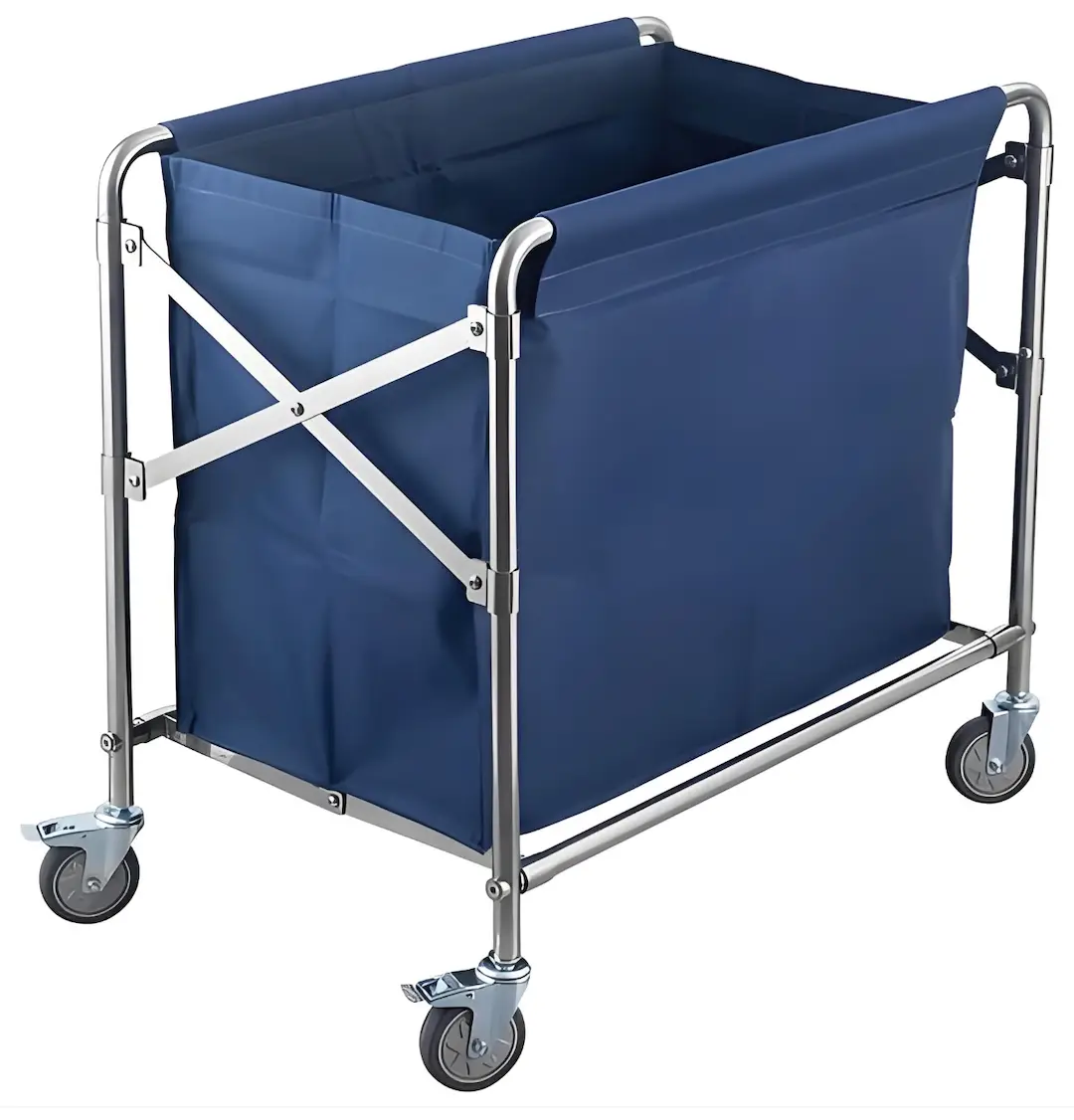
Utilisations en devoir de lavage 304, 304L ou 316L via Services de soudage de l'acier inoxydable; les flottes textiles et hôtelières apparaissent sous Chariots de blanchisserie personnalisés.
Chariots industriels légers en aluminium et constructions mixtes
L'aluminium réduit la masse de tare à une déflexion plus élevée pour la même section - voir Services de soudage de l'aluminium.
Roulettes conductrices, chemins de liaison, et chariots ESD testés en termes de résistance de surface
Les chariots ESD nécessitent un chemin continu de la surface de chargement au sol, communément spécifié dans la bande 10⁵ – 10⁹ Ω.
Revêtement en poudre, galvanisation, passivation, et conception lavable
Manteau en poudre, peinture humide, coat électronique, et zingage pour chariots en acier
Le revêtement en poudre convient aux flottes intérieures, la peinture humide convient aux cadres surdimensionnés, et le zingage protège le matériel - voir Traitement de surface métallique.
Galvanisation à chaud, ventilation, drainage, et protection contre la corrosion en extérieur
Le service extérieur évolue vers la galvanisation à chaud ou une norme ISO 12944 système, avec trous d'aération et de drainage conçus en.
Passivation, électropolissage, et contrôle des crevasses pour chariots en acier inoxydable
La nettoyabilité de l'acier inoxydable dépend du profil de soudure et de la conception des fissures; le décapage et la passivation restaurent la couche passive.
Masquage des supports de roulettes, fils de discussion, freins, et points de mise à la terre
Visages de roulettes, trous taraudés, les freins et les points de liaison sont masqués afin que le matériel soit à plat et que les chemins ESD restent conducteurs.
Capacité du chariot et performances de production vérifiées
Enveloppe du chariot étape par étape, masse, et limites de revêtement
La taille maximale du panier est définie par la plus petite étape: fixation, usinage, cabine de revêtement, caisse ou conteneur.
Charge utile mesurée, force de poussée, alignement, et cas d'interchangeabilité
Les preuves utiles sont mesurées: charge utile avec déviation, force de poussée sur un sol indiqué, et essais de croisement.
Réponse au devis, rendement au premier passage, livraison à temps, et paramètres de garantie
Chaque pourcentage a besoin d'un point, dénominateur et définition avant de pouvoir comparer les fournisseurs; voir Contrôle de qualité.
Divulgation des processus internes par rapport aux partenaires approuvés
Nous divulguons les opérations internes, y compris Services de découpe laser et Usinage CNC & Services de soudage, et quels processus font appel à des partenaires agréés.
Chariots industriels personnalisés par secteur et application
Automobile, VE, et chariots de kitting côté ligne
Kitting à cycle élevé, chariots de séquençage et de modules de batterie, généralement sous forme de flottes contrôlées avec des interfaces interchangeables.
Machinerie, outillage, entrepôt, et chariots logistiques
Chariots d'outillage pour ateliers d'usinage et préparation de commandes, flottes d'arceaux et de plates-formes, aux côtés Assemblages soudés sur mesure et Cadres soudés sur mesure.
Électronique ESD, équipement alimentaire en acier inoxydable, et chariots pour zones propres
Chariots enrouleurs et de circulation avec chemins de résistance définis, plus des chariots en acier inoxydable pour la nourriture et les zones contrôlées.
Outillage aérospatial, énergie, batterie, et chariots d'entretien
Chariots à outils pour composants protégés, chariots de manutention sur batterie, et chariots MRO avec tiroirs et quincaillerie de sécurité.
Comment évaluer un fabricant de chariots industriels personnalisés en Chine
Charger, itinéraire, roulette, attelage, et contrôles de capacité de test
Demandez comment les données de charge et de routage deviennent une spécification de roulettes et de châssis., et quels tests sont exécutés en interne.
Fixation, alignement, Fai, et preuve de la charge utile du chariot complet
Demandez un rapport du premier article avec les valeurs mesurées et le calcul derrière la plaque de charge utile.
Interchangeabilité de la flotte, des pièces de rechange, et preuve d'emballage d'exportation
Pour les flottes, confirmer les résultats des croisements, numéros de pièces de rechange et chariots par caisse et par 40 conteneur de pieds.
Fichiers d'appel d'offres: dessins, charge utile, données d'étage, interface de remorqueur, et la quantité
Envoyer des dessins ou des fichiers STEP, charge utile, données d'étage, interfaces de remorqueurs, finition et quantités; les pièces de détail relèvent Pièces de tôle de soudage OEM.
FAQ sur les chariots industriels personnalisés
Quelle capacité de charge dois-je spécifier pour mon cas d'utilisation
Spécifiez les attentes statiques et dynamiques, et si les charges sont uniformes ou ponctuelles. Si vous n'êtes pas sûr, partagez le type de charge utile et le poids maximum et nous vous proposerons une évaluation sûre.
Dois-je choisir une cage roulante, Cueillette, Pliant, ou à plat
La cage de sécurité prend en charge une logistique sécurisée, les chariots de préparation optimisent la vitesse de réapprovisionnement, les conceptions pliantes réduisent les coûts de stockage et de transport, et les plateaux traitent des charges volumineuses avec un accès de chargement simple.
Quelle est la meilleure configuration de roulettes pour les allées étroites
Quatre roulettes pivotantes maximisent la maniabilité, alors que 2 rigide + 2 le pivot améliore la stabilité du suivi. Le meilleur choix dépend de la largeur de l'allée, poids de la charge, et les habitudes des opérateurs.
Comment sélectionner la bonne finition de surface pour la résistance à la corrosion
Le revêtement en poudre fonctionne bien pour une utilisation en intérieur; une protection à base de zinc ou de l'acier inoxydable peut être meilleure pour une exposition plus élevée à la corrosion. Partagez l’environnement et nous vous recommanderons des options.
Pouvez-vous faire correspondre la conception et la marque de notre panier existant
Oui. Nous pouvons faire correspondre la géométrie de base et les caractéristiques fonctionnelles et ajouter des plaques de marque, couleurs, et fonctionnalités d'identification pour la cohérence de la flotte.
Demandez un devis de chariot industriel personnalisé
Envoyer des dessins, ou décrire la charge, itinéraire et poste de travail. Nos ingénieurs renvoient des commentaires sur la fabricabilité, recommandations de roulettes et de charge utile, et tarification avec les facteurs de coûts identifiés. Ajouter le port de destination et l'Incoterm — FOB, CIF ou DDP — pour une comparaison des coûts au débarquement. Contactez Able Hardware à Suzhou.
Demander un devis
Suite Chariots industriels personnalisés: