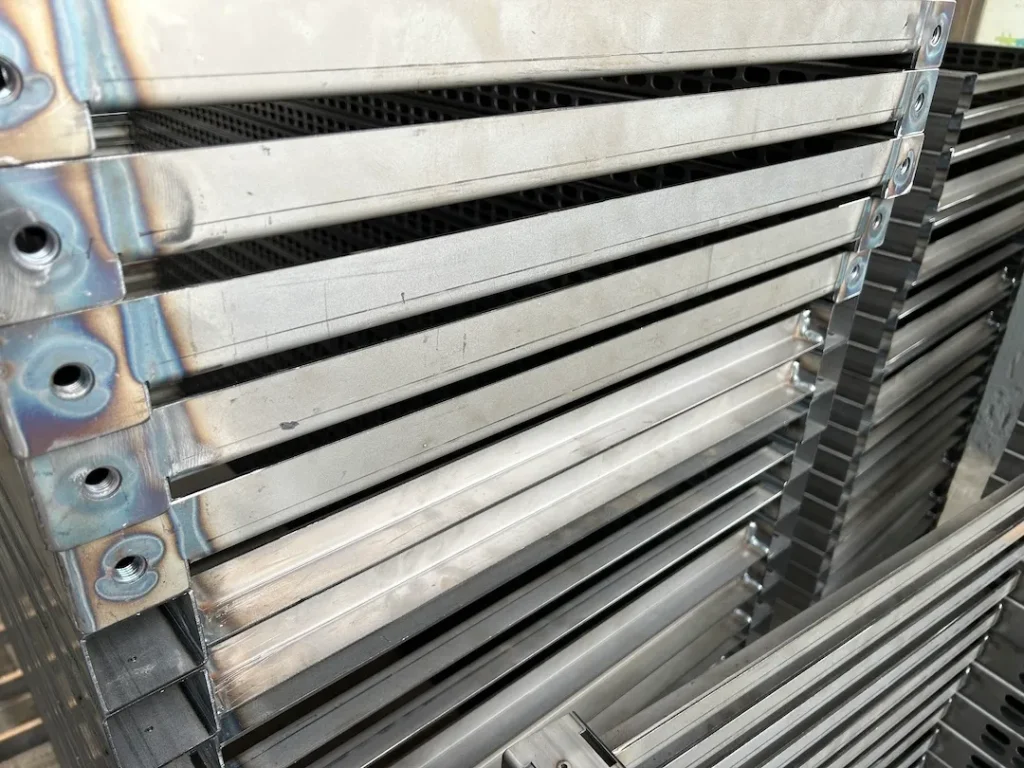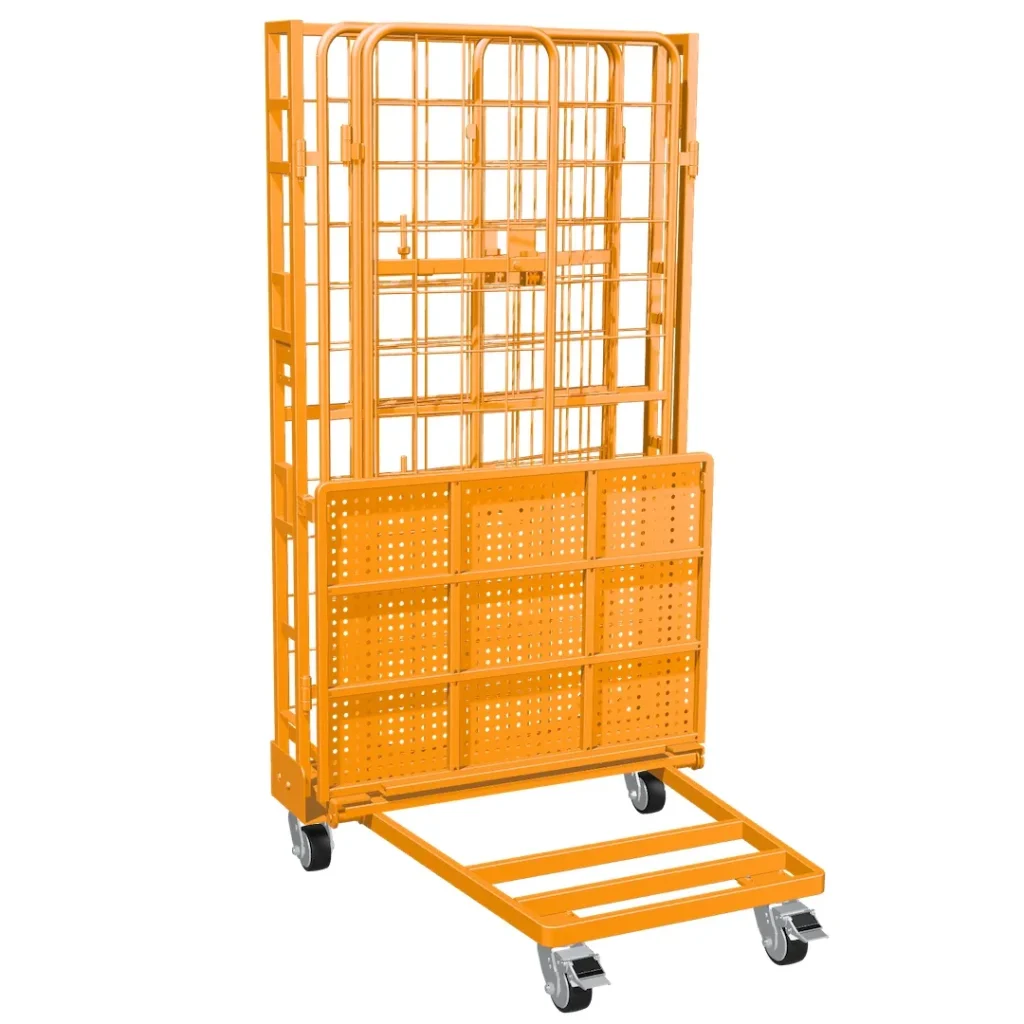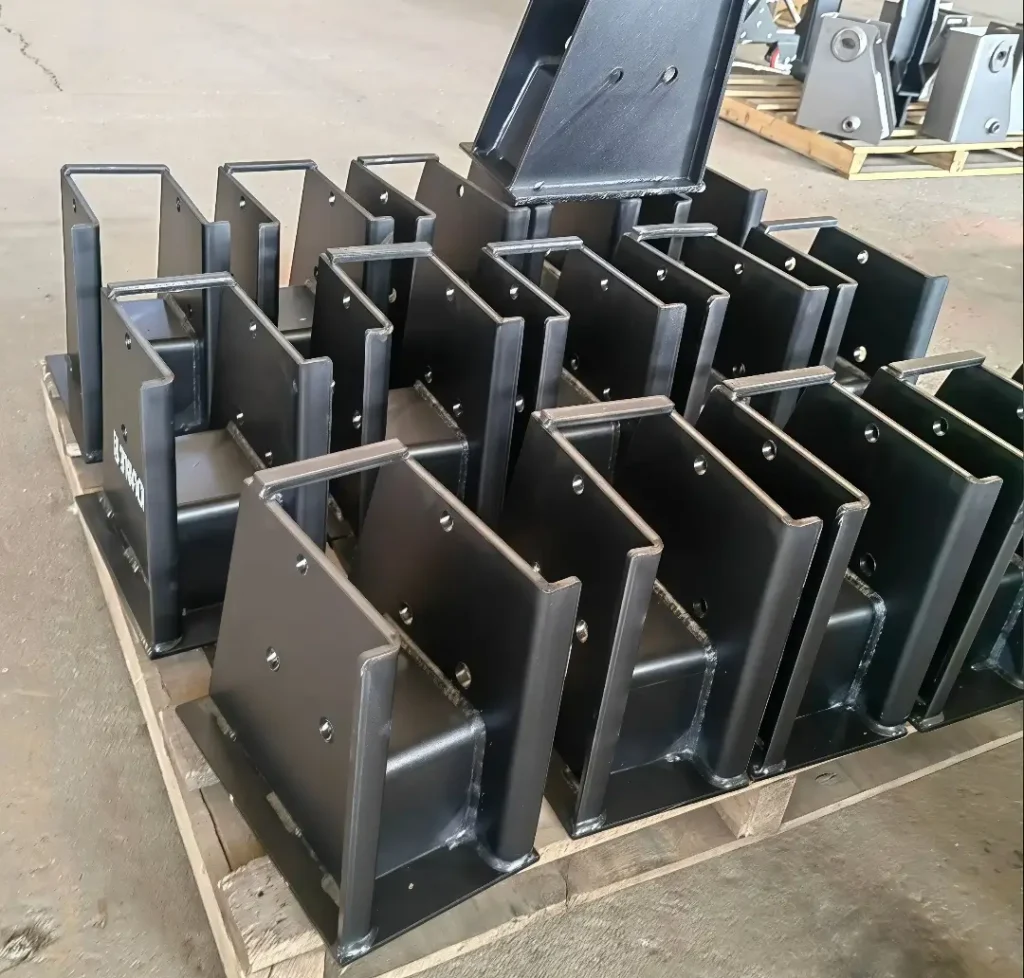
Able Hardware is an OEM welding sheet metal parts factory in Suzhou, Jiangsu — an industrial base where 175 Fortune Global 500 companies operate. We build to your print, nicht zu einem Katalog.
Inhaltsverzeichnis
What an OEM welding sheet metal parts factory delivers for build-to-print buyers
A build-to-print supplier reads your drawing, flags what is unbuildable before cutting steel, and returns a documented part. Unsere Schweißfertigungsdienstleistungen combine cutting, Bildung, Schweißen, finishing and inspection under one roof, removing the multi-vendor handoffs behind most dimensional disputes on imported weldments.
Custom welded sheet metal parts vs catalog hardware
Catalogue brackets force you to redesign around them. Custom welded parts consolidate several fasteners and stampings into one weldment, typically cutting in-house assembly labour 20–40% and deleting inventory lines. The trade-off: every dimension must be defined on the drawing.
Single parts, welded sub-assemblies, and multi-level kits
We quote three build levels. Single formed-and-welded parts (1–4 components) suit high-mix prototyping. Sub-assemblies of 5–30 components — our most common order profile — ship finished and inspected. Multi-level kits combine our Kundenspezifische Schweißbaugruppen with purchased hardware under one part number.
Materials and grades for custom welded sheet metal parts
Grade selection drives weldability, finish behaviour and cost more than any other RFQ variable.
Carbon steel options for MIG welded frames and brackets
Carbon steel is the value benchmark: roughly 30–50% lower material cost than equivalent 304 rostfrei, with faster MIG deposition. It is the default for painted machine bases, guards and Kundenspezifische geschweißte Rahmen.
Q235 and Q355 welded sheet metal fabrication
Q235B (broadly comparable to ASTM A36 / S235JR) gives ~235 MPa minimum yield and welds without preheat in normal gauges. Q355B raises minimum yield to ~355 MPa, often allowing 6 mm plate to drop to 5 mm. Equivalency must be approved on the drawing, never assumed by the factory.
Stainless steel for TIG welded enclosures and housings
Where corrosion, washdown or appearance matters, unser Schweißdienstleistungen für Edelstahl deliver low-distortion seams with controlled heat tint. Post-weld cleanup on stainless typically adds 10–25% to weld-cell labour versus painted steel.
SS304, 304L, and 316L grade selection for welded service
304 covers most indoor enclosures. 304L and 316L cap carbon near 0.03%, resisting sensitisation in heavily welded joints — the choice when welded parts meet chlorides. 316L adds molybdenum for marine service at roughly 1.3–1.6× the cost of 304.
Aluminum sheet metal welding for lightweight assemblies
Aluminium cuts mass about 65% against equal-volume steel, valuable for handheld covers, robot end effectors and air-freighted enclosures. Unsere Aluminiumschweißdienstleistungen use pulsed MIG and AC TIG with strict oxide removal and dedicated tooling to prevent steel contamination.
5052 und 6061 welded aluminum parts capability notes
5052-H32 forms and welds well — our first recommendation for bent-and-welded enclosures. 6061-T6 is stronger but loses temper in the heat-affected zone, typically 30–40% local strength reduction without post-weld heat treatment. Keep joints away from highly loaded sections.
Galvanized and coated sheet welding considerations
Zinc vaporises far below steel’s melting point, so coating is ground back 10–15 mm each side of the joint and bare zones receive zinc-rich touch-up. For full protection, welding bare steel then hot-dip galvanising outperforms welding pre-galvanised stock.
Material certificates, heat traceability, and approved equivalents
We supply 3.1-type mill test reports and maintain heat traceability from goods-in to packing list when specified. If a grade is unavailable, we submit a written equivalency request with chemical and mechanical comparison — never a silent substitution.
Sheet thickness ranges that drive cut, Biege, and weld capability
Thickness sets your process route, minimum flange and realistic tolerance band.
Dünnes Blatt, standard sheet, light plate, and heavy plate bands
Working bands: thin sheet 0.5–1.2 mm (cosmetic panels, spot-welded covers); standard sheet 1.2–3.0 mm, covering over half of OEM enclosure work; light plate 3–6 mm (Klammern, Basen); medium plate 6–12 mm (load-bearing weldments). Above 12 mm, preheat and joint preparation are engineered per part.
Thickness by material for laser cutting and press brake forming
Cutting windows differ by alloy: carbon steel spans the widest range, stainless is limited by nitrogen-assist edge quality, aluminium by reflectivity and dross. Confirm the per-material window for your part with our engineering team.
Thickness limits that change welding process and heat input
Below roughly 1.0 mm, WIG, laser or resistance spot welding replaces MIG to control burn-through. From 1.2–6 mm, MIG dominates on productivity. Above 6 mm, multi-pass technique, bevel preparation and interpass temperature control enter the quotation.
Product types buyers source from a welded sheet metal OEM
Custom welded brackets, Montageplatten, and base plates
Drawing-driven parts in 2–10 mm steel with tapped bosses, weld nuts or studs. Batches of 20 zu 5,000 pieces are routine; repeat orders reuse the original fixture and ship faster.
Welded sheet metal enclosures, Chassis, and electrical cabinets
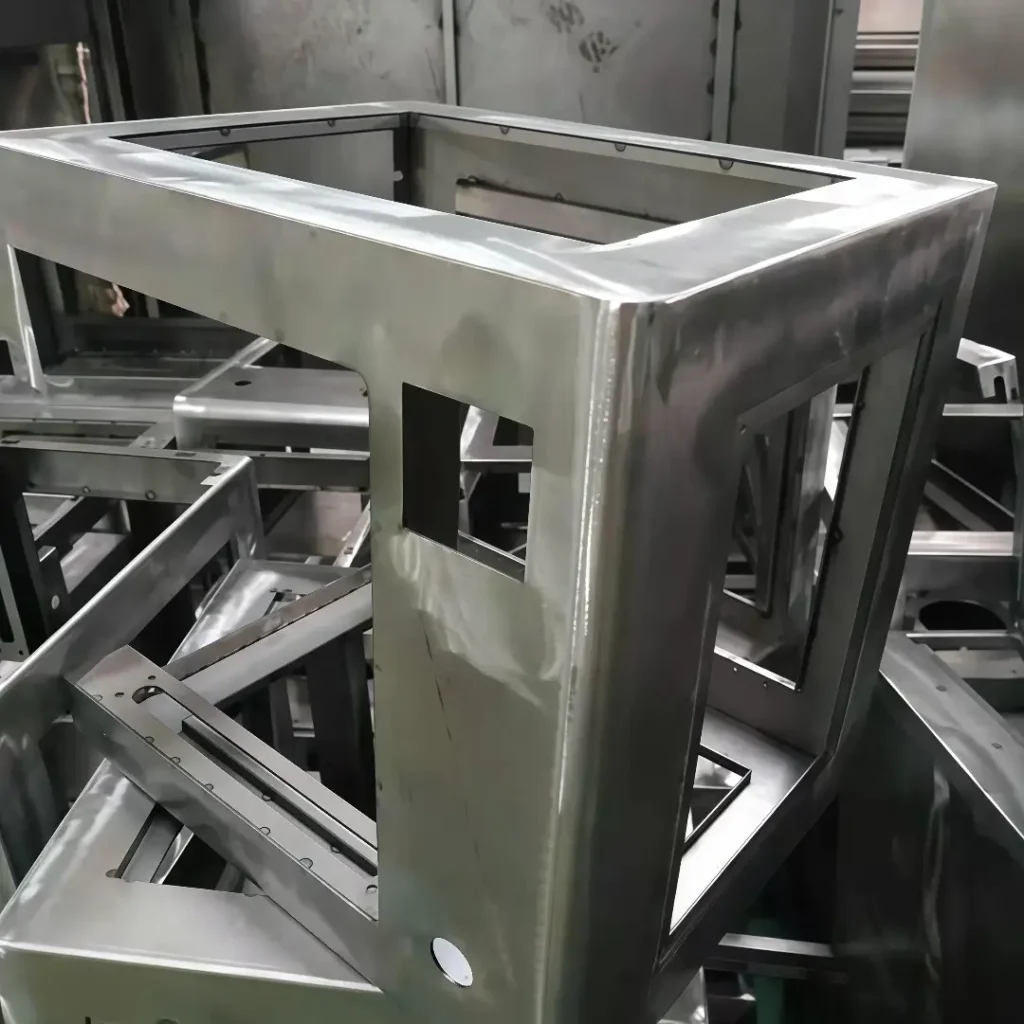
Continuous or stitch-welded seams ground flush on visible faces, with grounding studs, gasket channels and connector cutouts. State ingress-protection intent so seam continuity is planned before fabrication.
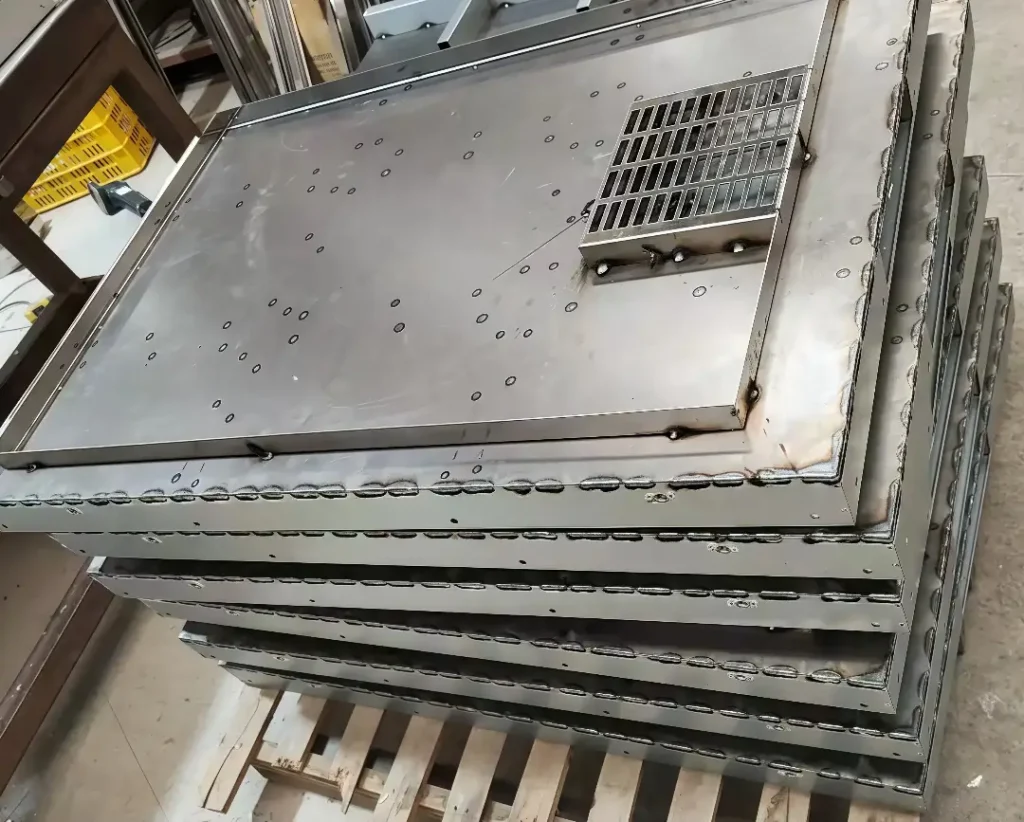
Maschinenrahmen, Wachen, covers, and industrial housings
Weldments combining sheet, plate and tube — the class most affected by distortion and squareness. Sheet metal frames exceeding roughly 1,500 mm in any axis benefit from a dedicated welding fixture.
Skid frames and structural sheet-plate hybrid assemblies
Heavier weldments for equipment bases, transport skids and mobile platforms, einschließlich Industriewagen, where caster plate position, load rating and flatness under load control acceptance.
Fabrication process route from blank to finished weldment
Laser schneiden, Stanzen, and nesting for export production
Fibre laser cutting delivers repeatable profiles and hole patterns; punching adds louvres, dimples and extruded threads economically. Nesting efficiency typically runs 70–85% and moves piece price directly — a minor outline change can recover several percent of yield.
Press brake bending, forming features, and flat-pattern control
Flat patterns use material- and tooling-specific K-factors, validated on a first-article bend. Respect minimum flange height (about die width ÷ 2) and keep holes at least 2.5× thickness from the bend line.
MICH, WIG, spot, and robotic welding for sheet metal assemblies
Process is matched to material, thickness and cosmetic class. Kundenspezifische WIG-Schweißdienste handle thin stainless and aluminium, MIG covers structural steel, und Kundenspezifische Laserschweißdienste minimise distortion where fit-up is tightly controlled.
Filet, groove, stitch, continuous, and spot weld applications
Continuous welds seal and carry load but add heat and cost. Stitch welds — 25 mm at 100 mm pitch, for example — cut weld time 50–70% on non-sealing joints. Specify intent: sealed, structural or cosmetic.
Secondary CNC machining after welding for datum-critical features
When bore position or mating-face flatness must hold tight tolerances, we machine after welding so datums are cut into the finished weldment rather than into parts that later move.
In-house vs outbound surface finishing workflows
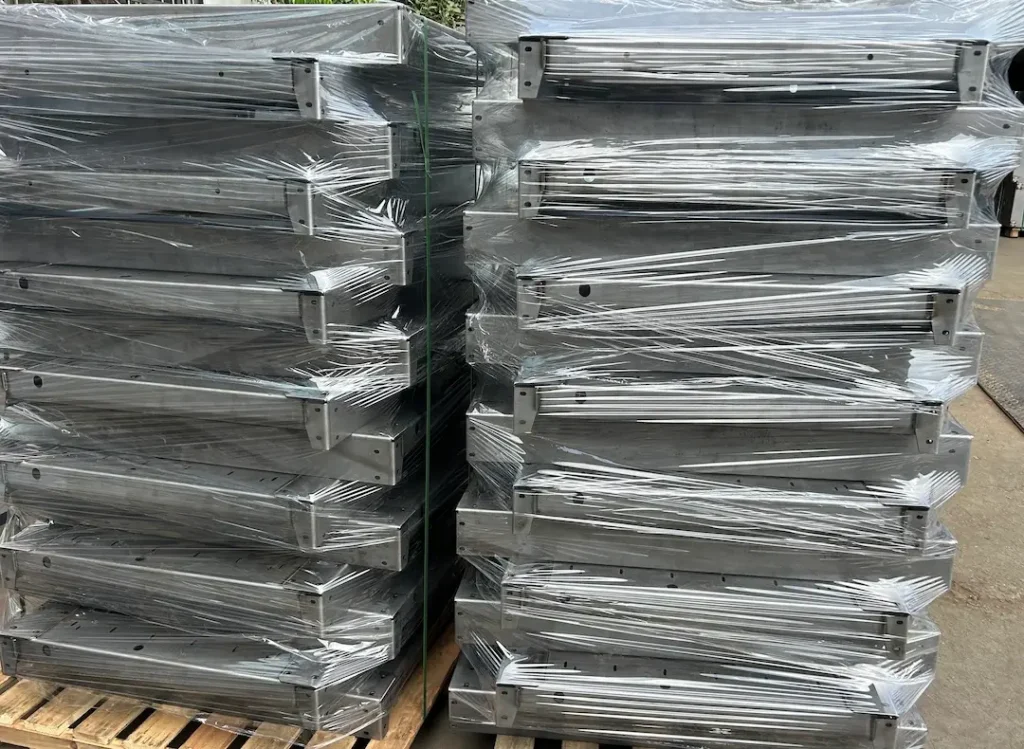
Powder coating runs in-house on controlled lead times. Hot-dip galvanising, anodising and specialist plating go through audited partners; allow an additional 3–7 days.
Weld Specifications We Support for OEM Sheet Metal Parts
Gemeinsame Typen, weld size, Kehle, and cosmetic grind class
We work to butt, fillet, Schoß, Ecke, T and plug joints with leg length and throat called out on the drawing. Define a cosmetic class — as-welded, dressed, or ground flush — because full dressing can add 15–30% to weld-cell hours.
Distortion control, Befestigung, and weld map documentation
Balanced sequencing, back-stepping, tack strategy and purpose-built fixtures hold assemblies in tolerance. Recurring assemblies receive a weld map identifying joint ID, process and inspection point, keeping results repeatable.
WPS, PQR, and welder qualification when standards are invoked
Where AWS, ISO or customer codes are contractually invoked, welding procedures and welder qualifications are established against that standard before production. Umfang, testing and cost are agreed during technical review.
Drawing symbols and acceptance criteria that avoid ambiguity
Clear weld symbols, stated limits for undercut and porosity, and a defined inspection level prevent rework. Ambiguous drawings cause most first-article rejections on imported weldments, so we raise queries in writing before release to production.
Surface finish options for OEM welded sheet metal parts
Pulverbeschichtung, nasse Farbe, and e-coat for carbon steel fabrications
Powder coating at 60–100 µm film thickness covers most industrial requirements. Wet paint suits very large assemblies; e-coat gives uniform coverage on complex geometry at higher volumes.
Zinc plating and hot-dip galvanizing size and design limits
Zinc plating at roughly 5–12 µm suits small and threaded parts. Hot-dip galvanising gives far heavier protection but needs vent and drain holes in enclosed sections and can distort thin or long assemblies.
Brushed, passivated, and pickled finishes for stainless weldments
Specify grain direction for brushed finishes. Pickling and passivation remove heat tint and restore the passive layer — essential where corrosion resistance, not appearance alone, is the requirement.
Maskierung, film thickness, and corrosion test requirements
Themen, Lagerbohrungen, grounding points and sealing faces are masked to drawing. Film thickness is gauge-verified; salt-spray or adhesion testing is performed when contractually specified.
Qualitätskontrolle, Inspektion, and testing for export weldments
Unsere Qualitätskontrolle system runs from incoming material to final packing.
Incoming material verification and first-article inspection
Grad, thickness and certificate are verified at goods-in. A dimensioned first-article report is issued for every new part and every drawing revision before batch release.
Visual weld inspection plus PT, Mt, Ut, or RT when specified
Visual inspection is 100% Standard. Farbeindringmittel, Magnetpartikel, ultrasonic or radiographic testing is applied when the drawing or applicable code requires it, with scope agreed in advance.
CMM and dimensional reports for GD&T-controlled assemblies
Gd&T features are measured and reported. Achievable tolerances depend on part size, geometry and process route, so critical dimensions are confirmed during drawing review.
Leak testing and coating inspection for enclosures and finished parts
Sealed enclosures can be pressure or leak tested to a defined criterion. Beschichtungsdicke, gloss and adhesion are checked against the finish specification.
ISO 9001 and customer documentation packs for international buyers
Export documentation includes certificate of conformance, material certificates, FAI and inspection records, with export-grade crating and VCI protection.
Industrial applications for China OEM welded sheet metal parts
Industrial machinery, automation frames, and equipment covers
Maschinenbasen, robot cell fencing, conveyor supports and access covers, where squareness and hole position govern integration.
Telecom cabinets, Gestelle, and electronics chassis fabrication
Rack-compatible hole patterns, Erdungskontinuität, ventilation and consistent cosmetic quality across repeat batches.
HVAC housings, energy storage enclosures, and EV equipment parts
Housings, mounting trays and battery-adjacent enclosures where sealing, coating durability and repeatability drive acceptance.
Agriculture, material handling, and medical equipment covers
Outdoor-durable coated weldments, trolley structures, and stainless covers for equipment needing cleanable surfaces.
Request a quote for custom OEM welding sheet metal parts
Send 2D and 3D files with material grade, Dicke, Schweißsymbole, Endspezifikation, kritische Toleranzen, quantity and target Incoterm. Prototype quotations are typically returned within 24–48 hours of drawing review, with engineering feedback on cost drivers before you commit. Contact Able Hardware in Suzhou to start your welded sheet metal project.