Table of Contents
Able Hardware is a custom metal welding services manufacturer in Suzhou, Jiangsu, China. We weld carbon steel, stainless steel, and aluminum parts to your drawings, weld symbols, and acceptance criteria — prototypes through repeat OEM production, with cutting, welding, machining, and finishing under one roof.
Custom Metal Welding Services for International OEM Buyers
Prototype, Contract, and Repeat Production Welding Models
Volume decides tooling, not sales preference: hand-jigged builds suit low quantities, while fixtures and robotic cells suit repeat programmes.
What a China Custom Metal Welding Supplier Should Deliver With Each Order
Expect a stated acceptance standard, the procedure reference used, material certificates where traceability applies, a dimensional report, and export packing.
MIG, TIG, Robotic, Laser, and Spot Welding Processes We Operate
Custom MIG and MAG Welding for Carbon Steel and Volume Parts
GMAW is the volume workhorse for carbon steel, depositing roughly 3–6 kg/h in spray or pulsed modes against 0.3–0.8 kg/h for manual TIG.
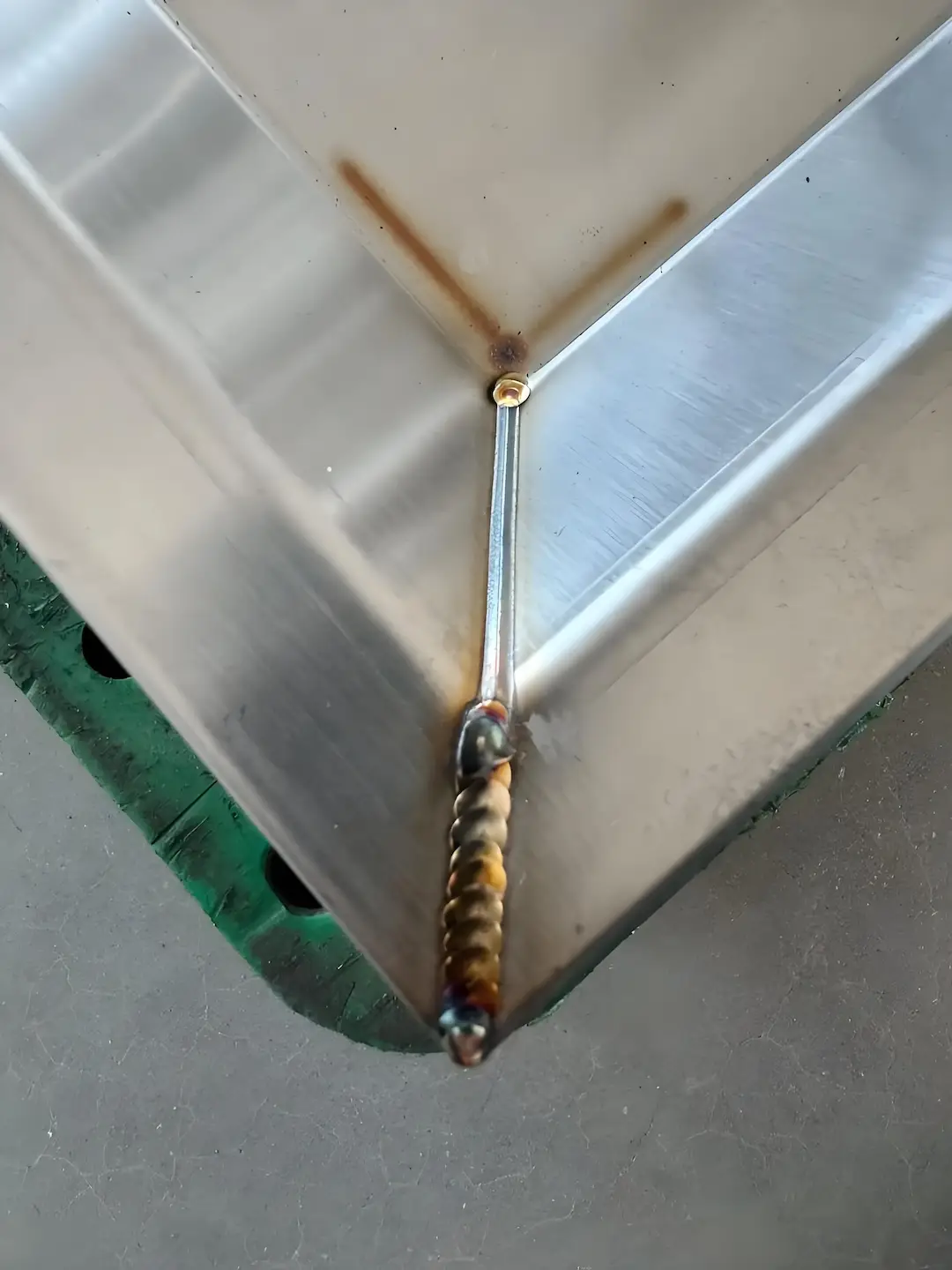
Custom TIG Welding for Thin Gauge, Stainless, and Cosmetic Seams
TIG suits thin gauge and visible seams, but on a structural steel frame it usually buys cost rather than strength — see Custom TIG Welding Services.
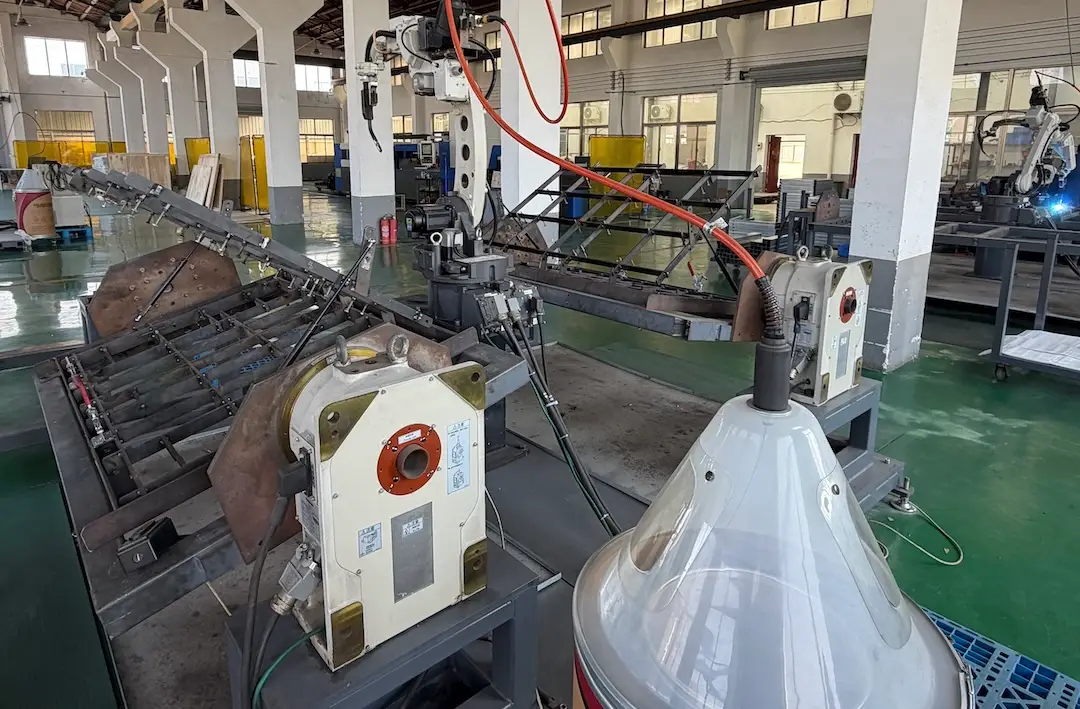
Robotic and Automated Welding for Repeat OEM Geometry
Robotic cells lift arc-on time from the 25–40% typical of manual stations toward 50–80%, but need blanks accurate enough that no gap needs improvising.
Custom Laser Welding for Low-Distortion Precision Joints
Laser welding keeps heat input and distortion low, and needs joint gaps typically within 10% of thickness — see Custom Laser Welding Services.
Spot, Stud, and FCAW Welding for Specialist Assemblies
Spot welding joins lapped sheet fast without sealing the joint, stud welding fixes fasteners from one side, and FCAW handles heavier sections.
How We Select the Welding Process for Your Material, Thickness, and Volume
Selection follows material, thickness, joint access, cosmetic class, inspection scope, and annual volume. State a preference and we confirm it or explain the trade-off.
Carbon Steel, Stainless Steel, and Aluminum Welding
Carbon and Structural Steel Welding: Q235, Q355, A36, and S355
Q235B and Q355B cover most structural work; Q355 lifts minimum yield from about 235 to 355 MPa, often allowing thinner sections and smaller fillets.
Stainless Steel Welding: 304, 304L, 316, and 316L
Stainless expands about 17 µm/m·K against carbon steel’s 12, with a third of the thermal conductivity, so it distorts more — see Stainless Steel Welding Services.
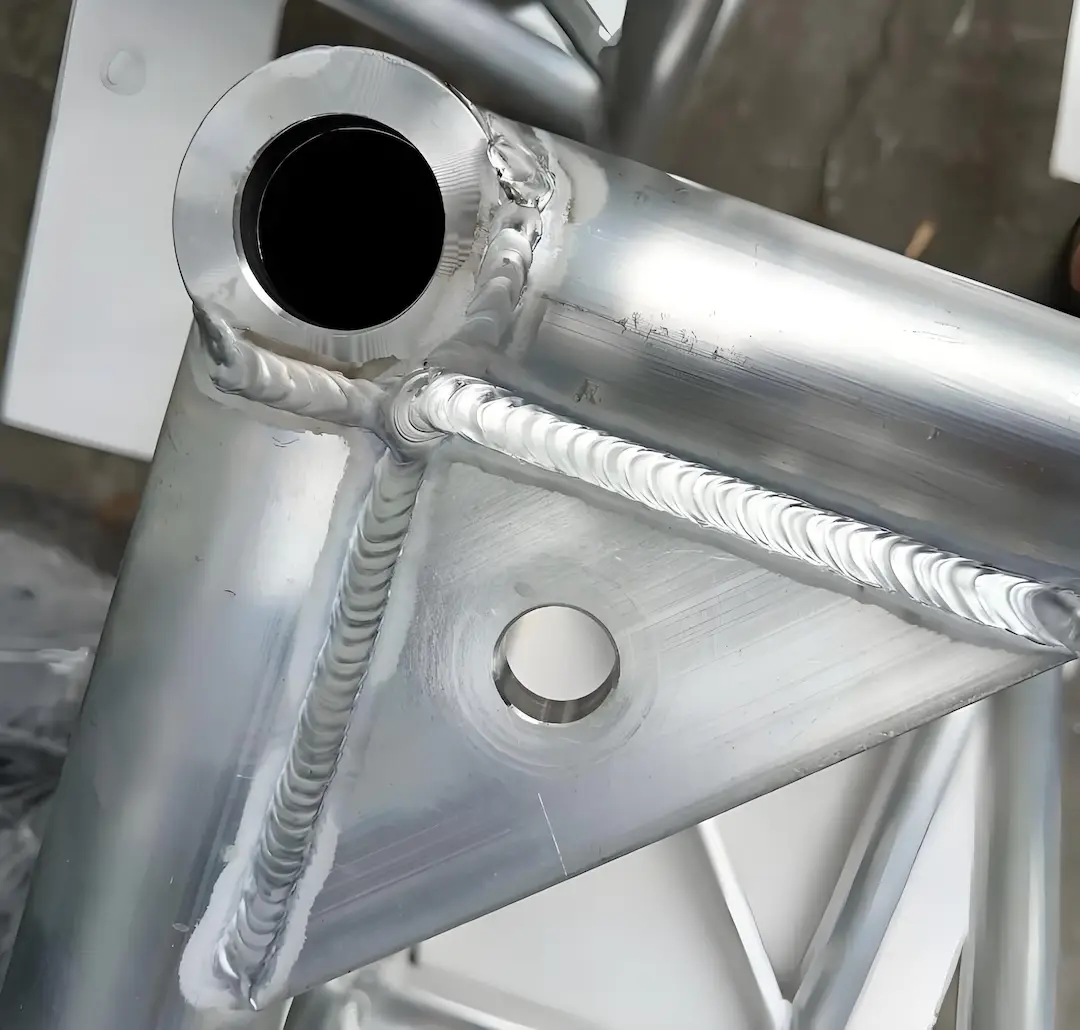
Aluminum Welding: 5052, 5083, and 6061
Aluminum saves roughly 65% of mass at equal volume, but its oxide melts near 2,072 °C and 6061-T6 softens in the heat-affected zone — see Aluminum Welding Services.
Galvanized, Coated, and Dissimilar Metal Welding Constraints
Zinc coating is removed at the weld zone and repaired afterwards; dissimilar pairings get engineering review for dilution and galvanic risk.
Sheet, Plate, Tube, and Mixed-Stock Custom Weldments
Sawn tube length variation drives frame diagonal error more than welding does, so blanks are controlled first — see Laser Cutting Services.

Custom Welded Parts and Assemblies We Manufacture
Welded Frames, Machine Bases, Chassis, and Skids
Frames, machine bases, and skids dominate our volume, judged on flatness and hole position — see Custom Welded Frames.
Welded Enclosures, Cabinets, and Sheet Metal Housings
Thin-gauge housings need lower heat input and stitch welding, with panel flatness governing acceptance — see OEM Welding Sheet Metal Parts.
Welded Brackets, Guards, Racks, Carts, and Subassemblies
Brackets, guards, racking, and Industrial Trolley Carts ship with hardware fitted; multi-part Custom Welded Assemblies arrive under one part number.
Structural, Cosmetic, Leak-Tight, and Fatigue Duty Classes
Duty class drives proof: weld size for structural work, samples for cosmetic, a named test method and threshold for leak-tight, toe profile for fatigue.
From Drawing to Approved Custom Weldment
Drawing, Weld Symbol, and DFM Review Before Production Welding
We read weld symbols to ISO 2553 or AWS A2.4, flag joints without torch access, and question datums welding cannot hold.
WPS, PQR, and Welder Qualification to ISO 9606 and AWS D1.x
Where a code or customer specification applies, joints run under a qualified procedure with supporting records, welded by personnel qualified for that process, material group, thickness, and position.
Fit-Up, Fixturing, Weld Sequence, and Distortion Control
Root gap variation drives weld volume and rework more than arc speed. Heat input Q = (U × I × 60) / (v × 1000) × k means halving travel speed roughly doubles thermal load.
Production Welding, Inspection, and Documented Release
In-process fit-up and weld-size checks precede final inspection; features tighter than the distortion budget are machined afterwards — see CNC Machining & Welding Services.
Weld Size, Cycle Time, and Custom Welding Cost
Weld Metal Mass and Arc Time per Metre of Fillet Weld
An equal-leg fillet is about z²/2 in section: in steel, roughly 0.163 kg per metre at 6 mm and 0.289 kg at 8 mm.
Why Specifying an 8 mm Fillet Instead of 6 mm Adds About 78% Cost
That step adds about 78% more weld metal, arc time, and heat input per joint, while effective throat and load capacity rise only about 33%.
Continuous, Intermittent, and Seal Welds: When Each Is Justified
Swapping a continuous 6 mm fillet for 25 mm runs at 100 mm pitch deposits about a quarter of the metal where sealing and fatigue permit.
Fixture and Robotic Welding Break-Even Quantity for OEM Volume
Break-even is fixture cost divided by cell rate times minutes saved per unit; robotic cells usually need a few thousand stable units yearly.
Design Changes That Measurably Reduce Custom Welded Part Price
Right-size fillets, use intermittent welds, design tab-and-slot self-location, loosen non-functional tolerances, assign quality levels per joint, and consolidate grades.
Weld Inspection, Acceptance Criteria, and NDT
ISO 5817 Quality Levels B, C, and D for Custom Metal Welds
Level B is stringent, C intermediate, D moderate, with undercut limits tightening roughly fourfold from D to B. Assign levels per joint, not per part.
Visual, Dimensional, PT, MT, UT, RT, and Leak Testing Scope
Visual and dimensional checks are baseline; penetrant, magnetic particle, ultrasonic, and radiographic testing apply to nominated joints when your drawing or code requires them.
First Article Inspection, Weld Maps, and Production Sampling Plans
Weld maps link joint IDs to process, size, and result. A 1,000-piece lot at general level II samples 80 pieces, where AQL 2.5 accepts five defectives.
Cosmetic Weld Classes: As-Welded, Blended, and Ground Flush
As-welded means spatter removed, blended means a uniform dressed transition, and ground flush merges the seam with parent metal as finishing labour climbs steeply.
Verified China Factory Welding Capabilities
Process, Material, and Thickness Qualification Matrix
We prefer a matrix — process against material, thickness, and position, with its procedure reference and verification date — to claims of welding everything.
Maximum Weldment Envelope, Mass, and Welding Cell Capacity
Fixture table, crane, booth, and container door limit buildability, not floor area, so send envelope and mass with your enquiry.
Welding First-Pass Yield, Repair Rate, and On-Time Delivery Data
Ask for the numerator, denominator, and period behind any quality figure; we define repair rate as repaired weld length divided by deposited length.
Manual Versus Robotic Repeatability and Cycle-Time Measurements
For candidate parts we compare cycle time, arc-on time, and weld-size scatter between manual and robotic welding using the same gauge and datum fixture.
Quality Documents Supplied With Custom Welded Parts
Mill Certificates, EN 10204 Traceability, CoC, and FAI Reports
EN 10204 3.1 certificates tie each heat to your parts, alongside conformity certificates, dimensional and first-article reports — see Quality Control.
WPS Coverage, Weld Maps, NDT Reports, and Inspection Packs
Documentation is a costed scope, so name it at RFQ stage: procedure references, weld maps, inspection and NDT reports, nonconformance records.
ISO 3834, AWS D1.1, and EN 1090 Scope Limits We Will Not Overstate
ISO 9001 is not procedure qualification, ISO 3834 is not product certification, and EN 1090 CE marking needs certified production control with a stated execution class.
Industries and Applications We Weld For
Industrial Machinery, Automation, and Equipment Frames
Machine bases, guards, and conveyor structures live on flatness and hole position — see Welded Frames & Carts for Industrial Equipment.
Material Handling, Warehouse Carts, Racks, and Logistics Structures
Carts, stillages, and racking trade precision for load rating and impact durability — see Material-Handling Carts & Racks for Warehouse & Logistics.
Energy Storage, EV Charging, Telecom, and HVAC Enclosures
These enclosures prioritise panel flatness, cosmetic seams, specified sealing, and grounding continuity across years of repeat orders.
Agricultural, Construction, Fitness, and OEM Equipment Parts
Outdoor equipment lives on coating durability, so weld-zone preparation matters as much as the weld — see Metal Surface Treatment and Welded Skids, Frames & Kitting Carts for Automotive & Agricultural.
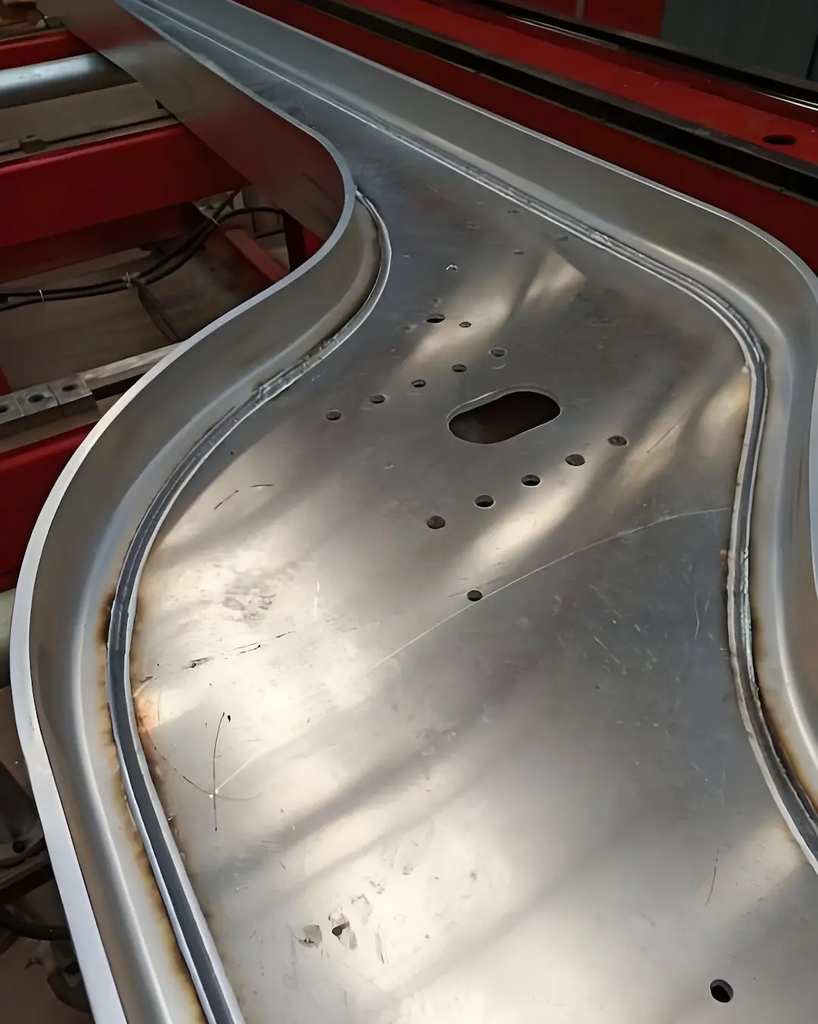
How to Choose a Custom Metal Welding Services Supplier in China
Factory Versus Trading Company: Capability Checks That Matter
Owning cutting, welding, machining, and finishing — see Custom Welding & Fabrication Services — means owning the tolerance stack rather than passing blame between vendors.
Questions Engineers and SQEs Should Ask Before Awarding Work
Which procedures cover my joint? Who is qualified to weld it? How is fit-up controlled? What is measured before shipment, against which standard?
Factory Audits, Video Tours, NDAs, and Third-Party Inspection
On-site audits, live video walkthroughs, and third-party inspection are welcome; drawings, models, and fixture designs stay confidential under NDA.
China Versus Local Welding Cost: Landed-Cost Factors to Model
Model landed cost, not piece price: tooling, inspection, finishing, packing, freight, duty, inventory. Sea LCL bills the greater of one cubic metre or 1,000 kg.
Frequently Asked Questions About Custom Metal Welding Services
What Information Do You Need for a Custom Welding Quote?
A drawing or 3D model, exact grade and thickness, prototype and annual quantities, acceptance standard, tolerance framework, finish, documentation, and destination.
How Much Do Custom Metal Welding Services Cost From China?
Welded parts price on joint count and time rather than mass, so weld volume, fit-up minutes, finishing, inspection, and tooling amortisation set the number.
What Tolerances Can Custom Welded Parts Realistically Hold?
ISO 13920 suits welded construction better than ISO 2768: across 400–1,000 mm, class B allows about ±3 mm and class C about ±6 mm.
Do I Need a WPS, PQR, or Certified Welders for My Part?
Only where a code, customer specification, or safety duty requires it; structural, fatigue-loaded, and regulated work usually does, general machinery work often does not.
Which Welding Process Is Best for My Metal and Thickness?
TIG for thin stainless, aluminum, and visible seams; MIG/MAG for carbon steel volume; robotic for long repeat seams; laser for tight precision joints.
Request a Quote for Custom Metal Welding Services
Send drawings or 3D models with grade, thickness, quantities, acceptance standard, finish, and destination. Our engineers review weld symbols, datums, and joint access, raise questions before quoting, and return a costed proposal with manufacturability notes. Drawings are reviewed under NDA on request — contact Able Hardware to have your custom welded parts quoted.
Request A Quote
More Custom Metal Welding Services :