Table of Contents
Custom Welded Assemblies
Able Hardware manufactures custom welded assemblies in Suzhou, Jiangsu, roughly 100 km from the Port of Shanghai. We build to your drawings and deliver weldments that meet your specifications and pass incoming inspection.
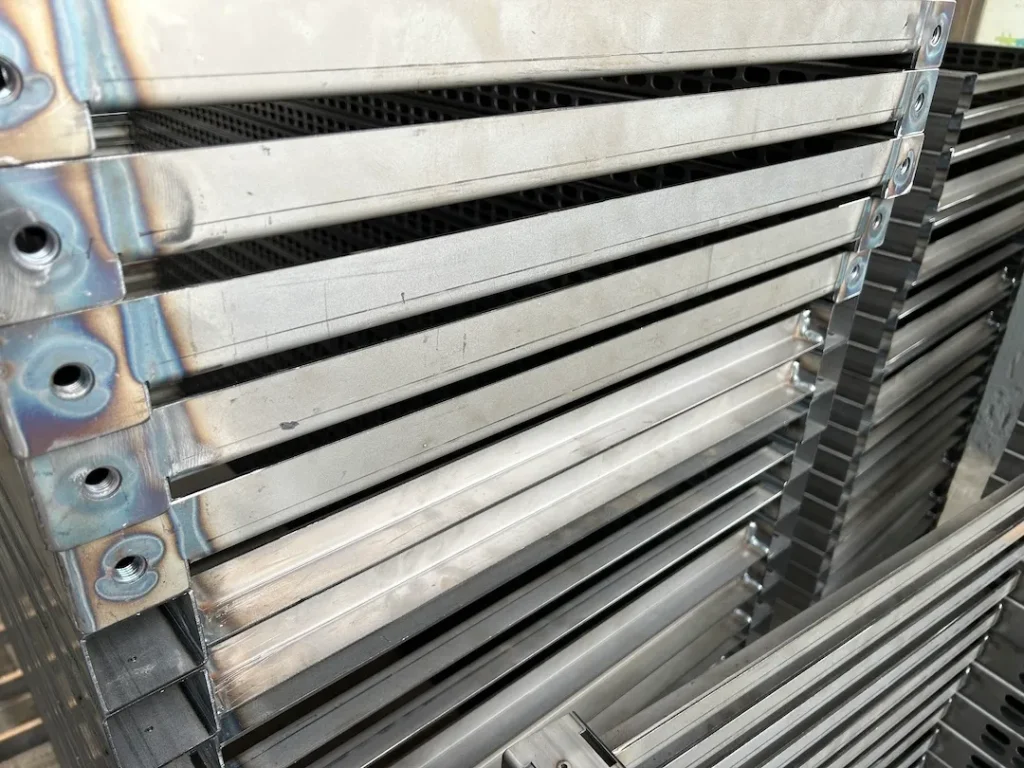
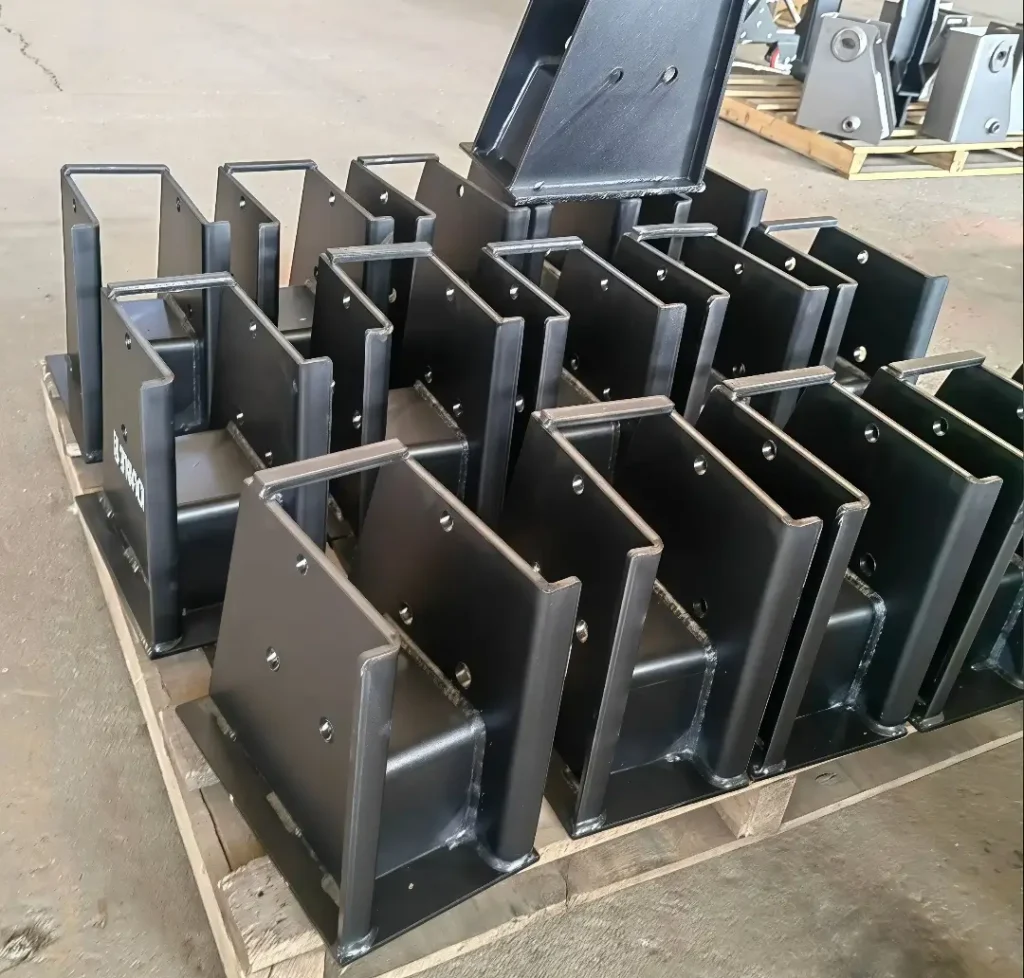
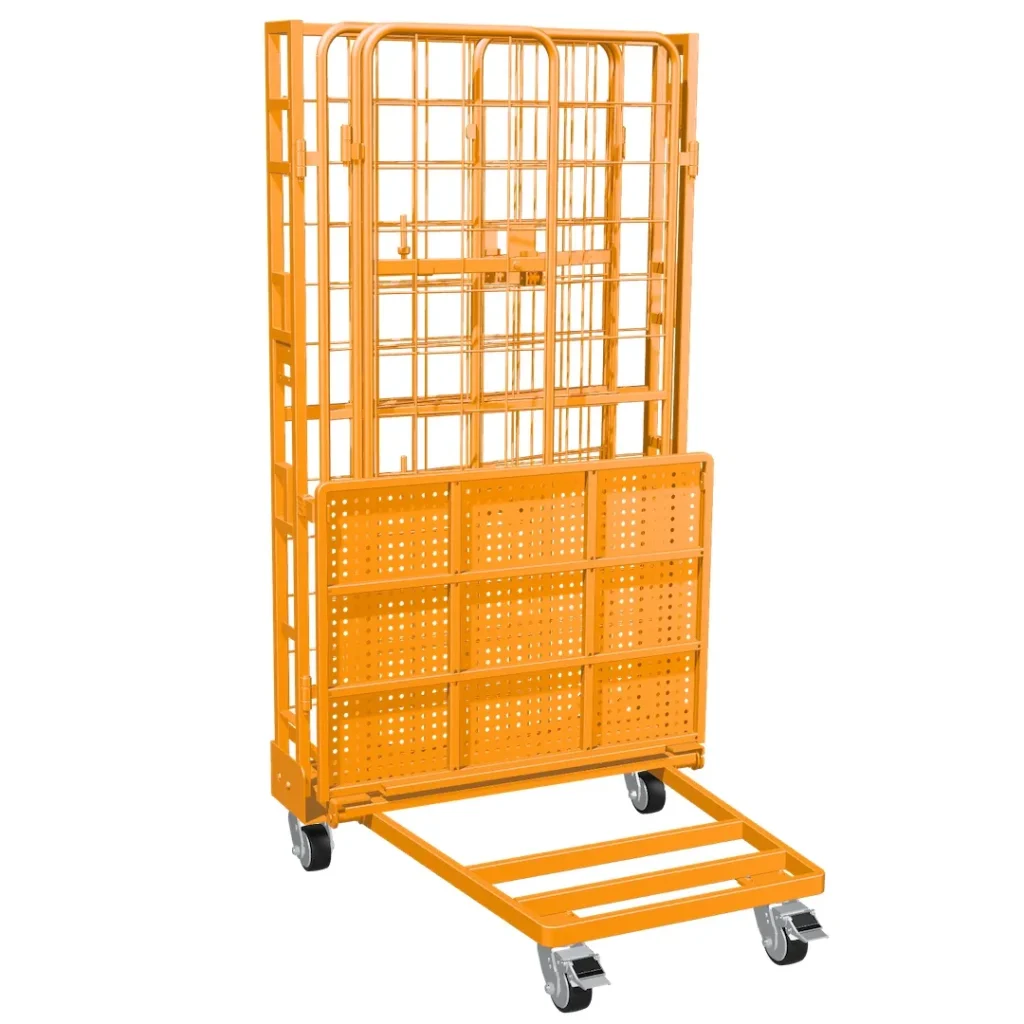
Build-to-print custom welded assemblies for international OEMs
A build-to-print supplier reads the drawing, raises questions before cutting steel, and returns a documented part. Our Custom Welding & Fabrication Services combine cutting, forming, welding, machining, finishing and inspection under one roof, removing the handoffs behind most dimensional disputes on imported weldments.
China OEM weldment manufacturing versus catalog metal products
Catalogue frames and carts force you to design around fixed hole patterns and load ratings. A weldment built to print consolidates several stampings, brackets and fasteners into one part number, deleting inventory lines and assembly labour. The trade-off is drawing discipline — anything undefined becomes a shop-floor assumption.
Single weldments, welded subassemblies, and complete kits
Three build levels price differently. Single weldments of 2–6 components suit prototypes and high-mix work. Welded subassemblies of roughly 6–30 components — our most common OEM profile — ship welded, finished and inspected. Complete kits add purchased hardware and panels under one part number, so your line receives one delivery instead of five.
Custom Welded Frames
Machine frames, equipment bases, and tubular structures
We fabricate frames from plate, square and rectangular tube, angle and channel. Grade changes the design envelope: Q235B offers roughly 235 MPa minimum yield against about 355 MPa for Q355B, often allowing a thinner section or a smaller fillet at lower total cost per assembly.
Load-bearing frames with machined mounting surfaces
Where motors, gearboxes or bearing housings mount to a frame, flatness and hole position govern acceptance rather than weld appearance. Frames over roughly 1,500 mm in any axis benefit from a dedicated fixture, and critical pads are machined after welding so datums are cut into the finished structure. See Custom Welded Frames.
Industrial Trolley Carts
Platform, picking, and logistics trolley weldments
Material-handling weldments face repeated loading and corner impacts, so welds must survive years of duty rather than one proof load. We build platform trolleys, order-picking carts, roll cages, tugger carts and kitting trolleys in tube-and-sheet construction, with deck size, shelf pitch and handle height set by your process rather than a catalogue.
Caster plates, load rating, and fitted hardware
Caster selection drives the weldment. Standard practice sizes casters on three of four wheels, since uneven floors rarely share load equally — a 400 kg cart needs casters rated near 135 kg each, not 100 kg. Plate thickness and weld pattern follow that rating, and casters, handles and bumpers are fitted before packing. Configurations appear under Industrial Trolley Carts.
OEM Welding Sheet Metal Parts
Brackets, enclosures, housings, and formed assemblies
In thin-gauge work, heat input, fit-up and cosmetic class matter more than section strength. Brackets, mounting plates, covers, guards, chassis and electrical enclosures make up this family, typically in 1–6 mm material with weld nuts, studs, gasket channels and cutouts. State whether a seam is sealed, structural or cosmetic, because ground-flush dressing adds materially to weld-cell hours.
Cut, bend, and weld production for sheet-metal OEM parts
Blanks are profiled through our Laser Cutting Services, formed on press brakes using material-specific K-factors, then welded in fixtures. Nesting efficiency of 70–85% is normal and moves piece price directly, so a minor outline change at review can recover several percent of sheet yield. See our OEM Welding Sheet Metal Parts page.
Additional welded assemblies and mixed-process kits
Equipment skids, hoppers, guards, and leak-tested fabrications
Beyond frames, carts and sheet-metal parts, we quote hybrid work mixing plate, tube and purchased components: skids, base modules, hoppers, chutes, platforms and machine guarding. Sealed enclosures and non-code tanks can be leak or pressure tested against a criterion agreed at review. Coating follows the service environment, since ISO 12944 categories C2 to C5 demand very different systems, selected through our Metal Surface Treatment options.
Multi-level assemblies with purchased components installed
We also source and install bought-in items — casters, hinges, latches, gas struts, bearings and panels. One finished assembly under one part number removes several purchase orders and inbound shipments.
Materials for carbon steel, stainless steel, and aluminum weldments
Grade and form drive weldability, finish behaviour and cost more than any other RFQ variable.
Sheet, plate, tube, pipe, and structural profile construction
Carbon steel remains the value benchmark for painted frames and bases. Stainless suits washdown and appearance, where 304L and 316L cap carbon near 0.03% to resist sensitisation in welded joints; our Stainless Steel Welding Services control heat tint and contamination. Aluminium cuts mass roughly 65% against equal-volume steel, handled by our Aluminum Welding Services with dedicated tooling and oxide removal.
Mill certificates, heat traceability, and approved grade equivalents
We supply mill test reports and maintain heat traceability from goods-in to packing list when specified. Q235B, ASTM A36 and S235JR are comparable but not identical, so substitutions are submitted in writing with chemical and mechanical comparison for approval — never applied silently.
MIG, TIG, robotic, and multi-process welding for assemblies
Process selection by material, thickness, and production volume
Process follows the joint, not preference. MIG dominates carbon steel from about 1.2 mm upward on productivity; Custom TIG Welding Services handle thin stainless, aluminium and cosmetic seams; and Custom Laser Welding Services minimise distortion where fit-up is controlled. The full list sits under our Custom Metal Welding Services.
Fixture-controlled welding for repeat OEM assemblies
Fixtures, not operators, deliver repeatability. Manual welding suits prototypes, changing designs and awkward access; robotic welding pays back on stable geometry with recurring demand, where fixture and programming cost amortises across annual volume. We review that crossover using your quantities and cycle times.
Engineering review, distortion control, and post-weld machining
DFM review of drawings, weld symbols, and datum schemes
Our engineers review joint access, weld symbol completeness, root gaps, tolerance stack-up, coating and drainage access, and lifting points before production starts. Ambiguous drawings cause most first-article rejections, so queries are raised in writing during review.
Weld sequence, fixturing, and distortion control
Distortion is thermal, not accidental. Austenitic stainless expands roughly 40% more than carbon steel at equal temperature, so identical joints behave differently. Balanced sequencing, back-stepping, controlled heat input and purpose-built fixtures hold assemblies within drawing limits, and intermittent welds — 25 mm at 100 mm pitch — cut heat and cost on non-sealing joints.
CNC machining after welding for GD&T-critical features
Where bore alignment, mating-face flatness or positional tolerance must hold, we machine after welding through our CNC Machining & Welding Services. ISO 13920 governs welded constructions while ISO 2768 applies to machined features; applying the wrong standard to a welded frame creates disputes no shop can win.
Quality control, NDT, and traceability for export weldments
Our Quality Control system runs from incoming material to final packing.
WPS, PQR, and welder qualification when standards are invoked
When AWS D1.1, D1.2, D1.6, ISO or customer codes are contractually invoked, welding procedures and welder qualifications are established to that standard before production, with scope agreed at technical review.
Visual, dimensional, and NDT inspection as specified
Visual inspection is standard on every weldment, with acceptance stated against a defined quality level such as ISO 5817 B, C or D. Dye penetrant, magnetic particle, ultrasonic or radiographic testing follows the drawing or code, at an agreed sampling level.
FAI, mill certificates, and documentation packs for international buyers
New parts and revised drawings receive a dimensioned first-article report showing measured values, not a pass mark. Shipments can include certificates of conformance, material certificates, inspection and coating records, plus third-party inspection by your appointed agency.
Industrial applications for custom welded assemblies
Machinery, automation, and equipment structures
Machine bases, robot-cell fencing, conveyor supports and access covers, where squareness and hole position govern integration — see Welded Frames & Carts for Industrial Equipment.
Material handling, warehouse, and logistics equipment
Trolleys, stillages, kitting carts and storage racks built for repeated duty cycles, covered under Material-Handling Carts & Racks for Warehouse & Logistics.
Energy, HVAC, agriculture, and specialty OEM programs
Energy storage and EV charging enclosures, HVAC bases and housings, and outdoor-durable coated weldments such as Welded Skids, Frames & Kitting Carts for Automotive & Agricultural equipment.
How to evaluate a custom welded assemblies manufacturer in China
Envelope, process, fixture, and finishing capability checks
Ask for limits stage by stage, because the smallest governs your part: cutting bed, brake length, fixture table, crane capacity, machining travel and coating booth. Confirm which operations are in-house and which use approved partners, since every handoff adds days and a quality interface.
Sample quality, NCR handling, and third-party inspection
Judge a supplier on evidence, not adjectives. Request a sample inspection report with measured values, an example weld map, and one anonymised nonconformance showing root cause and corrective action. Confirm you may appoint SGS, Bureau Veritas or your own inspector.
Request a quote for custom welded assemblies
Upload 2D/3D drawings, BOM, weld map, and finish requirements
Send 2D drawings, 3D models or STEP files, your BOM, weld symbols, finish specification and critical tolerance flags. If you only have a sample, we can work from the part and issue drawings for approval.
Confirm quantity, inspection scope, and delivery terms
Include prototype and annual quantities, required documentation, destination port and preferred Incoterm — FOB, CIF or DDP — so the quotation reflects landed cost. Our engineers return manufacturability feedback and cost-driver comments with the price. Contact Able Hardware in Suzhou to start your project.