Table of Contents
Overview of Industrial Material Handling Carts
What Are Industrial Material Handling Carts?
Industrial material handling carts are wheeled, reusable carriers designed to move parts, bins, totes, and bulk loads safely and efficiently inside warehouses, factories, and distribution centers. At Able Hardware, we engineer and manufacture heavy-duty steel carts as OEM and custom solutions that integrate smoothly into your existing intralogistics and lean material flow.
Why Carts Matter in Modern Warehousing and Manufacturing
Well-designed carts reduce forklift traffic, shorten travel time, protect product quality, and cut the true handling cost per unit. For procurement and engineering teams, switching from ad-hoc or consumer-grade carts to robust, industrial designs can unlock higher throughput, fewer injuries, and more stable takt time on the line.
Key Benefits: Safety, Efficiency, and Cost per Handling Cycle
Our industrial carts are optimized for repeat, multi-shift use: stable frames, correct caster selection, and vibration-resistant structures. This helps you lower life-cycle cost per handling cycle by reducing damage, downtime, and replacement frequency, especially in 2–3 shift operations.
Classification of Material Handling Carts
By Cart Structure and Form
Able Hardware develops a complete range of welded steel cart platforms, from simple flat-deck units to multi-tier picking carts and secure roll cages. Every platform can be tailored in dimensions, load rating, and surface finish.
Platform / Deck Carts
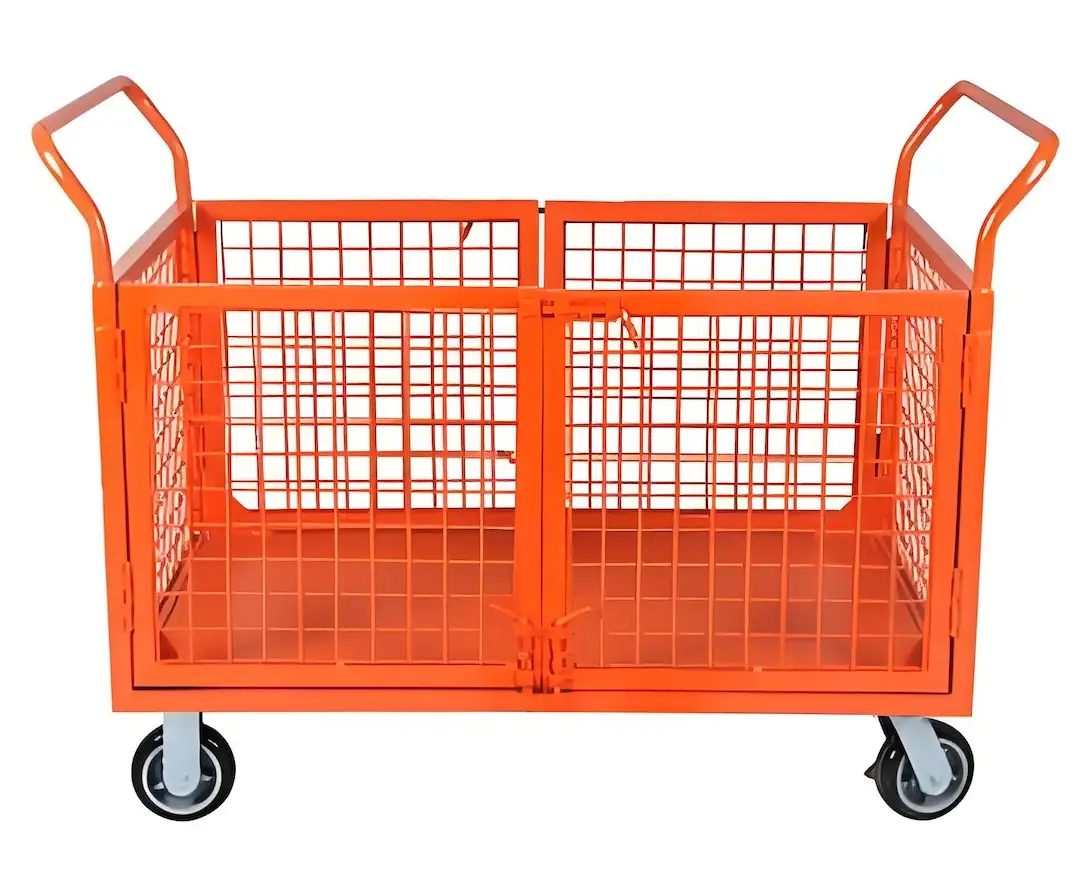
Flat or low-profile platform carts are ideal for bulk loads, bins, and equipment. We supply single-deck carts with optional side rails, removable stakes, and anti-slip decks to handle loads typically from 300 kg up to 1,500 kg, depending on design.
Shelf / Tier Carts
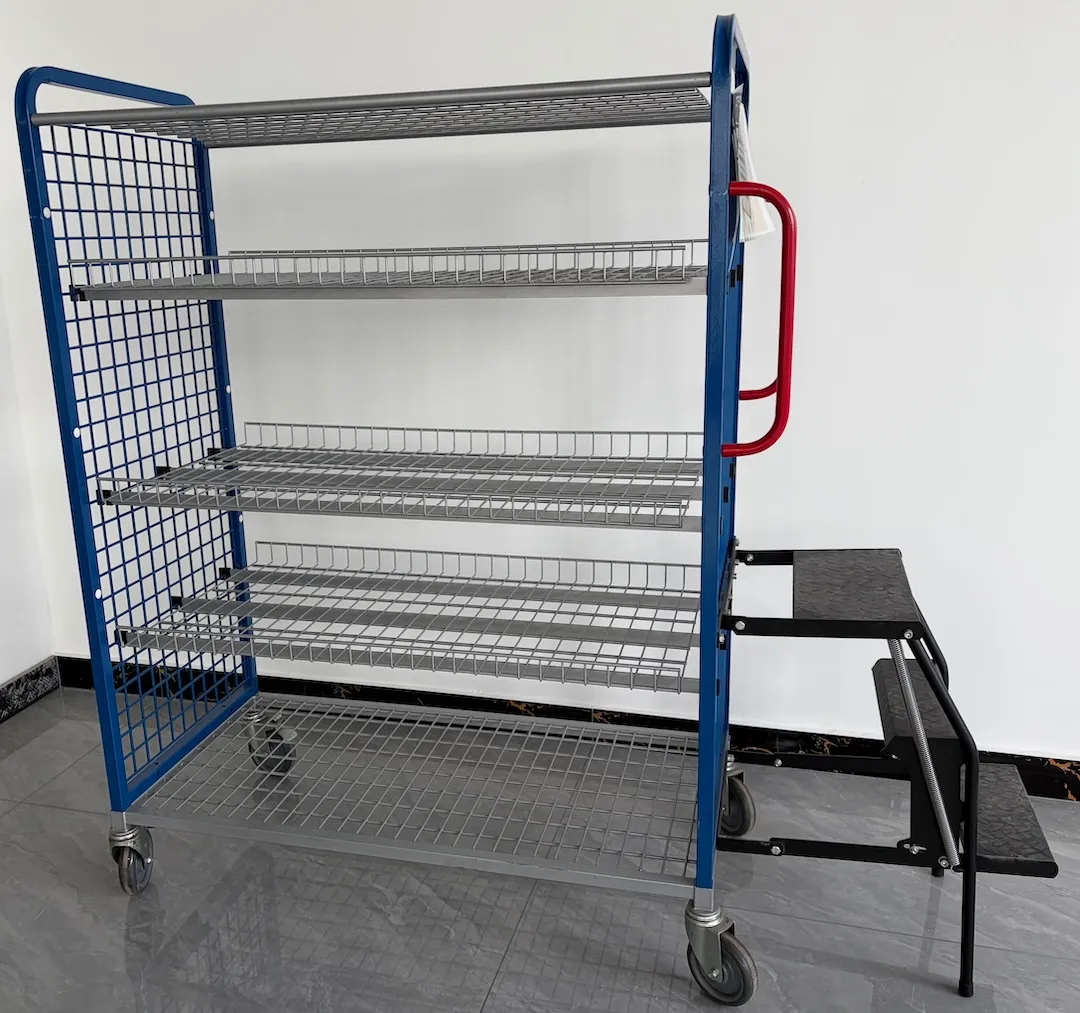
Shelf carts provide 2–4 tiers for small components, totes, and cartons. Engineers can specify shelf spacing, solid or wire decks, and guard lips to prevent items from falling during movement and braking.
Roll Cage Trolleys and Security Carts
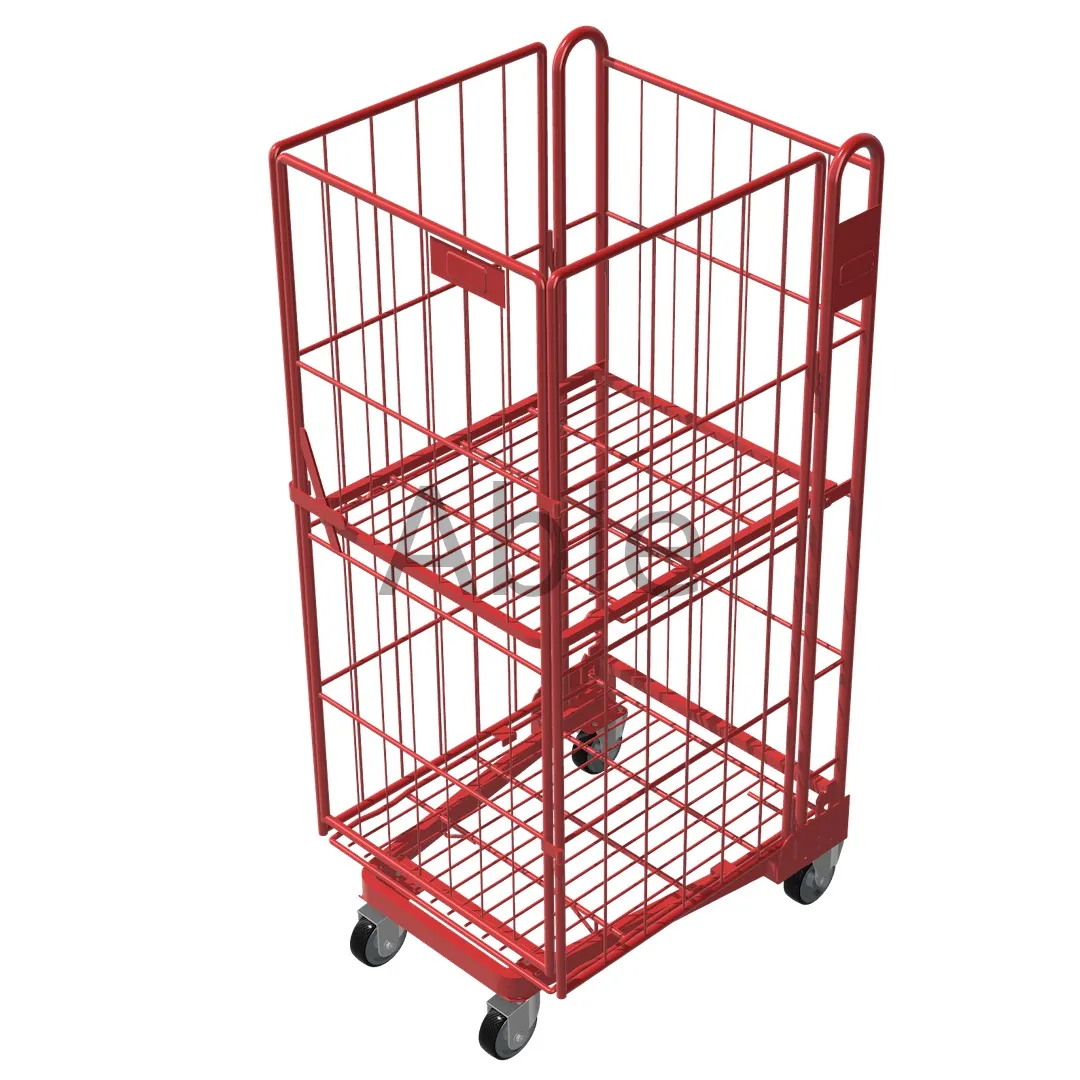
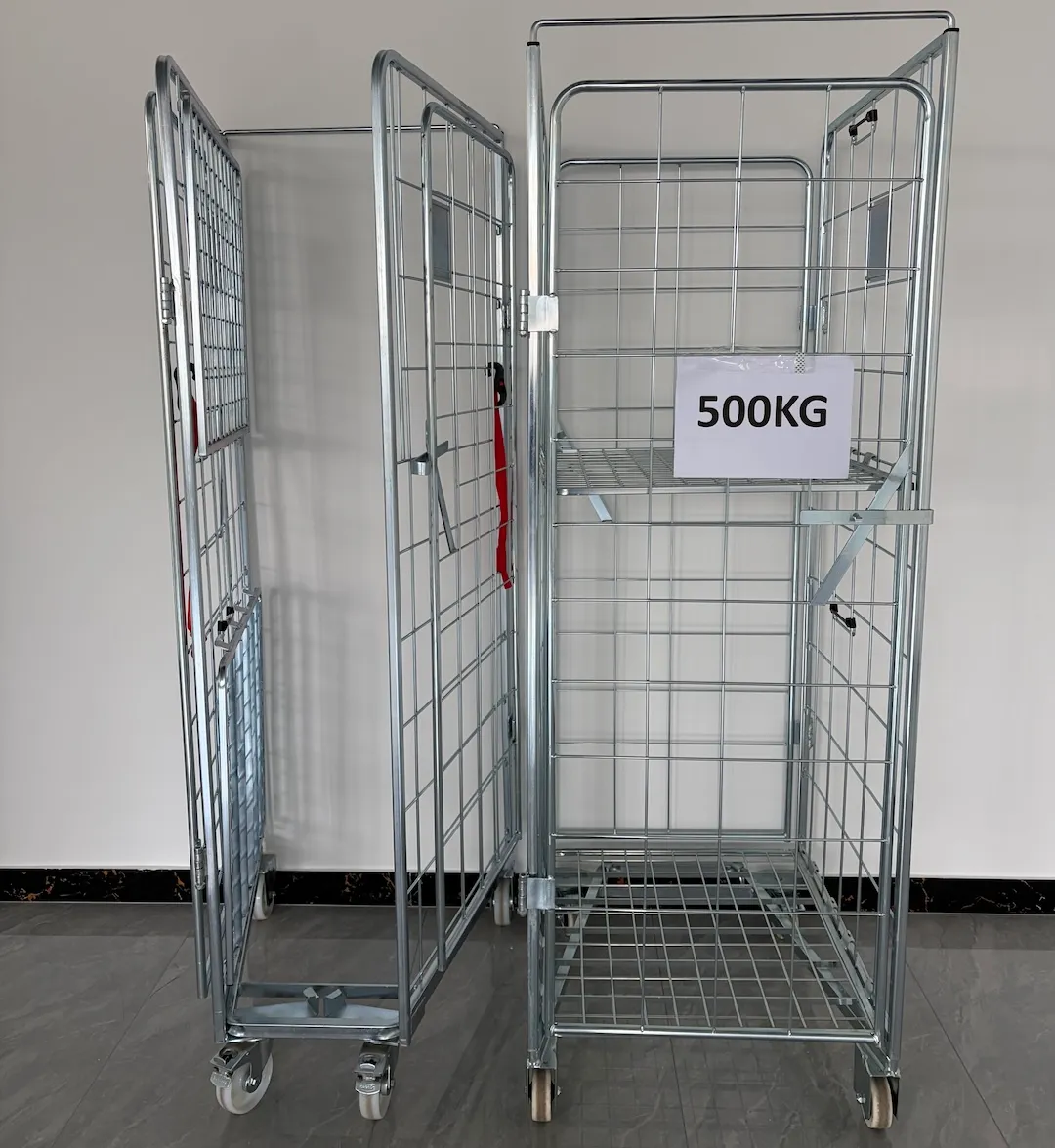
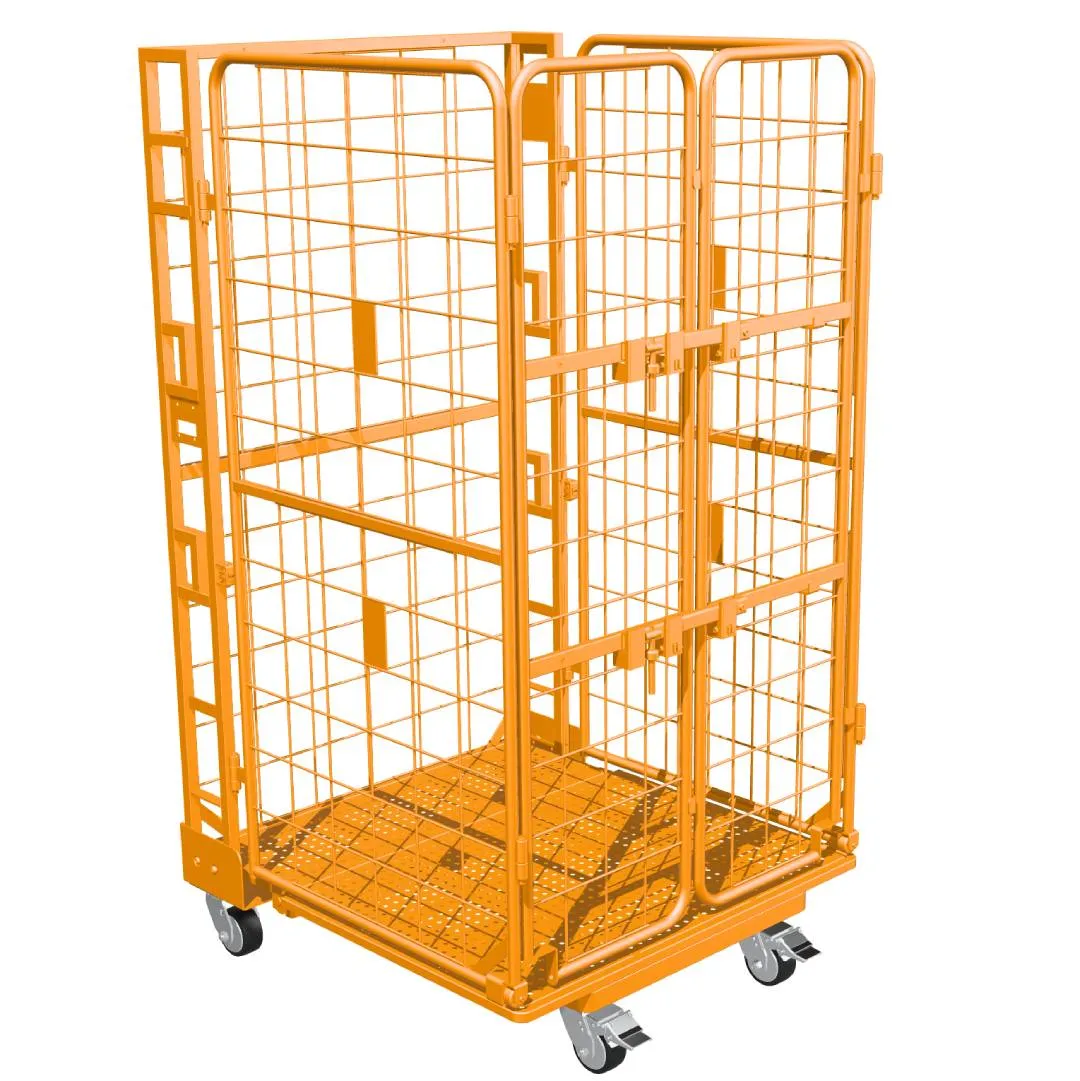
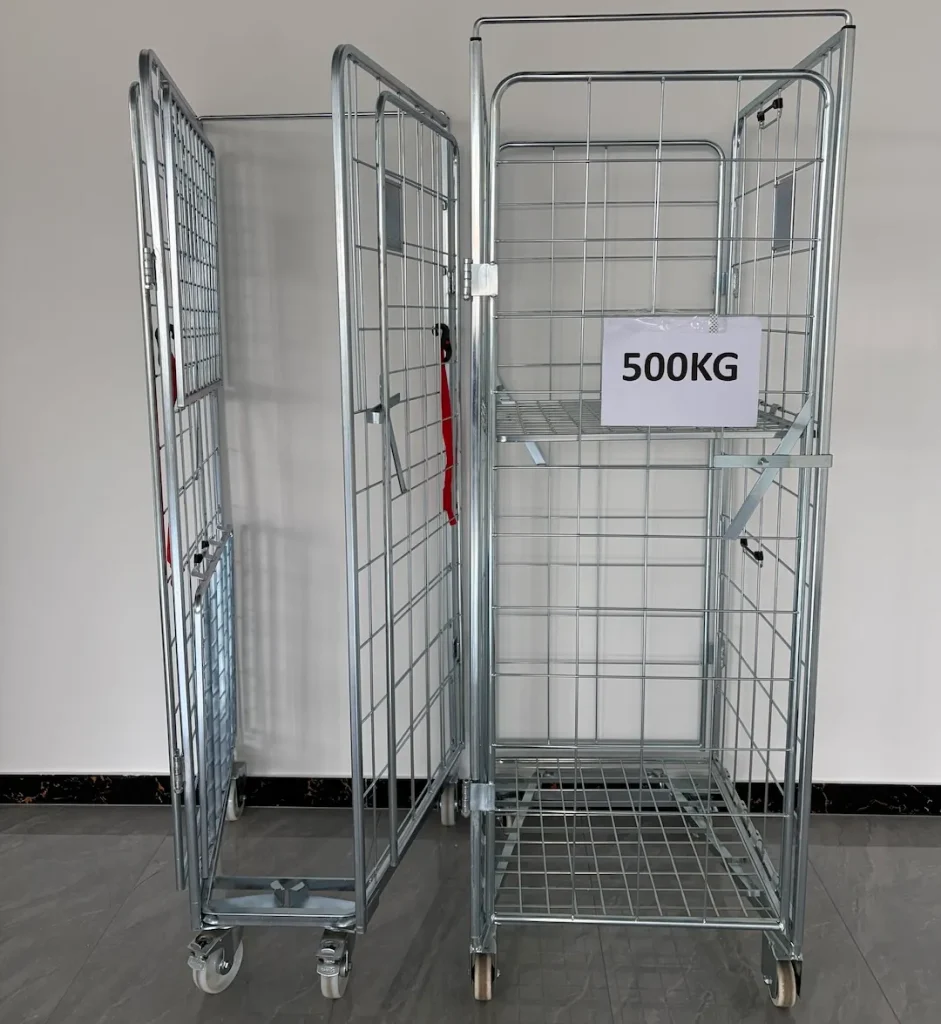
Roll cage trolleys combine a base deck with 2–4 mesh walls, often with a hinged door and latch system. Security versions use tighter mesh and lockable doors to protect high-value tools, components, or controlled items in warehouses and backrooms.
Tugger Carts and Mother–Daughter Carts
For tugger train systems, we build towable carts with tow bars, hitches, and corner guides. Mother–daughter cart systems support fast loading/unloading at the line side, helping you implement lean, milk-run material flow with minimal forklift involvement.
Special-Purpose Carts (Picking, Kanban, Tool, Cold-Room, ESD)
Special carts include order picking carts with integrated bins and scanner holders, Kanban and line-feed carts for WIP, tool carts for maintenance teams, cold-room/freezer carts with low-temperature wheels, and ESD-safe carts for electronics manufacturing.
Classification by Application and Environment
Warehouse & Logistics / E-Commerce Fulfillment
High-density picking and put-away require carts that are easy to maneuver in narrow aisles, with ergonomic handles and optimized shelf layouts. We design carts for carton and tote handling in high-throughput fulfillment centers.
Manufacturing, Assembly Line, and Kanban Line-Feed
In assembly lines, carts act as mobile racks feeding components to workstations. Our designs focus on correct load height, clear part presentation, and stable movement between supermarkets and line-side points.
Automotive, HVAC, and Appliance Plants
For heavy assemblies and bulky parts, we provide robust frames, reinforced decks, and forklift-safe interfaces where needed. Carts can be tailored around your specific components and fixtures to reduce handling damage.
Food, Beverage, and Cold-Chain / Freezer Applications
Cold-room and freezer carts use suitable finishes (galvanized or stainless) and wheel materials designed to roll at low temperature without cracking. Hygienic designs support easier cleaning and drainage.
Cleanroom, Hygienic, and ESD-Sensitive Areas
We offer stainless steel and ESD-safe platforms for cleanroom or electronics applications, with smooth surfaces, minimal dirt traps, and conductive wheels and grounding features where required.
Models, Sizes, and Technical Specifications
Standard Models vs Custom Industrial Cart Platforms
Able Hardware can manufacture according to your existing drawings or help you adapt one of our proven base platforms. Standardized models shorten lead time; custom platforms ensure a perfect fit for your process.
Load Capacity (Static, Dynamic, UDL, Point Load)
We size frames and decks based on your rated load, distinguishing between static, dynamic, and uniformly distributed loads. Heavy-duty carts are engineered to maintain acceptable deflection and stability over long-term industrial use.
Dimensions: Deck Size, Overall Footprint, Height, Shelf Spacing
Cart footprint, turning radius, and shelf height are matched to your aisle widths, racking layout, and ergonomic requirements. Metric drawings and 3D models are used to validate fit and maneuverability.
Casters and Wheels: Types, Diameter, Materials, Configurations
Wheel diameter, tread material, and configuration (e.g., 2 fixed + 2 swivel with brakes) are chosen based on floor condition, required push force, noise limits, and speed. Options include PU, rubber, nylon, and high-temperature wheels.
Frame Geometry, Tube Profiles, and Structural Stiffness
We balance weight, stiffness, and cost using square, rectangular, or round tube sections and bracing patterns. Critical joints are reinforced where carts experience the highest stress, such as tow bar areas and corner posts.
Surface Finishes and Corrosion Protection
Surface treatments include powder coating in RAL colors, zinc plating, galvanizing, or e-coating, specified according to indoor, outdoor, or cold-room use and your corrosion protection targets.
Materials and Surface Treatment
Carbon Steel Frames for Heavy-Duty Industrial Carts
Carbon steel tube and sheet give the best value for most warehouse and factory carts. Wall thickness and section size are selected to meet your load and durability requirements at an attractive cost level.
Stainless Steel Carts for Hygienic and Corrosive Environments
Stainless steel is recommended where corrosion resistance, hygiene, or aggressive cleaning chemicals are key factors, such as food and beverage, pharmaceutical, and some cold-chain operations.
Aluminum and Lightweight Structures
Where weight and manual handling are critical, we can develop aluminum structures combining reduced mass with adequate stiffness. These are suitable for certain clean or ESD environments.
Deck and Shelf Materials: Sheet Steel, Wire Mesh, Wood, Plastic
Deck and shelf options include solid steel with anti-slip surface, wire mesh for visibility and drainage, or wood and plastic inserts when product protection and noise reduction are priorities.
Powder Coating Options (Colors, Thickness, Edge Protection)
We provide industrial powder coatings with controlled thickness and edge coverage to resist chipping and corrosion. Color-coding supports 5S and visual management in your facility.
Zinc Plating, Galvanizing, and E-Coating for Outdoor / Cold-Room Use
For harsher environments, zinc plating, hot-dip galvanizing, or e-coating can be specified to extend cart life, especially in cold, humid, or semi-outdoor applications.
Design, Purpose, and Use Cases
Order Picking Carts for Warehouses and E-Commerce
Custom picking carts can integrate carton bays, tote locations, scanners, and paperwork holders. The goal is to reduce walking, improve pick accuracy, and support multi-order picking strategies.
Line-Feed and Kanban Carts for Assembly Lines
Line-feed carts are designed around your bins and kitting strategy, so operators receive parts in the correct sequence and orientation. This reduces searching and error at the workstation.
Bulk Transfer, Pallet-Sized, and Bin Carts
For WIP containers, bins, and pallet-sized loads, we design carts that match container footprints, allow secure stacking, and can be handled safely by tugger or manual push.
Security and Tool Carts for Controlled-Access Storage
Lockable mesh carts keep tools, fixtures, and high-value components available where needed while preventing unauthorized access. These carts are common in maintenance and controlled parts rooms.
Cold-Room / Freezer Carts for Low-Temperature Operations
Cold-room carts combine cold-resistant wheels, corrosion-resistant finishes, and open designs that allow airflow and fast cooling or freezing.
Tugger Train Carts for Lean Intralogistics
Tugger carts connect to form trains, delivering multiple loads per trip. We engineer tow bars, corner guides, and frames to handle repeated starts, stops, and turns under industrial duty cycles.
Ergonomics, Safety, and Standards
Handle Height, Push/Pull Force, and Operator Fatigue
We work with your EHS and engineering teams to define handle height and configuration that minimizes operator strain. Correct wheel and caster choices help keep push/pull forces within recommended limits.
Brakes, Wheel Locks, and Anti-Tip Design
Brake systems, wheel locks, and carefully designed wheelbases help keep carts stable during loading, parking on slopes, and emergency stops.
Noise Reduction and Floor Protection
Wheel material and bearing selection reduce noise in high-traffic areas and protect coated or delicate floors from damage.
Load Labels, Safety Warnings, and Color Coding
Carts can be supplied with clear load rating labels, warnings, and color coding to support internal safety guidelines and visual management.
Internal Safety Guidelines and Best Practices for Cart Operation
On request, we can support your internal standards by aligning cart design with your handling procedures, such as maximum stacking height or specific towing speeds.
Manufacturing Process for Industrial Material Handling Carts
From RFQ and Drawings to Prototype and Mass Production
Projects typically start with an RFQ, including drawings, load requirements, and environment. Our engineers review the data, propose optimizations, and provide a quotation with indicative lead times.
Design for Manufacturability (DFM) and Cost Optimization
We frequently suggest DFM improvements—simplified joints, common components, or standardized casters—to reduce cost, improve robustness, and shorten lead time.
Robotic MIG Welding of Cart Frames
Cart frames and critical load-bearing structures are welded using automated robotic welding to ensure consistent weld quality, repeatable geometry, and stable performance over high-volume production.
Laser Cutting, Bending, Stamping, and Sub-Assembly
Precision cutting and bending of tubes, plates, and brackets ensure accurate fit-up and clean assembly. Sub-assemblies are verified before final build.
Surface Treatment Lines and Curing
All steel parts pass through surface preparation, coating, and curing stages to achieve the required finish quality and corrosion resistance.
Final Assembly, Inspection, and Functional Testing
Casters, handles, and accessories are assembled and torqued according to standardized procedures. Carts are inspected for dimensions, stability, and smooth rolling performance before packing.
Quality Control and Testing
Dimensional Inspection of Frames and Critical Interfaces
Key dimensions—such as deck size, overall height, and coupling points—are checked against drawings to ensure compatibility with your racks, lines, and tugger systems.
Weld Quality Standards and Visual / NDT Inspection
Welds are visually inspected, and critical joints can be tested using additional methods where required by your standards or specifications.
Load and Fatigue Testing for Industrial Duty Cycles
Sample carts can be load-tested and cycled to validate stiffness, deformation, and durability under realistic industrial conditions.
Corrosion and Surface Finish Inspection
Coating thickness, adhesion, and appearance are monitored to maintain consistent quality and appearance across batches.
Traceability, Documentation, and Repeatability for OEM Programs
For long-term OEM programs, we maintain process documentation and relevant records to support repeat orders with consistent performance.
Packaging, Shipping, and Logistics
Knock-Down (KD), Foldable, and Nestable Cart Designs
Where possible, we design carts to be knock-down, foldable, or nestable so that more units fit into a container, reducing freight cost per unit.
Palletization and Container Loading Optimization
We prepare packing plans to maximize 20GP and 40HQ container utilization while meeting your requirements for palletization, stacking, and handling at the destination.
Protection Against Damage in Sea Freight and Long-Distance Transport
Corner protectors, strapping, and internal bracing are used to protect painted and galvanized surfaces from damage during ocean and inland transport.
Labelling, Assembly Instructions, and Spare Parts Packing
Units can be labeled with your part numbers, barcodes, and destination information. Where carts are shipped KD, assembly instructions and hardware packs are included.
Cost and Price Factors for Industrial Material Handling Carts
How Design and Load Capacity Influence Cost
Heavier load ratings, reinforced frames, and larger casters increase material and processing requirements, which is reflected in unit price. Optimizing load rating for real needs is a key cost lever.
Impact of Materials, Finishes, and Caster Choices on Price
Carbon steel with standard powder coating is usually the most economical option. Stainless steel, special coatings, or premium casters add cost but may be essential for your environment and life-cycle targets.
Effect of Quantity, Tooling, and Annual Volume on Unit Cost
Higher order quantities and stable annual volumes enable better material planning and process optimization, lowering average unit cost over the program life.
Prototype Cost vs Mass Production Cost
Prototypes typically carry higher piece cost due to low quantities and extra engineering time, while mass production benefits from economies of scale and process tuning.
Freight, Duties, and Landed Cost Considerations for Importers
Container utilization, shipping routes, and local duties all affect your landed cost. We work with you to balance design, pack density, and shipping frequency.
Cost-Saving Strategies with Chinese OEM Manufacturers
By consolidating models, standardizing components, and designing for KD shipping, buyers can benefit from competitive China factory pricing without sacrificing performance or quality.
Customization and OEM Services
When to Choose Custom vs Standard Industrial Cart Models
If your process, parts, or environment are unique, fully custom carts usually provide better total cost and performance than forcing a standard model to fit. For simpler applications, existing platforms can be adapted.
Custom Dimensions, Load Ratings, and Shelf Layouts
We can adjust footprint, shelf spacing, load rating, and cart height to suit your components and operators, ensuring a better fit with your equipment and ergonomics.
Custom Casters, Wheels, and Tow Bar Systems
Caster types, wheel materials, and tow bar systems are customized based on floor conditions, towing methods, and desired speeds.
Branding Options: Colors, Logos, ID Plates, and Label Holders
Company colors, logo plates, and integrated label holders help integrate the carts into your visual management system and make asset tracking easier.
Engineering Support, 3D Modeling, and Fast Prototype Development
Our engineering team supports you with 2D drawings and 3D models for approval. Fast prototypes help verify ergonomics, stacking, and integration before mass production.
Typical OEM Project Workflow with a China-Based Manufacturer
A typical project runs from RFQ and DFM review, through prototype and pilot runs, into stable mass production with ongoing quality monitoring and repeat deliveries.
Talk to Able Hardware About Your Next Cart Project
Whether you need a proven industrial cart platform or a fully custom design around your parts, Able Hardware can support you from RFQ to container loading. Share your drawings, load data, and environment, and our engineering team will recommend a cost-effective solution with the right materials, casters, and finish for your application.
Contact Able Hardware today to discuss your industrial material handling carts project and request a tailored quotation for your next OEM or plant-wide implementation.
Request A Quote
More Industrial Trolley Cart: