Table of Contents
Overview of Stocking Picking Carts
What Are Stocking Picking Carts?
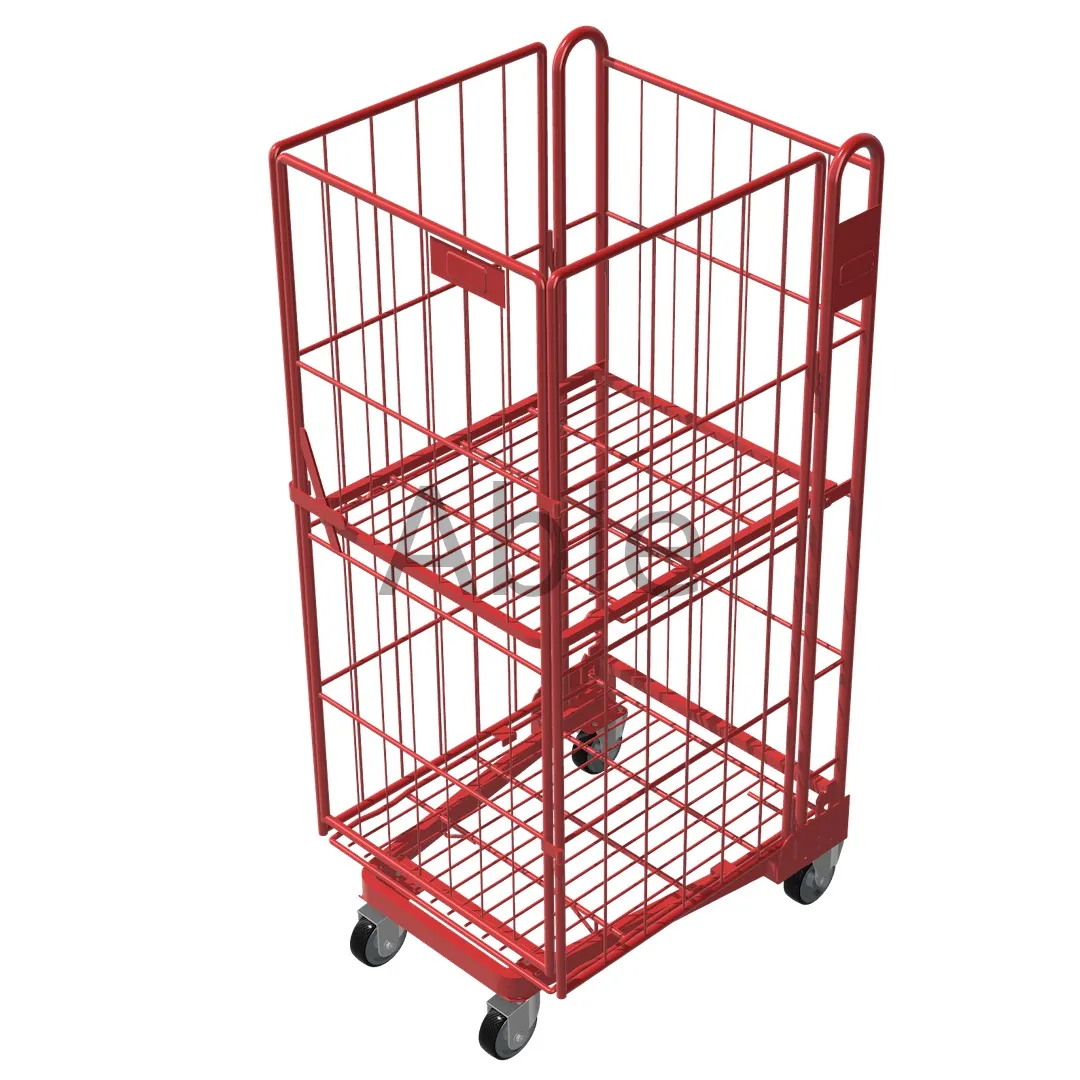
Stocking picking carts are multi-shelf, wheeled units used to move cartons, totes, and loose items between receiving, storage, and picking areas. Compared with simple platform trolley carts, they organise SKUs on shelves or in compartments so operators can do more work per trip with fewer errors.
Able Hardware is a China-based factory specialising in OEM/ODM stocking picking carts and other material handling carts. We design and manufacture export-ready carts for warehouses, 3PLs, retailers, and manufacturers who need industrial-grade equipment tailored to their layout and processes.
Stocking vs Order Picking: Key Differences
Stocking carts focus on put-away and replenishment, moving cases from inbound or back-stock to racking. Order picking carts focus on building customer orders. With the right shelf layout and labeling, one custom design can support both stocking and picking, helping you standardise your fleet across sites and align different types of trolley carts.
How Stocking Picking Carts Improve Picking Speed and Accuracy
Well-designed carts improve performance by:
- Increasing lines per trip with multi-shelf or multi-order layouts
- Keeping SKUs separated and clearly visible to reduce mis-picks
- Matching shelf height and reach to operators to reduce fatigue
Integrated label rails, tote locations, and IT mounts also support scan-based or WMS-driven workflows.
Typical Workflows: Put-Away, Replenishment, and Order Picking
Typical deployments include:
- Put-away: moving inbound cartons directly into pallet racking or shelving
- Replenishment: refilling forward pick faces from back-stock or reserve storage
- Order picking: using multi-bin carts to batch pick for multiple customers at once
Main Types of Stocking Picking Carts
General Stock Picking Carts (2/3/4-Shelf)
Robust steel carts with 2–4 levels for mixed cartons and loose items. These are the workhorses of many warehouses and retail backrooms, often used alongside other material handling carts for bulk moves.
Multi-Order & Batch Picking Carts with Totes or Bins
Carts with multiple tote locations or wire baskets for batch and cluster picking. Ideal for e-commerce and spare parts where operators handle many small orders per route.
Stocking / Replenishment Carts for Back-Stock and Put-Away
Higher-capacity carts with deeper shelves and strong frames for full cartons and heavier loads, optimised for put-away and replenishment loops.
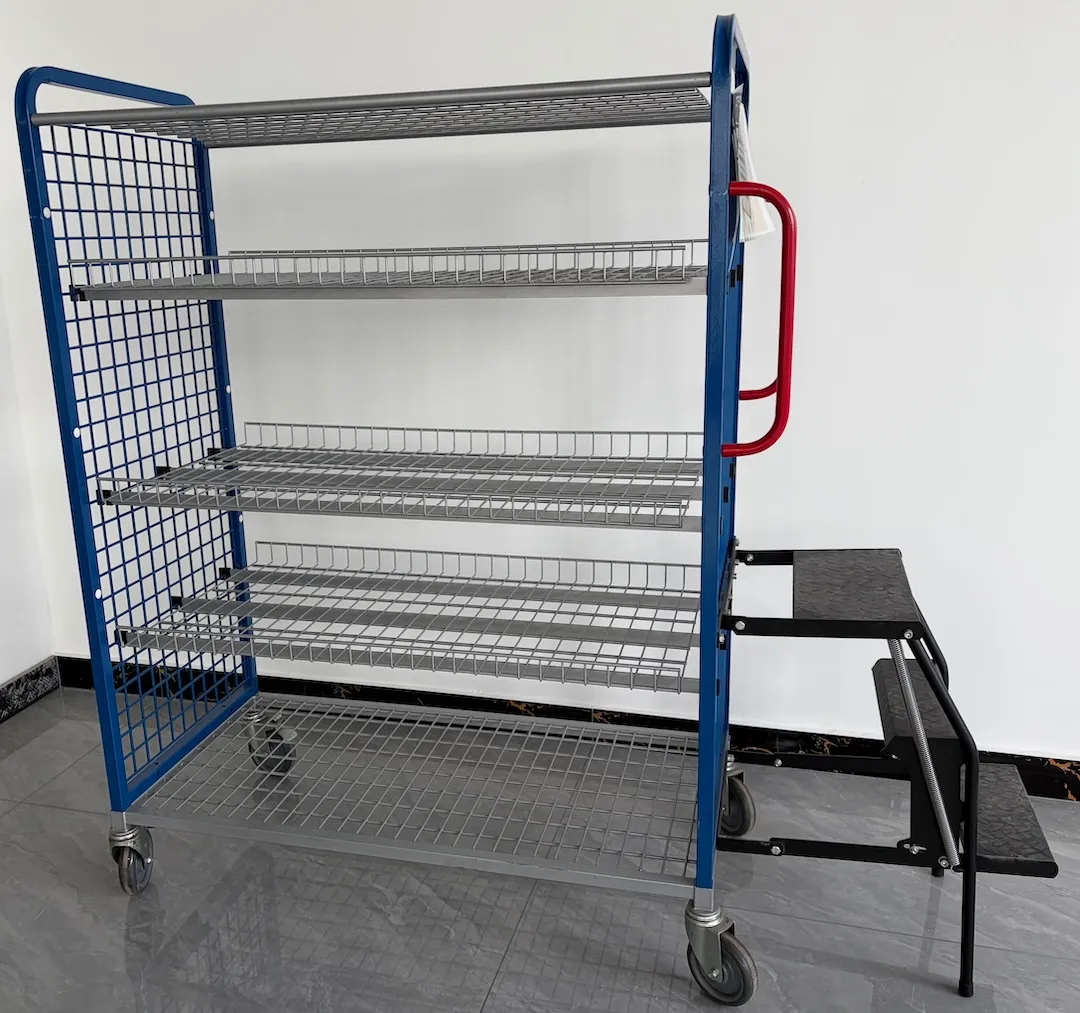
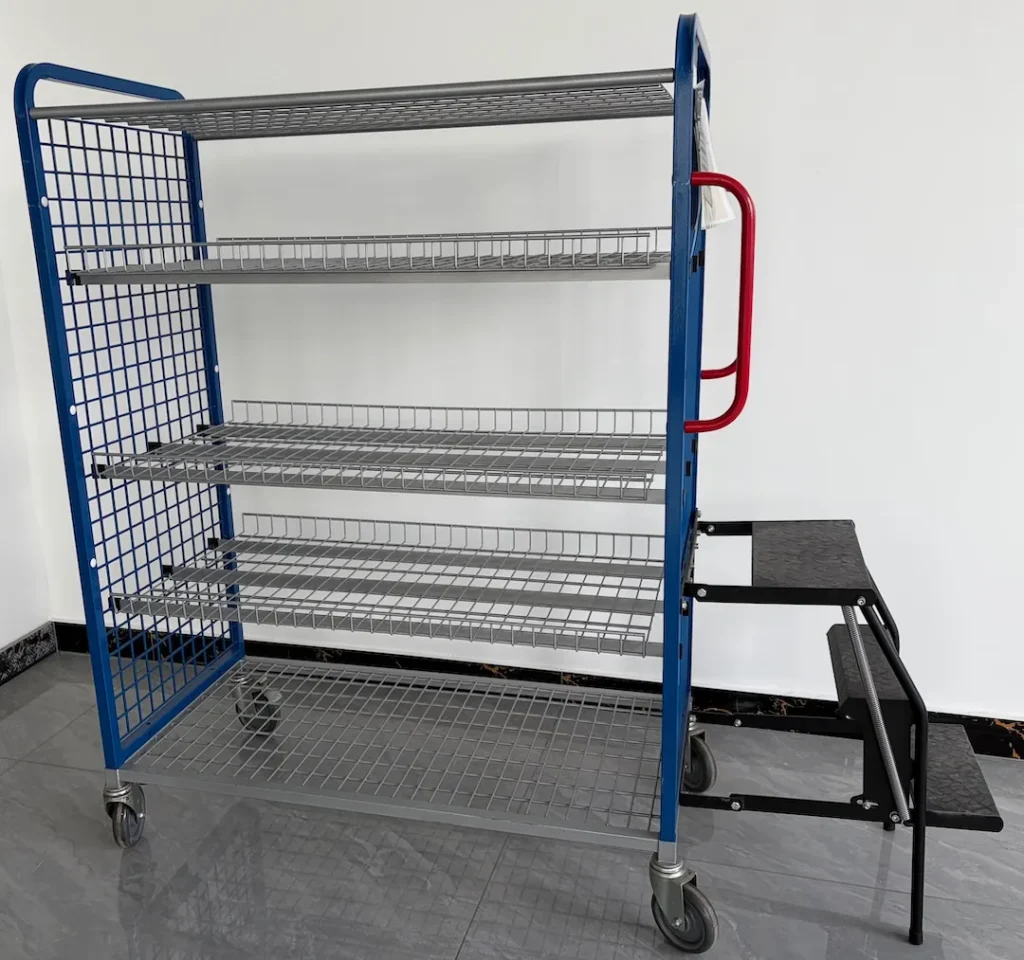
Stock Picking Ladder Carts for High-Shelf Access
Carts with integrated steps or ladders so operators can safely reach higher rack levels (for example 2.5–3.0 m) without separate equipment.
High-Density Mobile Picking Systems (Flow Carts, Cube Carts)
Flow shelves or cube-style compartments provide high slot density for slow- and medium-moving SKUs while keeping items visible and accessible.
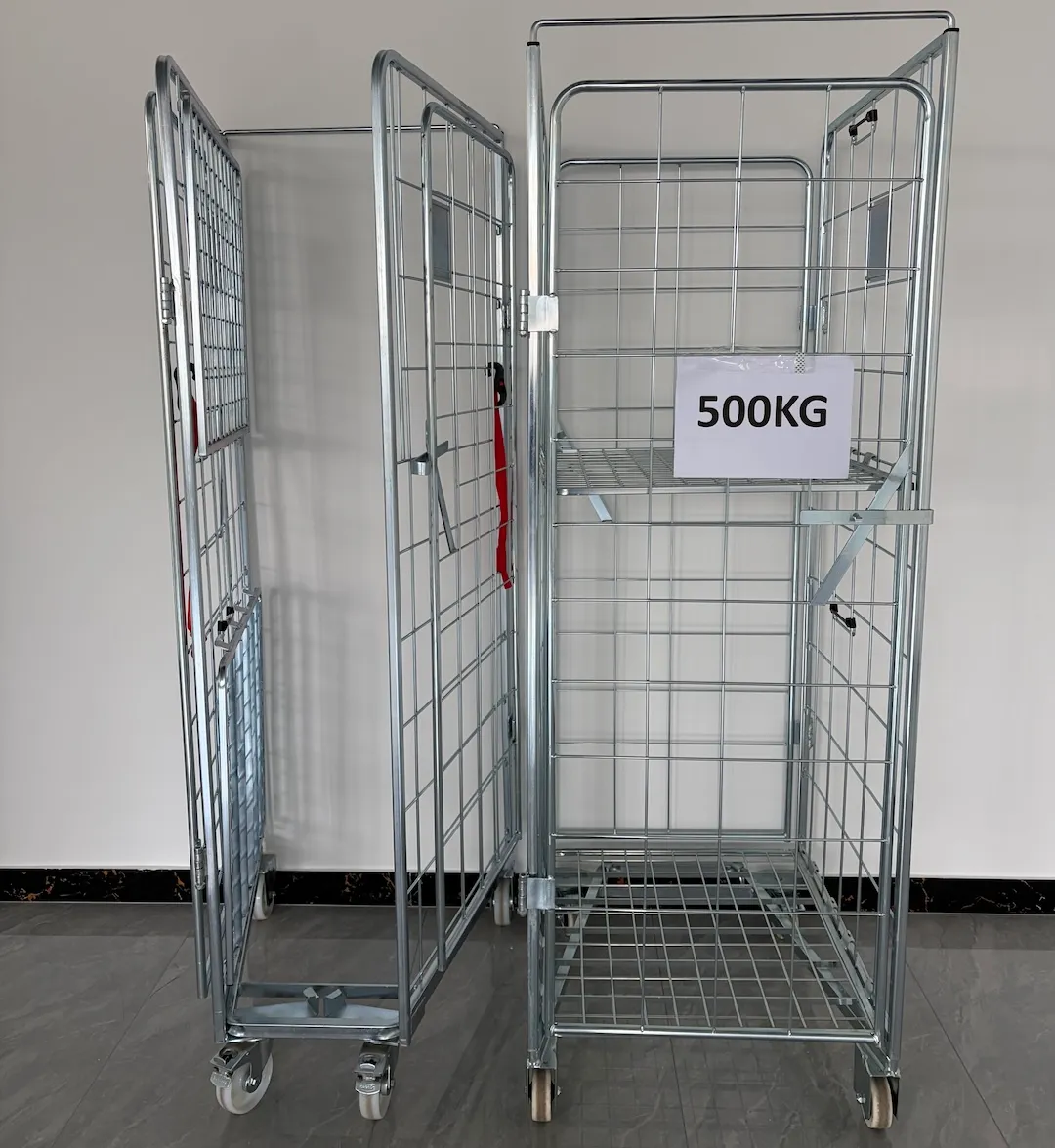
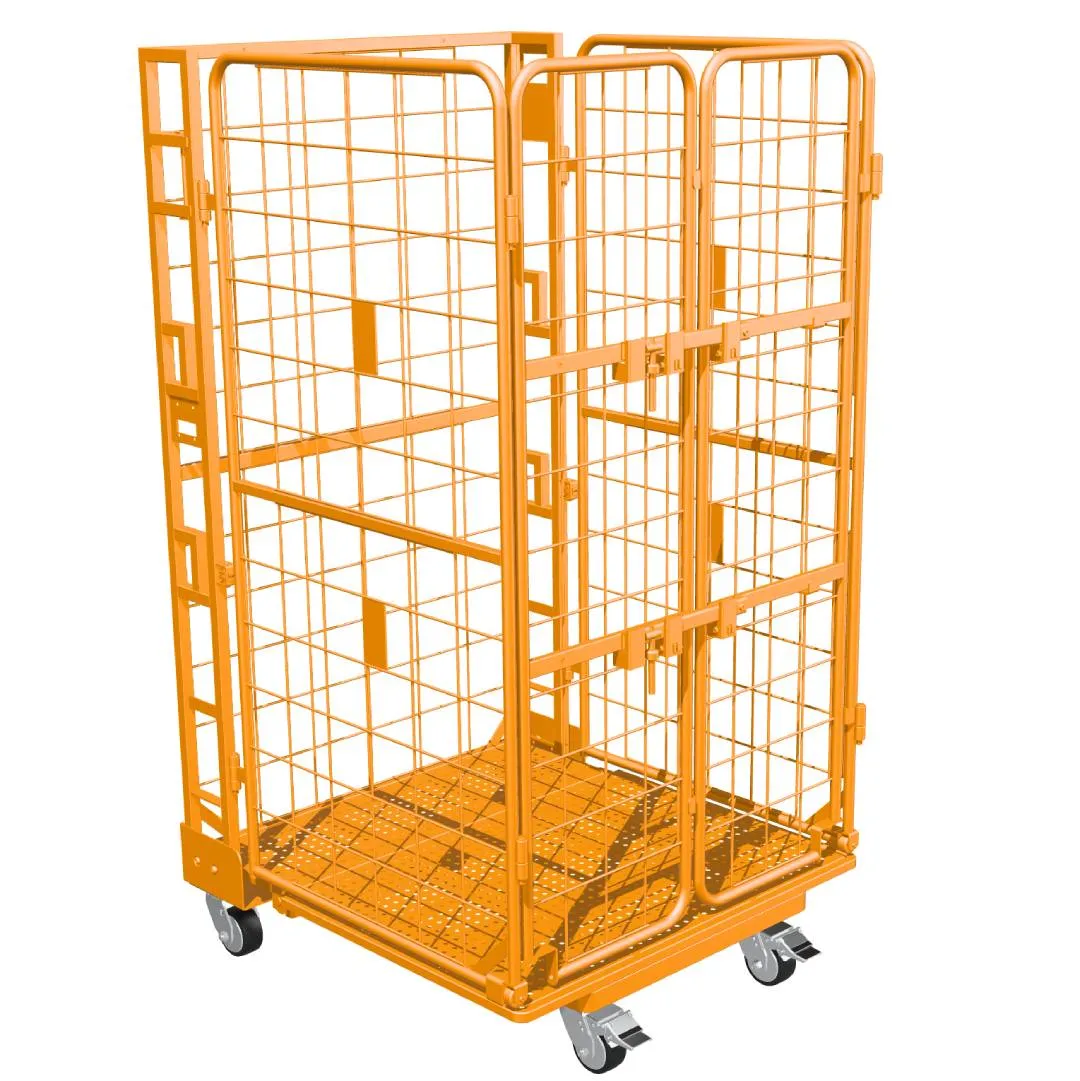
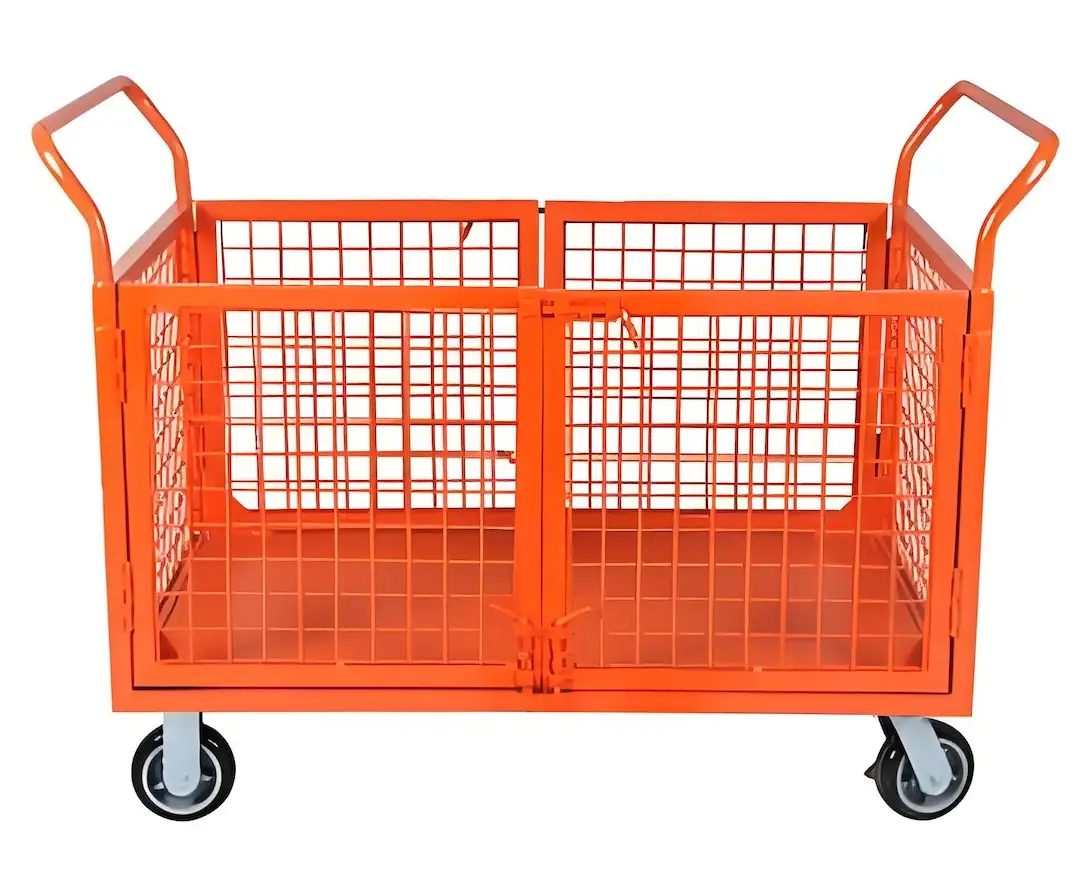
Cage and Security Stocking Carts for High-Value Items
Mesh sides and lockable doors protect controlled SKUs, tools, or electronics during movement between secure zones.
Key Design & Structural Features
Robotic-Welded Steel Frame and Base Construction
At Able Hardware, main frames and bases are welded on robotic cells as part of our welding fabrication capability. This improves weld consistency, dimensional accuracy, and long-term durability, especially important for tall carts and ladder modules built on stable welded steel frames.
Shelf Configurations: Flat, Slanted, and Flow-Through Shelves
We combine flat shelves for cartons, slanted shelves for better visibility, and flow shelves for first-in-first-out handling where required. Different shelf styles can be used within the same cart family.
Compartments, Bins, and Tote Layouts for Multi-Order Picking
Layouts are built around your tote sizes and order profile. Dividers, bins, and colour coding help operators keep multiple orders clearly separated on one cart.
Handles, Guard Rails, Corner Bumpers, and Operator Aids
Ergonomic push handles, end rails, and optional corner bumpers protect both operators and infrastructure. Guard rails or side panels keep goods stable when turning or braking.
Forklift, Walkie, and Tugger Compatibility
For longer routes, we can add tow bars, hitch points, or fork pockets so carts can be moved by tuggers, walkies, or order pickers as part of a tugger train system.
Shelves, Compartments, and Slot Design
Shelf Size, Depth, and Spacing for Different SKUs
Shelf dimensions and spacing are defined around carton sizes, SKU mix, and reach limits. Our engineers check that operators can load and pick safely without excessive bending or stretching.
Slanted Shelves for Visibility and Short Reach
Angled shelves bring products closer to the operator and improve label visibility, which is especially useful for small items and high-frequency picks.
Wire Baskets, Cubes, and Tote Positions for High Slot Density
Wire cubes or defined tote positions increase available pick locations on a single cart, supporting dense, multi-order picking with clear slot ownership.
Front Lips, Retainers, and Dividers to Prevent Product Falls
Front lips, retaining bars, and adjustable dividers reduce product spills when moving quickly or over uneven floors, lowering damage and rework.
Casters, Wheels, and Mobility Performance
Caster Configurations: 2 Rigid + 2 Swivel, All Swivel, Braked
Caster layouts are chosen according to aisle width, turning patterns, and operator preference. Options include 2 rigid + 2 swivel, all swivel for tight turning, and swivel casters with brakes or total-lock systems.
Wheel Diameter, Tread Materials, and Floor Compatibility
Wheel diameter and tread material are matched to floor conditions and noise limits. Rubber and TPR run quietly; polyurethane and nylon support higher loads and longer runs.
Push/Pull Effort and Turning Radius in Narrow Aisles
By balancing wheel size, caster position, and handle height, we help you control push force and turning radius, critical in narrow aisles and around rack ends.
Noise Reduction and Vibration Control in Busy Facilities
Low-noise wheels, rigid frames, and quality bearings reduce vibration and sound levels, improving working conditions in busy distribution centres.
Materials and Surface Finishes
Carbon Steel, Stainless Steel, and Aluminum Frame Options
Most frames use carbon steel tube or channel for a strong, cost-effective structure. Stainless steel or hybrid designs can be offered for corrosive or hygienic areas, with aluminium used selectively where weight reduction is important.
Powder Coating, Zinc Plating, and Galvanized Finishes
We offer powder-coated, zinc-plated, and galvanised surfaces. Finish selection is based on environment, cleaning methods, and required corrosion resistance.
Coating Thickness, Corrosion Resistance, and Durability
Coating thickness and preparation are controlled to support long service life in indoor warehouses, cold rooms, or semi-exposed areas.
Material Choices for Cold-Room, Hygienic, and Retail Areas
Cold-room carts use low-temperature compatible wheels and finishes with good corrosion resistance. For hygienic or front-of-store use, we focus on smooth, easy-to-clean surfaces and consistent appearance.
Applications and Working Environments
E-Commerce Fulfillment and 3PL Warehouses
Multi-order and high-density carts help increase lines picked per hour and adapt quickly to changing SKU mixes in fulfilment centres and 3PL operations.
Grocery and Retail Store Aisle Picking
Compact, quiet carts with good manoeuvrability support night replenishment and in-aisle picking without disturbing customers or damaging fixtures.
Manufacturing and Lineside Parts Replenishment
In factories, stocking picking carts act as mobile supermarkets for components and kits. Carts can be designed to dock with lineside racks or supermarket shelving, leveraging the same welded steel frames and component philosophy used in other custom structures.
Cold-Room / Freezer Picking and Special Environments
For cold-room operations, we combine suitable coatings and wheel materials with insulated, operator-friendly touch points where appropriate.
Safety and Ergonomics
Brakes, Anti-Tip Design, and Stability Considerations
Stable wheelbases, correct height-to-width ratios, and robust frames reduce tipping risk. Brake options allow operators to secure the cart during picking or when using ladder sections.
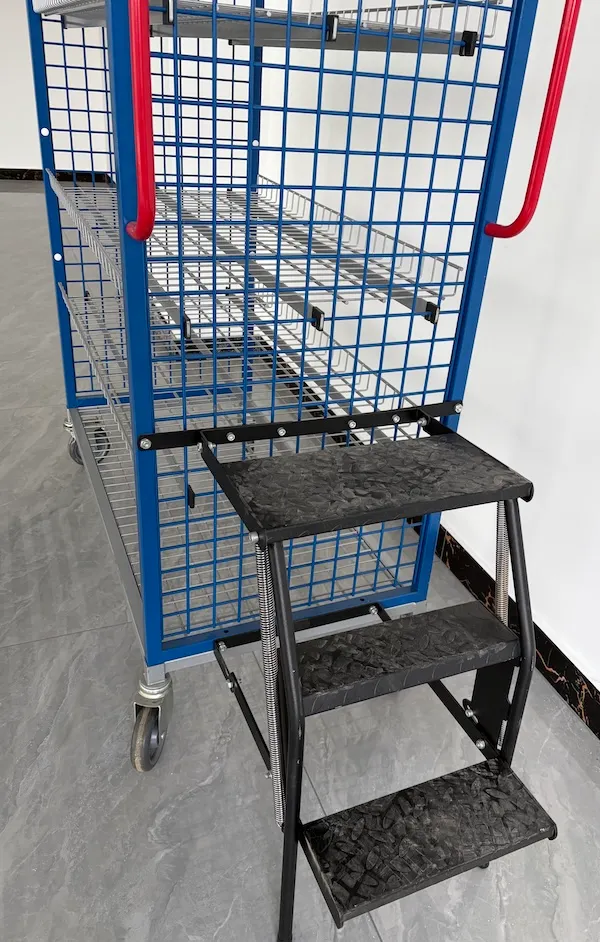
Ladder Safety on Stock Picking Ladder Carts
Ladder carts include anti-slip treads, guard rails, and locking mechanisms so operators can work at height with confidence, within defined load limits.
Handle Heights, Shelf Angles, and Operator Reach
We design around typical operator anthropometrics, optimising handle height, shelf levels, and angles to cut fatigue and reduce strain over long shifts.
Labeling, Load Rating Plates, and Workplace Safety Practices
Clear load rating plates, warning labels, and ID tags help you integrate carts into your existing safety and quality control programmes.
Manufacturing with Robotic Automatic Welding (Chinese OEM)
Robotic MIG Welding for Frames and Ladder Assemblies
Robotic MIG welding in our China factory delivers consistent bead quality, reduced distortion, and high productivity for frames, bases, and ladder modules. These MIG welding services support both standard designs and fully custom OEM projects.
Laser Cutting, Punching, and Bending of Shelves and Brackets
Shelves, brackets, and gussets are processed by laser cutting or punching and CNC bending to achieve precise fit and clean edges.
Jigs, Fixtures, and Dimensional Control for Large Batches
Dedicated jigs and fixtures control critical dimensions such as wheelbase, ladder angle, and shelf spacing, ensuring interchangeability across batches.
In-Process Quality Checks and Final Assembly Procedures
We combine in-process checks with final quality inspection of mobility, finish, and assembly, providing export-ready stocking picking carts for global customers.
Quality Assurance and Testing
Load Testing for Cart and Shelf Capacity
Representative carts are load-tested to verify rated capacities for both cart and individual shelves, considering uniform and concentrated loads.
Stability and Anti-Tip Testing with Realistic Loads
We assess stability under realistic loading, including higher loads on upper shelves or during ladder use, and adjust geometry where necessary.
Coating Thickness, Adhesion, and Corrosion Testing
Coating thickness and adhesion are checked against agreed specifications. For demanding environments, additional corrosion testing can be defined together with your QA team.
Inspection Documents and QA Records for OEM Projects
Inspection reports, packing lists, and photos can be provided in line with your internal quality inspection and supplier management requirements.
Customization and OEM Services
Custom Sizes, Load Ratings, and Shelf Layouts
Able Hardware offers custom sizes, load ranges, and shelf layouts so stocking picking carts fit your racking, SKUs, and workflow.
Custom Casters, Wheel Materials, and Brake Options
Wheel material, diameter, bearing type, and brake system are selected to match your floor, travel distance, and noise limits.
Custom Colors, Branding, Logos, and ID Plates
We can apply your brand colours, logos, and asset IDs so carts integrate visually and operationally into your network.
Integration of IT Accessories: Scanner, Tablet, and Label Holders
Scanner brackets, tablet trays, and document pockets can be integrated from the start to support digital picking and real-time data capture.
Fast Prototyping and Engineering Support
Reviewing Customer Drawings and 3D Models
You can send existing drawings, 3D files, or photos with basic dimensions. Our engineers translate them into manufacturable designs aligned with your standards.
DFM (Design for Manufacturability) for Stocking Picking Carts
We review tube sizes, weld runs, caster fixings, and packing to reduce cost and assembly time while maintaining performance, leveraging our experience in welding fabrication and export projects.
Prototype and Pilot Cart Builds for On-Site Trials
Prototype or pilot batches allow you to test carts in real operations, collect operator feedback, and confirm fit before scaling.
Engineering Change Management During Ramp-Up
Design changes are controlled and documented, ensuring future production follows the agreed specification.
Cost and Price Factors for Stocking Picking Carts
How Design Complexity and Materials Affect Cost
More complex frames, ladder systems, and high-density layouts increase material usage and fabrication time. Stainless and aluminium add cost relative to standard carbon steel.
Impact of Load Rating, Ladder Modules, and Accessories on Price
Higher load ratings, integrated ladders, security cages, and IT accessories all influence price; we highlight these cost levers during quotation.
Batch Size, Tooling, and Welding Automation Cost Levers
Larger, repeat batches improve utilisation of jigs and robotic MIG welding services, enabling more competitive wholesale price levels from our China factory.
Balancing Upfront Price vs Lifetime Operating Cost
Investing slightly more in robust, ergonomic carts can reduce downtime, damage, and labour cost over the life of the equipment.
Packaging, Shipping, and Container Loading
KD (Knock-Down) and Nestable Designs to Save Freight
We can design stocking picking carts as knock-down kits or nestable frames so more units fit in each 20GP or 40HQ container.
Palletization and Container Loading Plans (20GP/40HQ)
Standard packing patterns and container loading plans help you plan inbound volumes and distribution to multiple sites.
Protective Packaging to Reduce Transit Damage
Corner protection, wrapping, and labelled hardware kits reduce damage risk and simplify assembly at destination.
Shipping Terms and Coordination with Forwarders
We work with your nominated forwarders under common Incoterms and align shipping schedules with your project milestones.
Implementation Checklist Before Ordering
Checklist Before Finalizing Your Stocking Picking Cart Design
Before placing an order, confirm:
- Load per cart and per shelf (kg)
- Aisle width and turning space
- Environment (ambient, cold-room, hygienic)
- Wheel and caster preferences
- Required documents, markings, and branding
When a Custom OEM Programme Makes Sense
If you operate multiple sites, have specific workflows, or plan recurring orders, a standardised custom OEM stocking picking cart programme usually delivers better total cost and performance than one-off spot purchases.
Partnering with a Robotic-Welding Chinese Factory
With robotic welding, in-house fabrication, custom-welded steel frames, and export-focused QA, Able Hardware can support long-term programmes as a stable, engineering-led supplier of stocking picking carts.
Call to Action
Looking to upgrade or standardise your stocking picking carts across one or more sites?
Share your current cart photos, basic dimensions, load requirements, and environment details with Able Hardware. Our engineers will recommend a custom stocking picking cart concept and provide a clear OEM quotation from our China factory, including prototype and production lead times.
Request A Quote
More Industrial Trolley Cart: