Table of Contents
Custom Platform Trolley Supplier for OEM/ODM Projects
If your team needs a reliable source for heavy-duty platform trolleys—built to your drawings, load targets, and workflow—Able Hardware is a China-based factory focused on OEM/ODM manufacturing for B2B buyers. We produce platform trolleys as part of our broader Industrial Trolley Cart portfolio, serving procurement managers, engineers, and quality teams who require stable repeatability and export-ready documentation.
Why Choose a China-Based OEM Platform Trolley Supplier
For B2B buyers, selecting a supplier is not only about unit cost—it’s about total cost of ownership: durability, downtime, worker efficiency, and reduced damage risk. A capable China OEM factory can deliver strong value when it combines mature fabrication capability with controlled QA and fast engineering response.
Able Hardware supports:
- Custom engineering for load cases, deflection targets, and component selection
- Robotic welding for consistent weld geometry and repeatability
- Surface finish options matched to environment and corrosion needs
- Inspection records and export-ready packaging to minimize transit damage
- Custom branding and standardization for multi-site rollouts
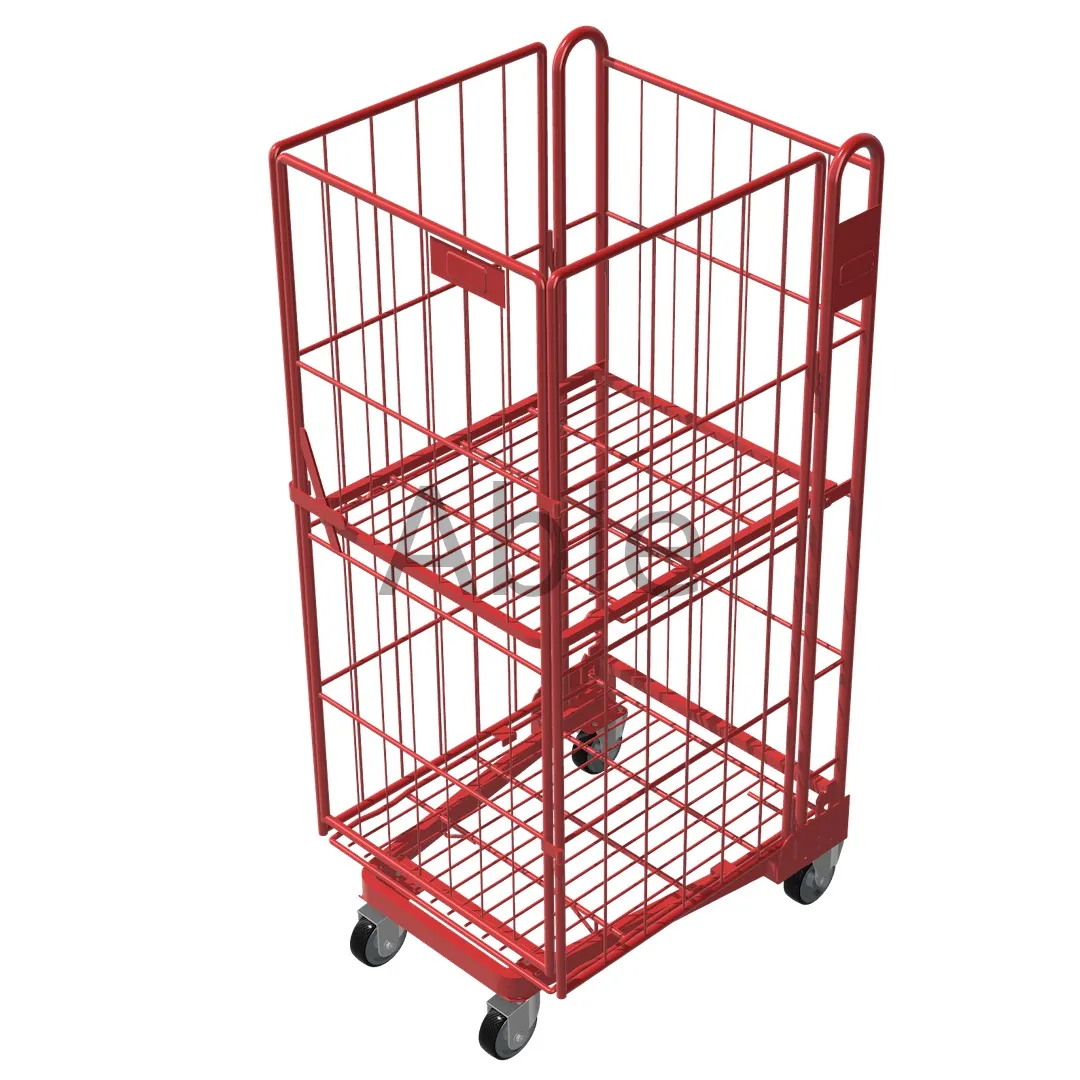
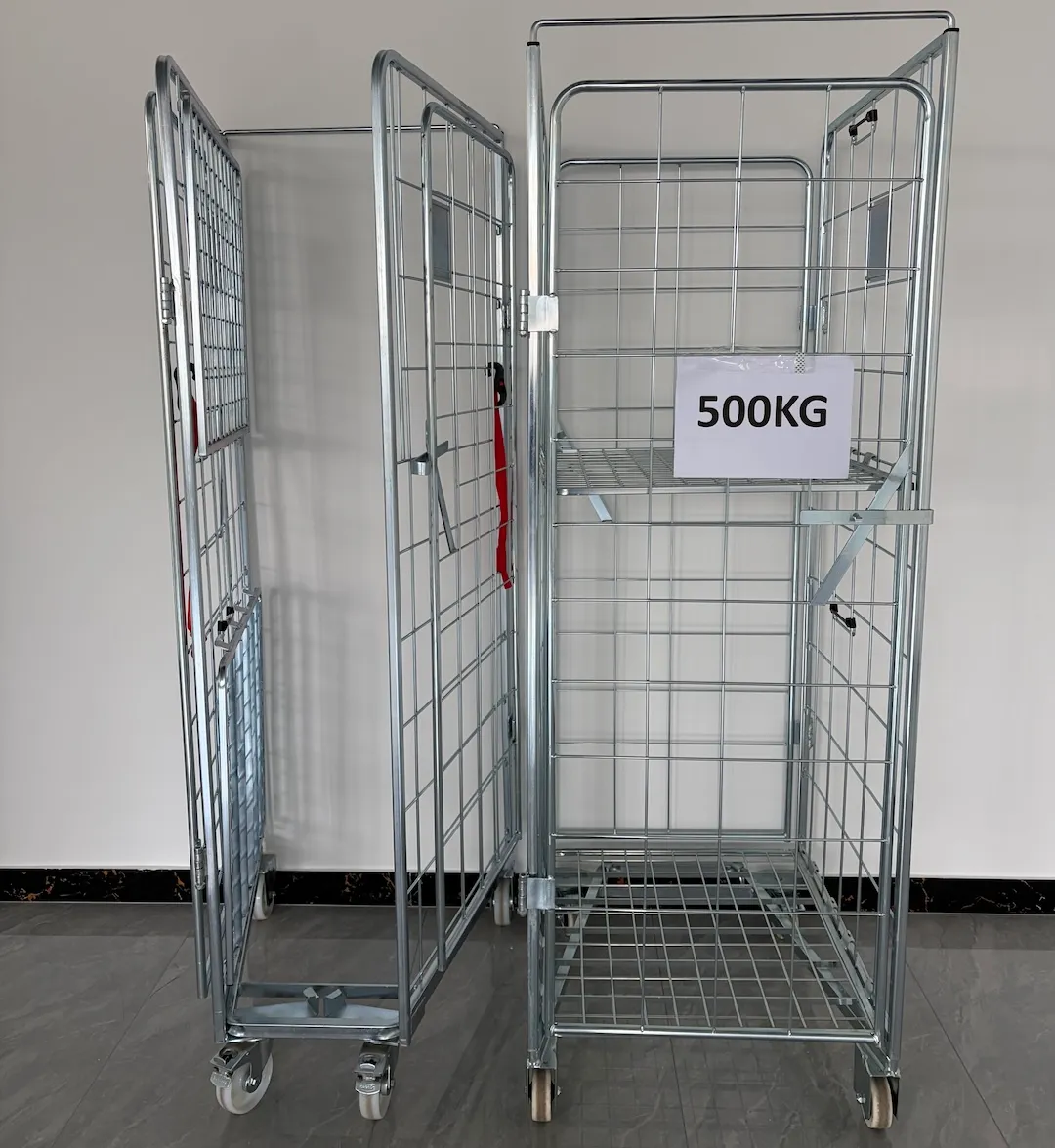
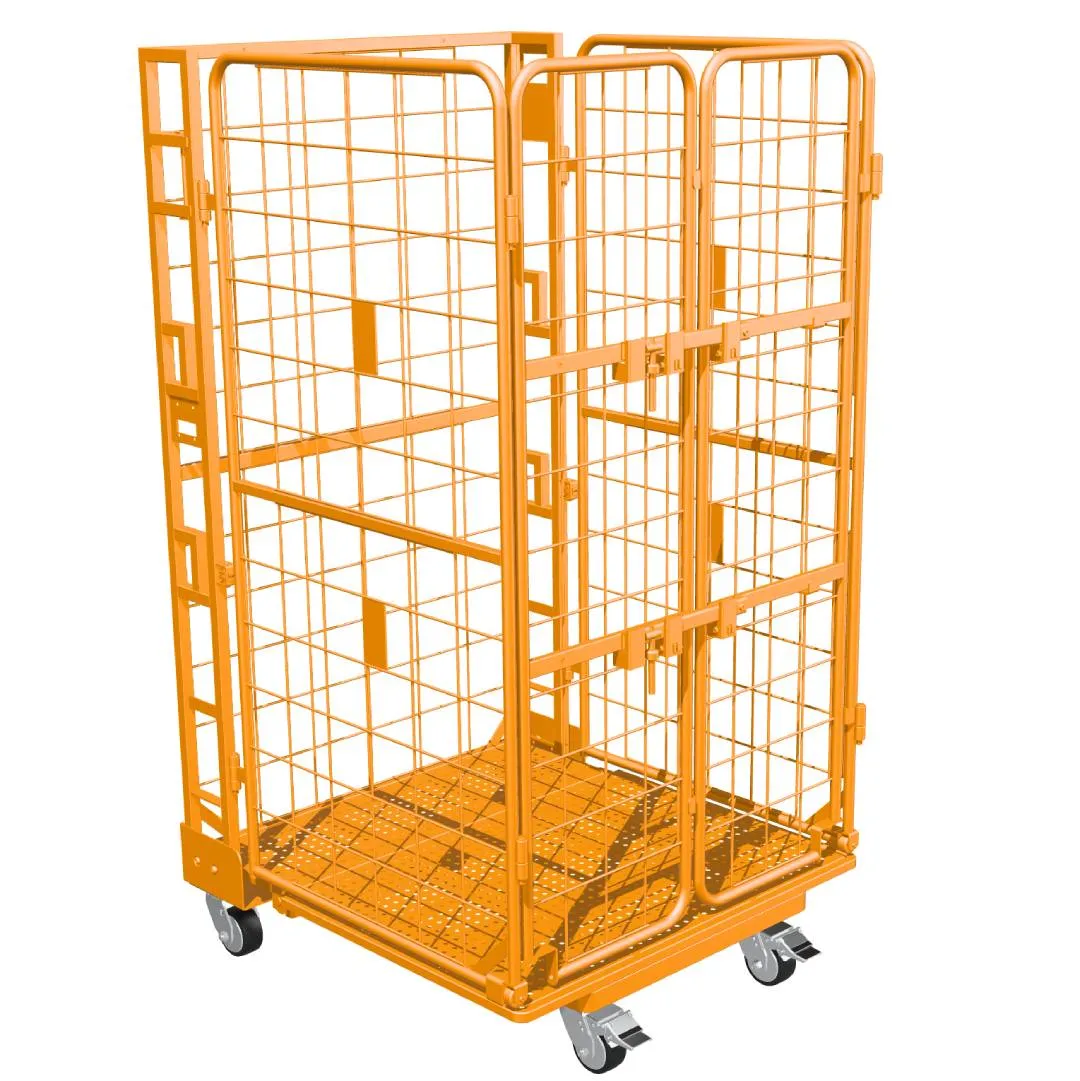
If your product ecosystem includes cages or rolling containers, we can also coordinate platform trolley programs with Logistic Roll Cage Trolley and related warehouse systems for consistent usability and spare-part strategy.
Custom Platform Trolley Types We Manufacture
Platform trolley designs should be driven by use case, aisle conditions, load geometry, and the way operators interact with the cart. Below are common categories we produce for OEM/ODM customers.
Flat Deck Platform Trolleys (Flat Deck / Flatbed)
The classic flat deck platform trolley is ideal for uniform loads and general transfer. We engineer the deck and frame to meet your rated load capacity (UDL and point load), then select casters to match floor conditions and turning needs. Options include low-profile decks for stability and heavy-duty frames for higher capacity.
Steel Deck Platform Trolleys (Heavy-Duty Industrial)
Steel deck trolleys are preferred for abrasive environments, heavy parts, or repeated impacts. Deck thickness, ribbing, and frame cross-bracing are configured to control deflection and reduce vibration. For harsh duty cycles, we can specify reinforced corners, bumpers, and improved coating thickness.
Elevated-Deck Platform Trolleys (Work-Height Transfer)
Elevated-deck designs reduce bending and improve ergonomic transfers between workstations. These are common in kitting, assembly, and packaging lines where the cart becomes a mobile work surface. Key design points include deck height, stability (anti-tip), and caster selection to reduce push force.
Side-Loading Platform Trolleys (Fast Loading From the Side)
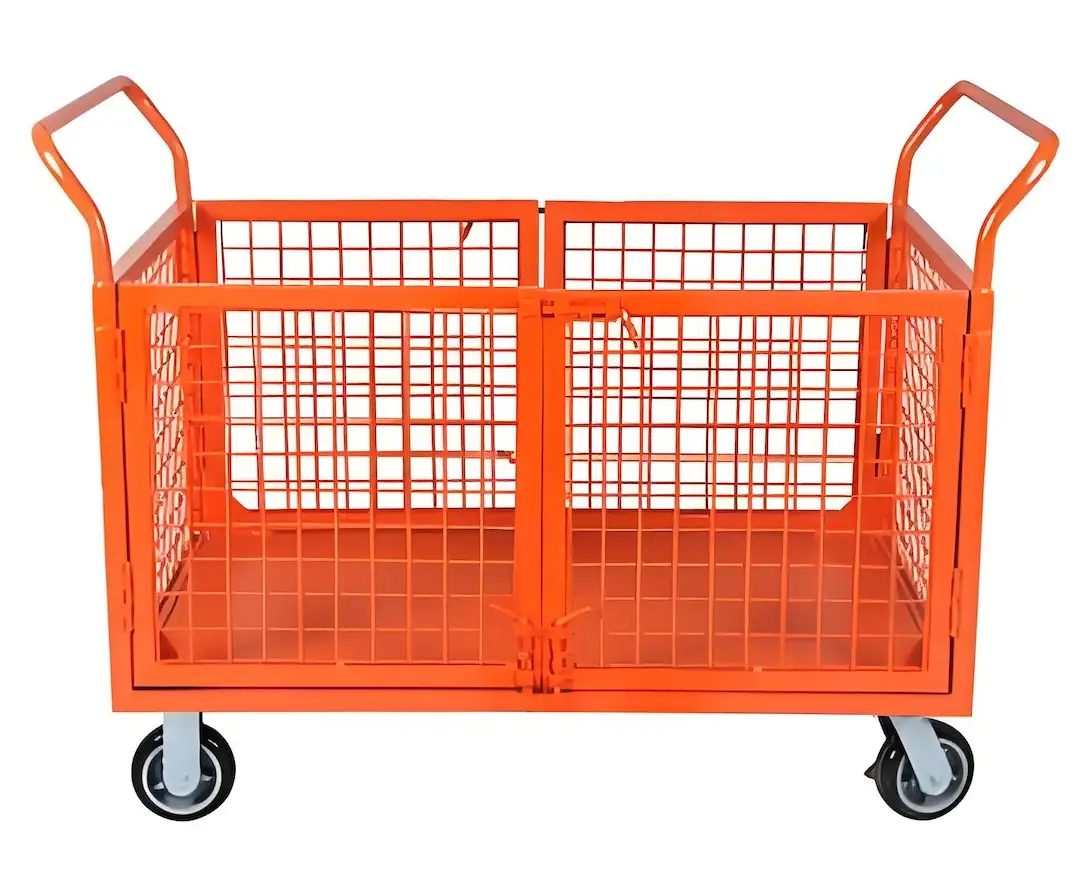
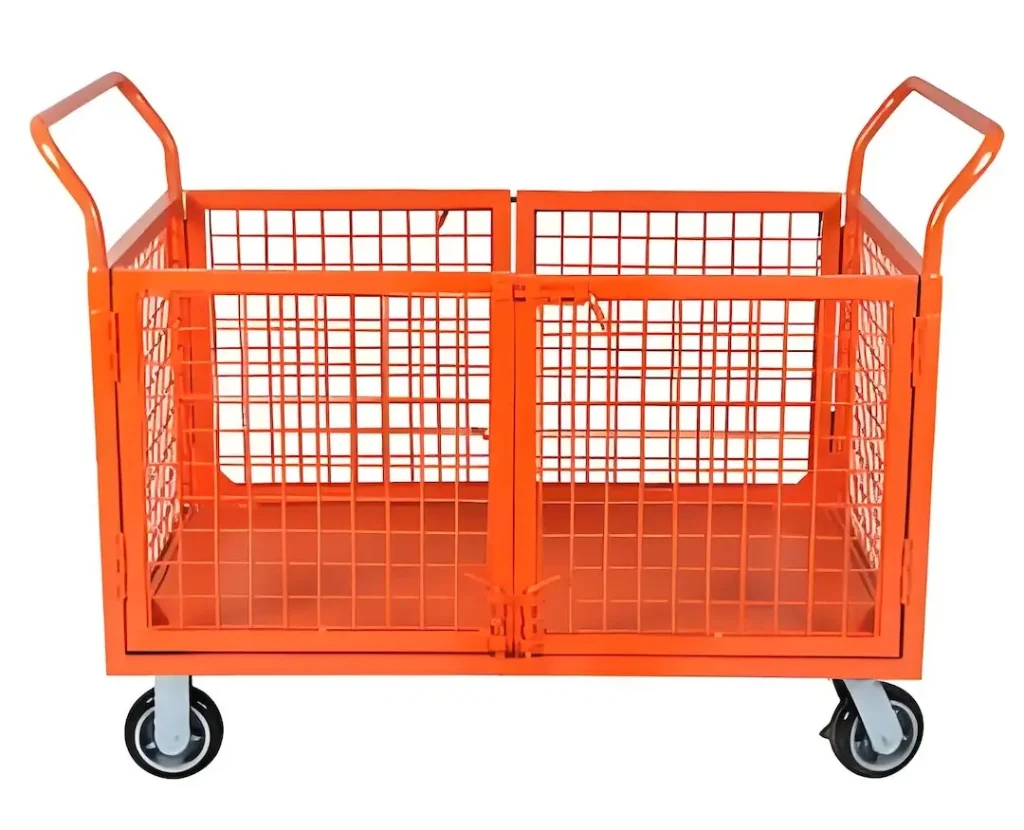
Side-loading platform trolleys improve workflow where access from the side is required—such as staging next to conveyors, shelves, or wrapping stations. Side rails, removable posts, and tie-down points can be added to secure irregular loads while keeping side access open.
Rotating-Platform Trolleys (Turntable Deck)
Rotating-platform (turntable) trolleys allow multi-sided access without repositioning the cart, improving productivity in packing, sorting, and inspection. The bearing structure and rotation control are engineered for stable rotation under expected load, with safety considerations to prevent pinch points and uncontrolled movement.
Stacking Platform Trolleys (Flat Stacking / Stackable)
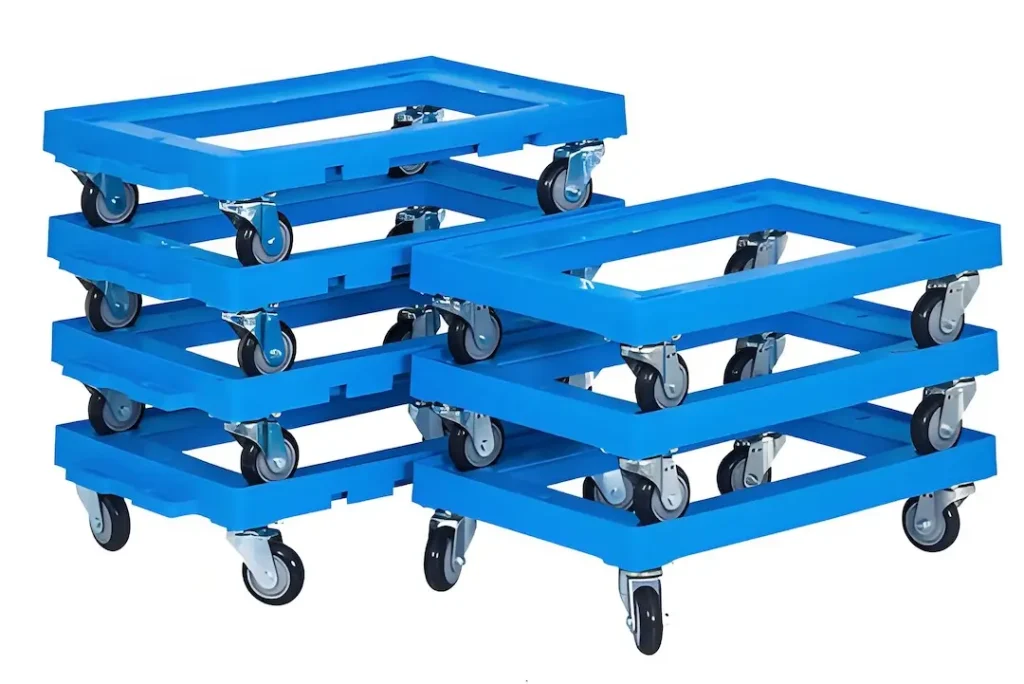
Stackable platform trolleys reduce storage footprint and improve backroom organization. We design stacking interfaces to prevent shifting and to protect coated surfaces. Stackable formats can also enhance shipping efficiency by increasing units per container.
U-Boat Platform Trolleys (Warehouse & Retail Backroom)
U-boat style platforms are widely used for replenishment and retail backroom handling. We customize deck size and handle geometry to match your aisle widths and item dimensions, and we can integrate corner guards and bumpers to reduce product damage in high-traffic areas.
Towable Platform Trolleys (Tow Bar / Tugger-Compatible)
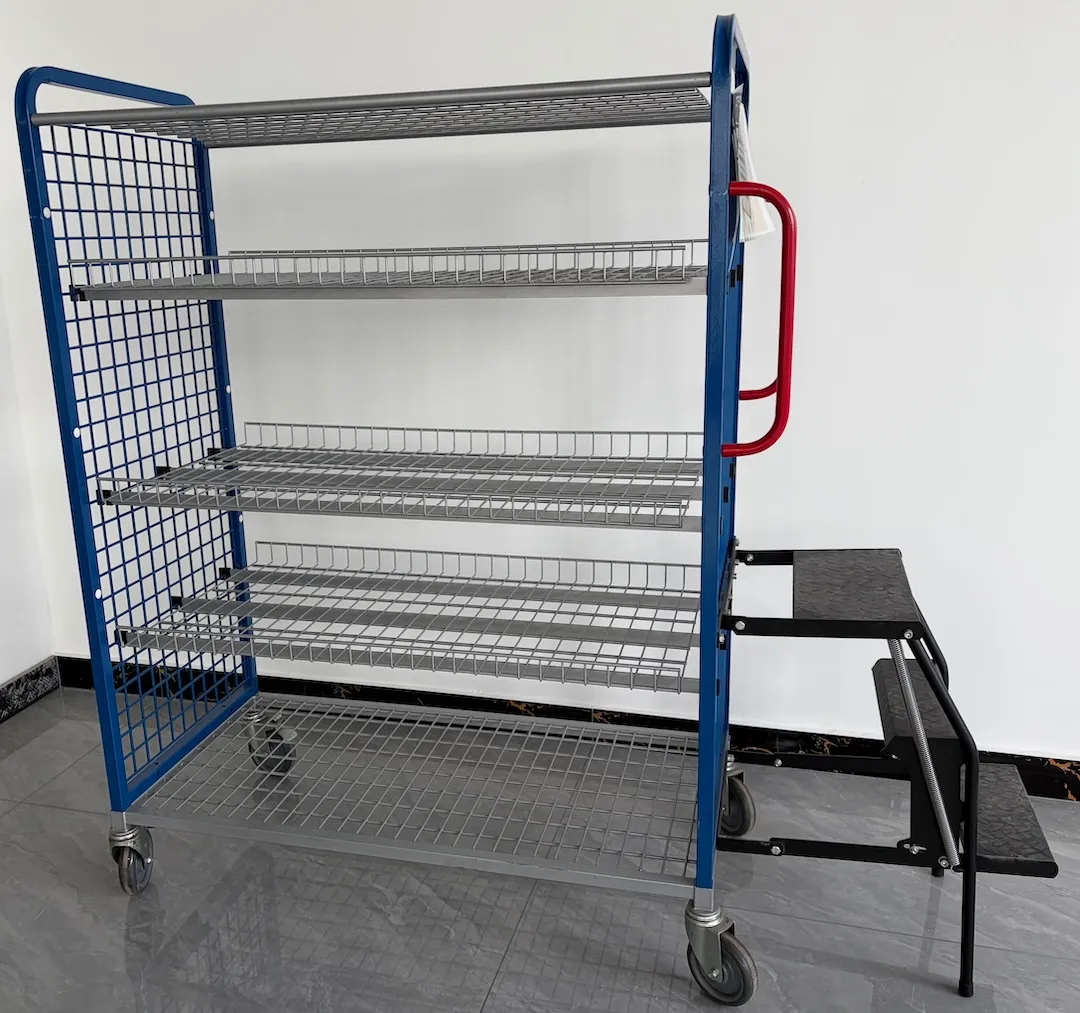
Towable trolleys are designed for tugger trains and material flow. We can integrate tow interfaces, drawbars, and connection points, and help standardize coupling height and turning behavior across your fleet. If you also use picking carts in the same routes, we can coordinate designs with Stocking Picking Carts for consistent ergonomics and warehouse rules.
Collapsible / Foldable Platform Trolleys (Space-Saving Storage)
Foldable/collapsible designs help when storage space is limited or when carts return empty from distribution routes. Hinges, locks, and folding mechanisms are selected for cycle life and safe operation, with attention to rattle reduction and finish wear.
KD / Knock-Down Platform Trolleys (Lower Freight Cost)
Knock-down (KD) platform trolleys ship unassembled to reduce volume and freight cost drivers. KD design requires careful engineering of bolted joints, assembly repeatability, and packaging protection for coated surfaces. For customers who already buy Folding Logistic Trolley, KD platform designs can share fastening standards and assembly instructions for simpler onboarding.
Motorized Platform Trolleys (Powered / Electric Platform Carts)
For operations focused on injury reduction and productivity, motorized platform trolleys can reduce push/pull force and improve safety with controlled drive and braking. We support OEM builds where the customer provides drive specifications and performance targets, and we fabricate the structural chassis, deck, and accessory interfaces to match the system requirements.
Power-Assist Platform Trolleys (Traction-Drive / Push-Assist)
Power-assist designs bridge the gap between manual and full motorized platforms. Structural design focuses on stable handling, predictable steering, and safe braking under load. These carts often require clean routing for components and protected mounting points.
Motorized Scissor-Lift Platform Trolleys (Move + Lift)
For combined transport and elevation, scissor-lift platform designs require tight control of stiffness and stability across lift heights. We support structural fabrication, deck integration, and protective guarding based on your safety requirements.
Customization Options for Your Platform Trolley
Custom Deck Size, Height, and Load Rating (UDL vs Point Load)
We define load ratings based on realistic conditions: uniformly distributed load (UDL), point load, and dynamic load during movement or threshold crossing. Deck size and height must match both load geometry and operator reach. If the trolley interfaces with storage systems, we can coordinate dimensional compatibility with Custom Industrial Storage Solutions to reduce handling steps.
Deck Surface Options: Smooth, Tread, Anti-Slip, Rotating Deck
Deck surfaces are chosen for grip, durability, and the type of goods moved. Smooth decks are easier to clean and slide goods across; tread and anti-slip decks improve stability. For specialized workflows, rotating decks enable multi-sided access.
Frame & Chassis Design: Tube Size, Cross Bracing, Deflection Targets
Frame design controls strength and deflection. We select tube profiles and thicknesses, then configure cross braces, gussets, and deck supports to meet stiffness targets. For customers also sourcing structural subassemblies, we can align specifications with Custom Metal Welding Frames programs for consistent manufacturing standards.
Caster & Wheel Selection: Diameter, Tread Material, Bearings
Casters often determine real-world performance more than the frame. We select wheel diameter and tread material to match your floor conditions (concrete, epoxy, rough surfaces), noise expectations, and rolling resistance targets. Bearing choice affects long-term durability and push force.
Mobility Layouts: 2 Rigid + 2 Swivel, 4 Swivel, Center-Caster Steering
Layout determines turning radius and control. A 2 rigid + 2 swivel configuration is stable for straight paths; 4 swivel improves maneuverability in tight spaces; center-caster steering can deliver tight turning with better tracking. We help you select a layout that balances turning needs with safety and operator training.
Brakes & Control: Total Lock, Directional Lock, Parking Brake
Brakes are critical for ramps, staging zones, and safe loading/unloading. Options include total lock brakes, directional locks, and parking brakes depending on your operation and risk assessment.
Handle Options: Fixed, Removable, Ergonomic Push Bars
Handle height, angle, and grip geometry influence push force and operator fatigue. We can provide fixed or removable push bars, reinforcing mounts to handle high cycle use, and adding protection to reduce finish wear.
Load Control: Removable Posts, Side Rails, Tie-Down Points
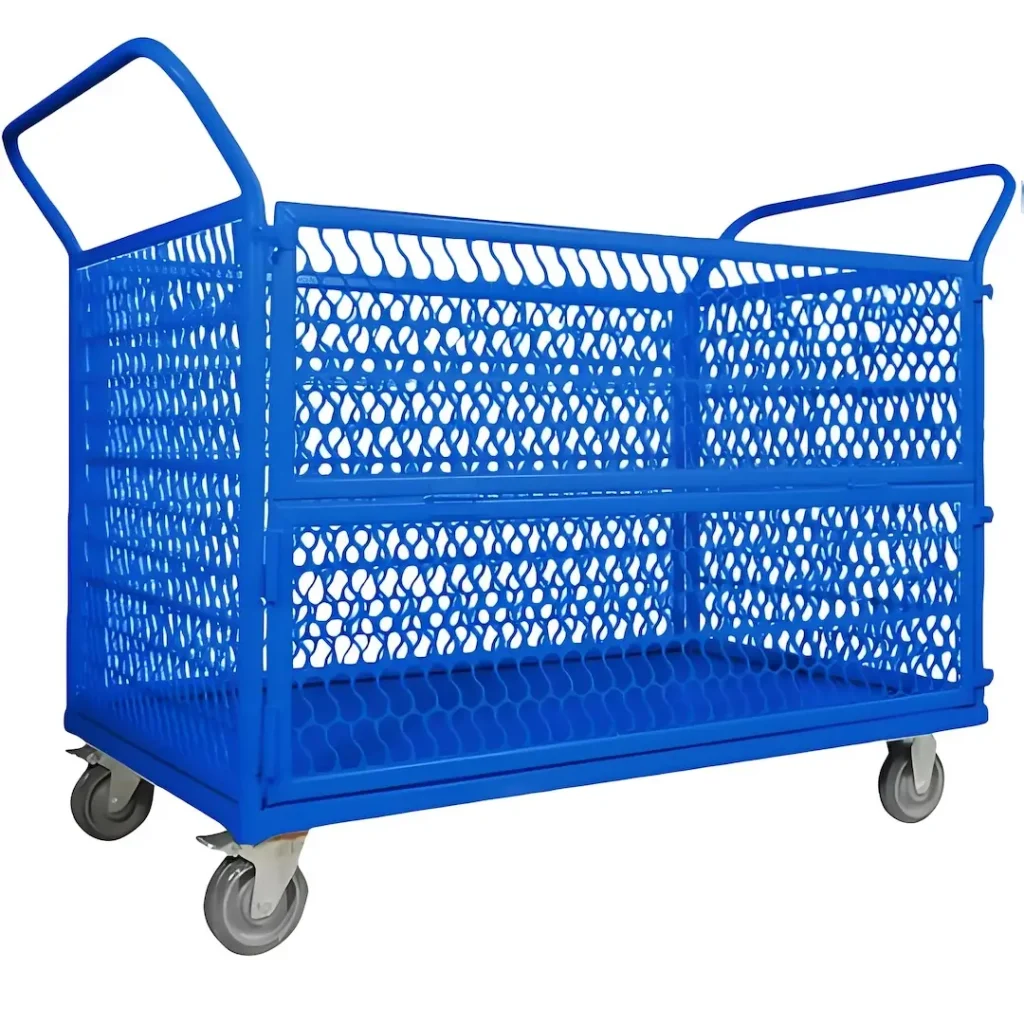
To stabilize irregular loads, we can integrate removable posts, side rails, and tie-down points. These features reduce product damage and improve safety during high-traffic movement.
Forklift Features: Fork Pockets and Lift Points
When forklifts are part of the flow, fork pockets and lift points can improve safe handling and staging. We design these features to protect the chassis from impact and to maintain structural integrity.
Accessories: Bumpers, Corner Guards, Label Holders, ID Plates
Accessories improve usability and standardization: bumpers reduce damage; corner guards protect walls and products; label holders support kanban or inventory routing; ID plates enable asset tracking. If your program uses rolling containers, consider pairing platform trolleys with a Wire Mesh Rolling Cart for different load profiles within the same facility.
Materials and Surface Finishes
Material Choices: Carbon Steel, Stainless Steel, Aluminum
Carbon steel is cost-effective and widely used for industrial trolleys. Stainless steel supports hygienic environments and corrosion resistance. Aluminum reduces weight for easier handling. Material selection should consider load rating, environment, and lifecycle cost—not just initial unit price.
Surface Finishes: Powder Coating, Zinc Plating, Galvanizing, E-Coating
Finishes are selected based on corrosion exposure, abrasion, and appearance. Powder coating suits indoor environments and custom branding. Zinc plating or galvanizing can support outdoor or higher-corrosion environments. E-coating can improve coverage in complex geometries.
Corrosion & Wear Requirements by Use Environment
We match finish systems to the actual environment: indoor dry warehouses, wet areas, coastal exposure, or frequent washdown. The right finish reduces rust risk, maintains appearance, and protects weld areas over long duty cycles.
Color & Branding: RAL/Pantone, Logo Plates, Nameplates
Branding is part of operational clarity. We support RAL/Pantone color matching, logo plates, and durable ID marking for asset management across multiple sites.
Engineering, Prototyping, and OEM Project Workflow
RFQ Checklist: What to Share for Accurate Quotation
For a fast, accurate quotation, share: load capacity targets, deck size, caster preference, working environment, expected duty cycle, and any interface constraints (racks, doors, conveyors). Drawings, photos, or a reference cart help accelerate the DFM process.
Pricing is typically driven by structure weight, deck construction, caster selection, finish requirements, accessory complexity, and packaging method (assembled vs KD). We provide price ranges based on these drivers rather than a single absolute number, so you can compare design options transparently.
DFM Review: Optimizing Strength, Cost, and Manufacturability
During DFM, we optimize tube sizes, joint strategies, and fixturing to control distortion and improve repeatability. We also confirm critical-to-quality dimensions that affect assembly, stacking, and fleet compatibility.
Fast Prototyping: Sample Build, Testing, and Approval
Prototype builds validate fit, function, and handling. We can support initial samples, implement changes quickly, and create approval records that lock the specification for mass production.
Pilot Run to Mass Production: Repeatability for Long-Term Supply
A pilot run confirms process stability and packaging robustness. After approval, we standardize fixtures and inspection points to ensure repeatable shipments for long-term programs.
Engineering Change Control (ECN) and Version Management
We manage revisions through clear version control, avoiding mixed parts in the supply chain and maintaining traceability for quality audits.
Robotic Automatic Welding and Fabrication Capabilities
Robotic MIG Welding for Consistent Weld Quality
Consistent weld geometry improves both strength and appearance, while reducing rework. Our production uses fixture-based welding and repeatable processes supported by Automated Robotic Welding Services to improve dimensional stability across batches.
Laser Cutting, Bending, Stamping, and Fixture-Based Assembly
Flat parts, brackets, and plates are produced with controlled cutting and forming processes, then assembled in dedicated fixtures to reduce variation. This is critical for stackable interfaces, fork pockets, and removable post alignment.
Weld Appearance, Strength, and Dimensional Repeatability Targets
We control weld placement and distortion to protect key interfaces—caster mounts, deck flatness, stacking points, and handle alignment—so your fleet performs consistently across sites.
Quality Assurance and Testing
Incoming Material Inspection and Traceability
We verify incoming materials and maintain traceability for critical items so that mechanical properties and coating performance remain stable across production.
Dimensional Inspection: Critical-to-Quality (CTQ) Control
We define CTQ dimensions such as deck size, overall height, caster mounting geometry, and stacking interfaces. Records can be provided as part of your documentation package.
Load Testing: Static, Dynamic, and Safety Factors
Load testing validates real-world performance. Depending on your program, we can evaluate static load, dynamic movement conditions, and safety factors to confirm that the trolley meets the intended duty cycle.
Caster Load Verification and Rolling Performance Checks
Caster performance is checked against rated load distribution and handling behavior. Rolling checks can be used to confirm maneuverability and turning performance.
Coating Inspection: Thickness, Adhesion, Salt-Spray (If Required)
Coating thickness and adhesion inspections help prevent premature corrosion. Salt-spray testing can be supported when your program specifies corrosion performance targets.
Final Inspection, Photo Records, and Shipment Release
Final inspection includes visual checks, dimensional verification on key points, packaging confirmation, and release documentation through our Quality control system.
Applications and Industries Served
Warehouse, Logistics, and Bulk Transfer
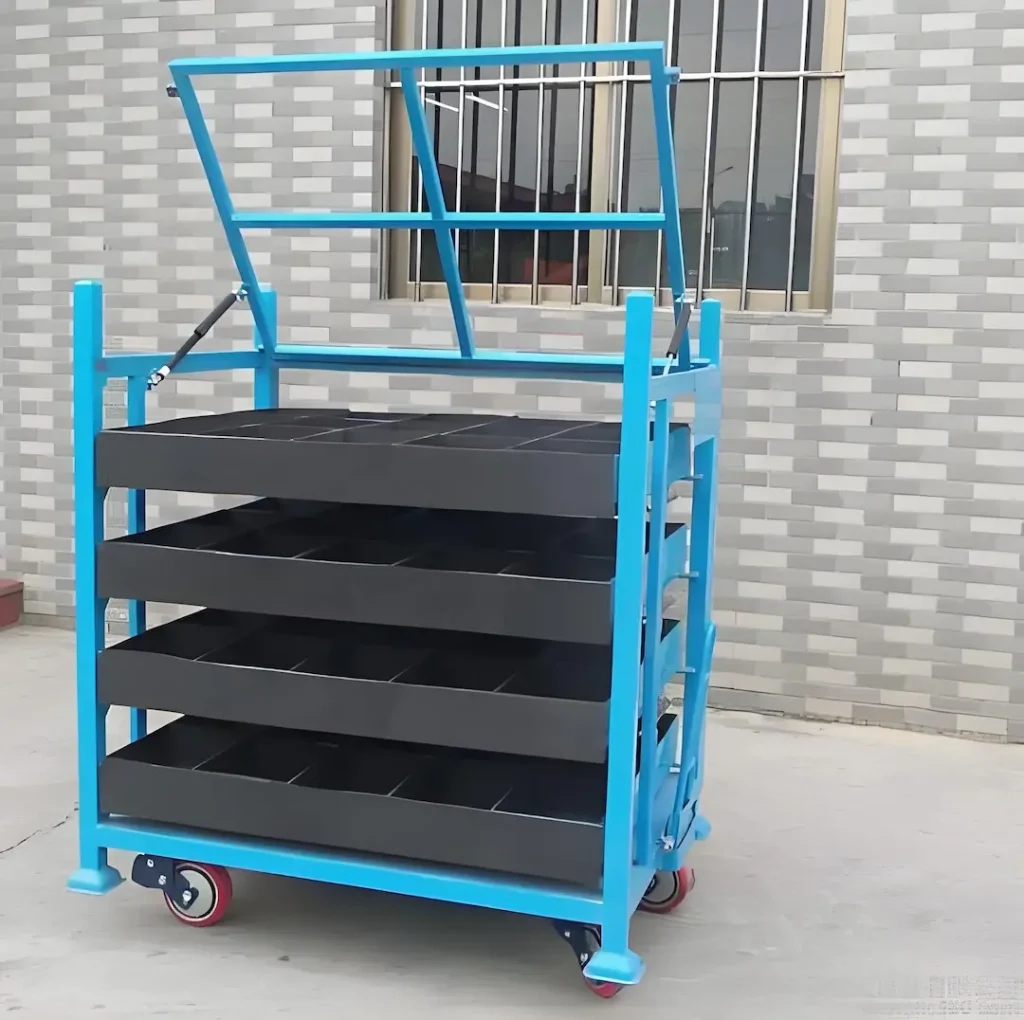
Platform trolleys are core tools for warehouses—moving cartons, totes, and bulky items efficiently. For broader solutions, many customers align trolleys with Material-Handling Carts & Racks for Warehouse & Logistics to standardize handling methods and reduce damage.
Manufacturing: Line Feeding, Kitting, WIP Movement
In manufacturing, platform trolleys support line feeding, WIP movement, and kitting. Elevated decks and ergonomic handles can improve throughput and reduce operator fatigue.
Retail Backroom and U-Boat Replenishment
Retail backrooms demand maneuverability, impact protection, and higher storage density. U-boat formats and stackable designs can reduce clutter while supporting fast replenishment routes. When shelving is part of the flow, we can coordinate trolley dimensions with Metal Shelving layouts.
E-Commerce Fulfillment and Order Picking
In fulfillment environments, cart control and turning radius matter. We customize caster layouts and handle geometry for tight aisles and higher pick frequency, and we can standardize picking workflows across facilities.
Special Handling: Mattress, Panels, and Large Flat Loads
Purpose-built platform trolleys can reduce product damage for large flat loads like panels or mattresses. We can add removable posts, rails, and protective bumpers to stabilize products and reduce corner impacts.
FAQ
What is the typical prototype lead time and sample cost?
Prototype lead time is 2-3 working days, depending on complexity, finish, and component availability. Cost drivers include steel weight, caster grade, accessory count, and whether KD design is required. We propose options so you can balance lead time and performance.
Can you meet specific load ratings and deflection limits?
Yes. We design the chassis and deck supports to meet your load case and stiffness target, then validate with inspection and load testing as required.
Which caster configuration is best for tight turning radius?
For very tight spaces, 4 swivel or center-steering configurations may improve maneuverability. The best choice depends on load stability, path length, ramp use, and operator skill level.
Can you add removable posts, side rails, or tie-down points?
Yes. These features are common for irregular loads and damage prevention. We can standardize post diameters, hole patterns, and rail heights across your trolley fleet.
Do you support stackable or knock-down (KD) designs for shipping?
Yes. Stackable designs improve storage density and container loading, while KD designs can reduce freight volume. We engineer stacking interfaces and KD joints for repeatability and safe assembly.
What finishes are recommended for outdoor or corrosive environments?
Finish selection depends on exposure level. Options include heavier powder coating systems, zinc plating, galvanizing, or other protective strategies based on your corrosion targets.
Can you produce stainless or aluminum platform trolleys?
Yes. Stainless supports corrosion and hygienic requirements; aluminum reduces weight for easier handling. We’ll recommend materials based on duty cycle and cost drivers.
Do you provide load testing and inspection reports with shipments?
Yes. We can provide inspection records and testing documentation aligned to your QA plan and incoming inspection needs.
What is the MOQ for OEM platform trolley orders?
MOQ is 100-300 pcs, depending on design complexity, finish, and whether custom fixtures or special components are required. We support scalable programs—from initial pilots to long-term repeat orders.
Can you manufacture motorized or power-assist platform trolleys?
We support OEM fabrication of structural chassis and platform assemblies to match your powered system requirements, including mounting interfaces and protective features.
Get a Fast Quote for Your Custom Platform Trolley
Send your drawings, photos, or a reference spec and tell us your load rating, deck size, and operating environment. We’ll reply with a practical OEM proposal—design options, key cost drivers, and a production plan that fits your timeline. Contact Able Hardware today to start your custom platform trolley project.
Request A Quote
More Industrial Trolley Cart: